This week’s humanitarian project:
Emergency Food for Refugees- Rome, Italy
Jesuit Relief Service seeks to mitigate malnutrition among young adult refugees and families with children who are living and sleeping on the streets while they wait for a placement in the institutional reception system provided by the municipality of Rome. This project will provide 6, 500 meals over the next year, served at the Centro Astalli soup kitchen. Beneficiaries’ health will be stabilized as well as keeping them connected to additional services offered at the center such as Italian language lessons, medical services, and legal support.
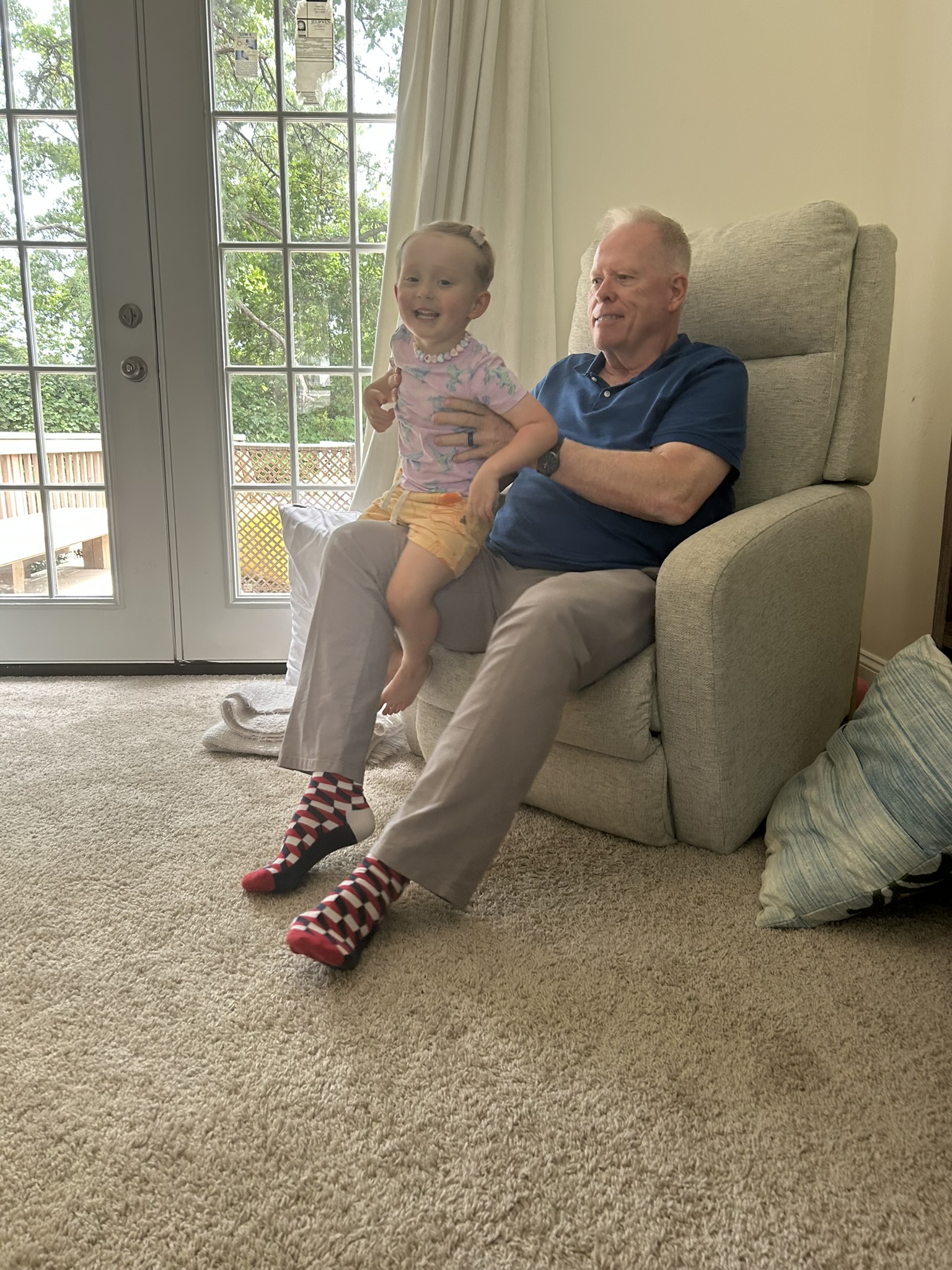
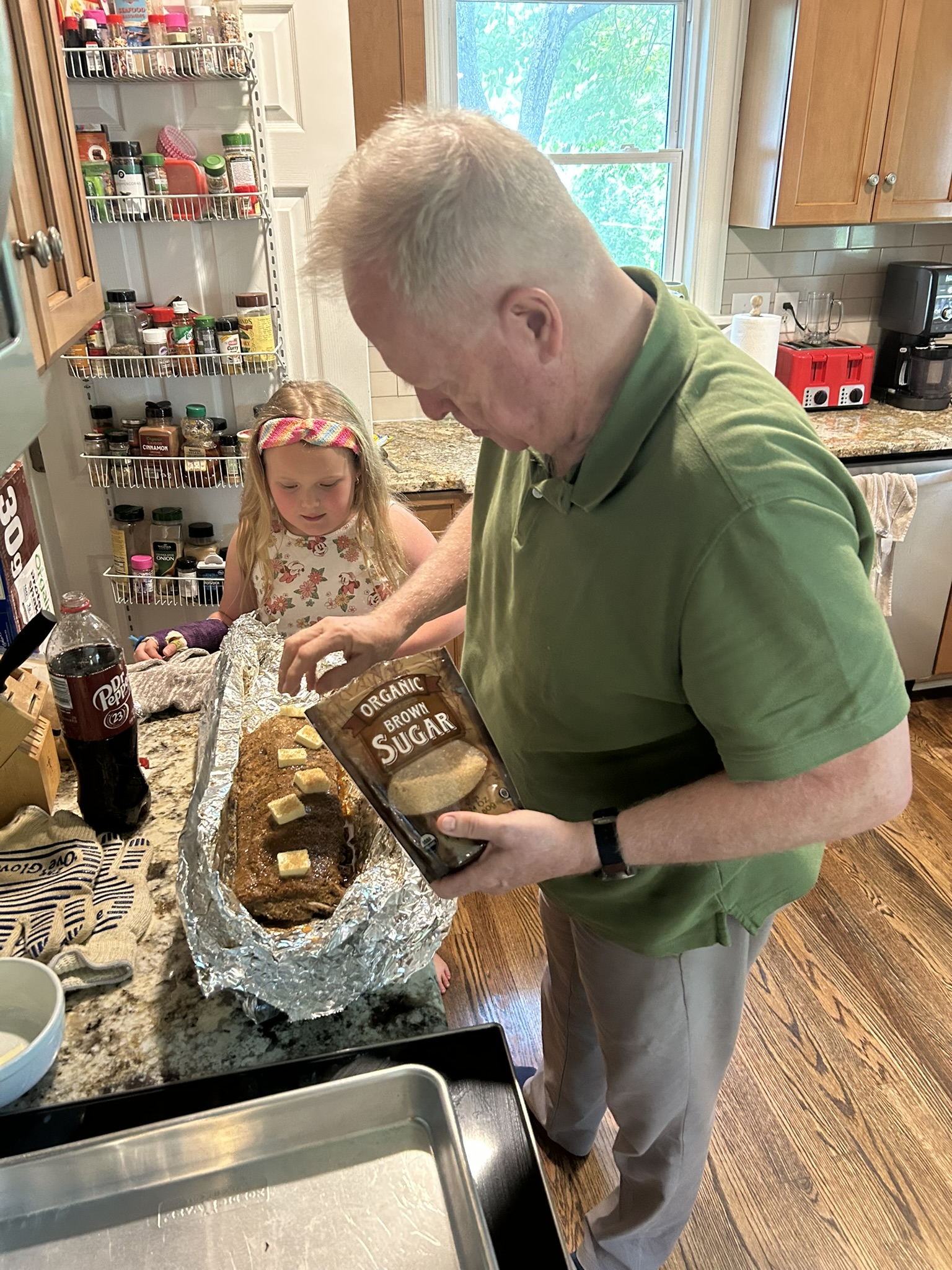
While Debbie worked in the office in Frankfurt all week, Ed flew back to Ohio for legal proceedings. Every cloud has a silver lining they say. Eds was that he was able to spend the weekend with our daughter Becca and her family. Lots of good Pop Pop time.
Debbie took lots of long walks through nearby farmers’ fields. The barley, beets, and strawberries are looking good. “Fresh Air Corridors” are found in every city: parks, farmland, and forests have been carefully preserved. Germany has so much beautiful greenspace!


Kind friends invited Debbie to lunch, to dinner, took her to the temple and to pickleball and on a Saturday field trip.
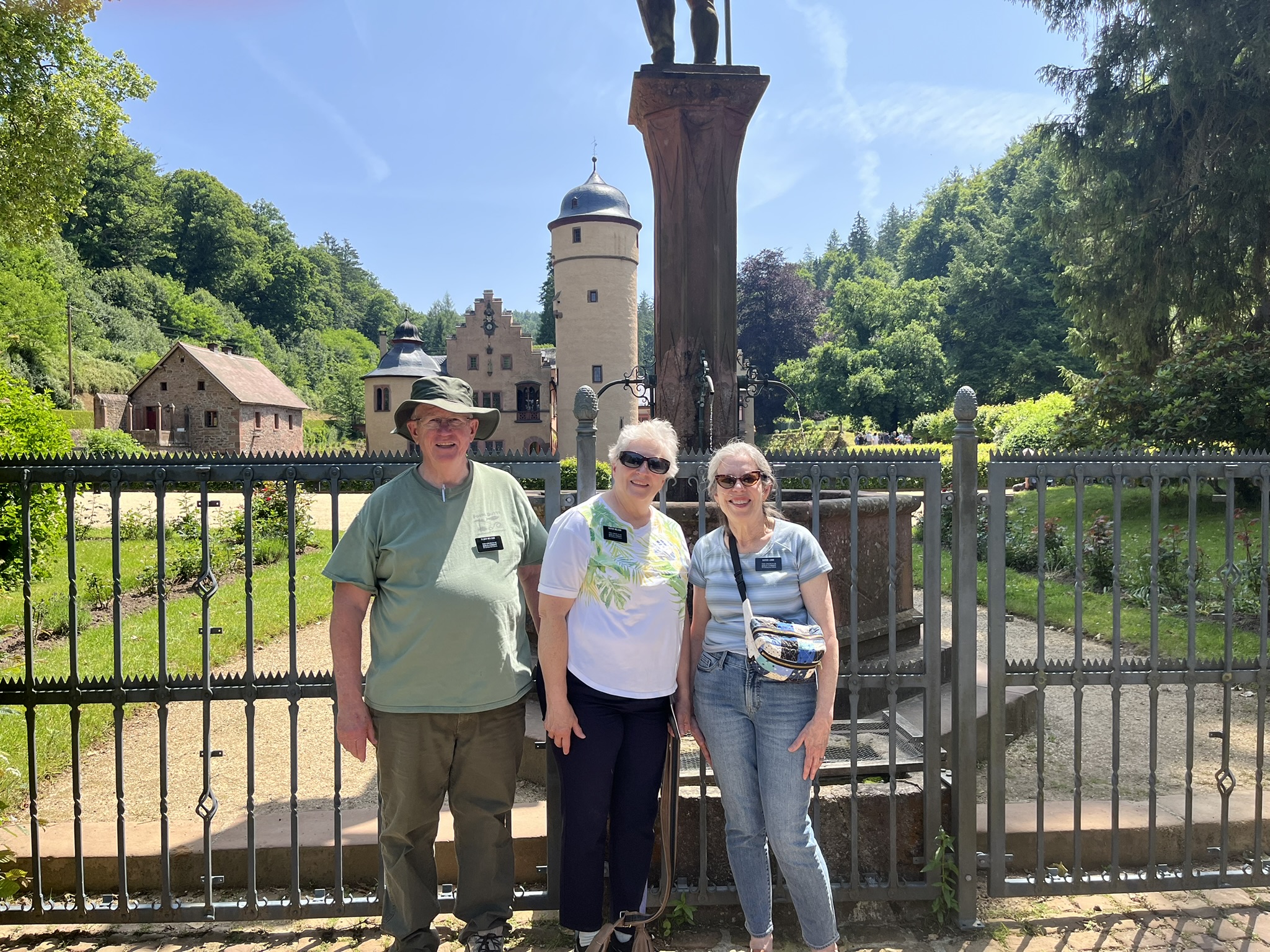
Mespelbrunn
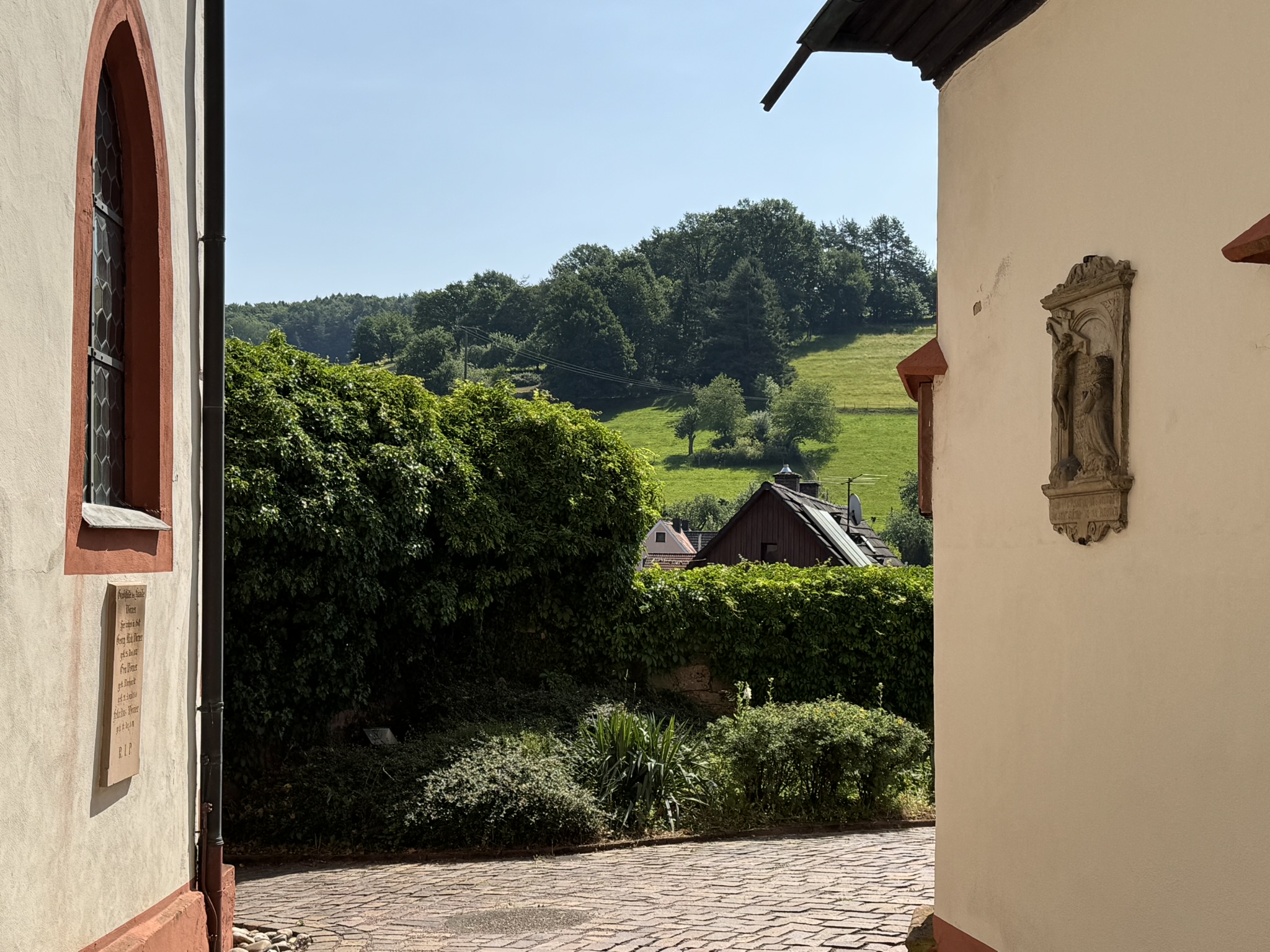
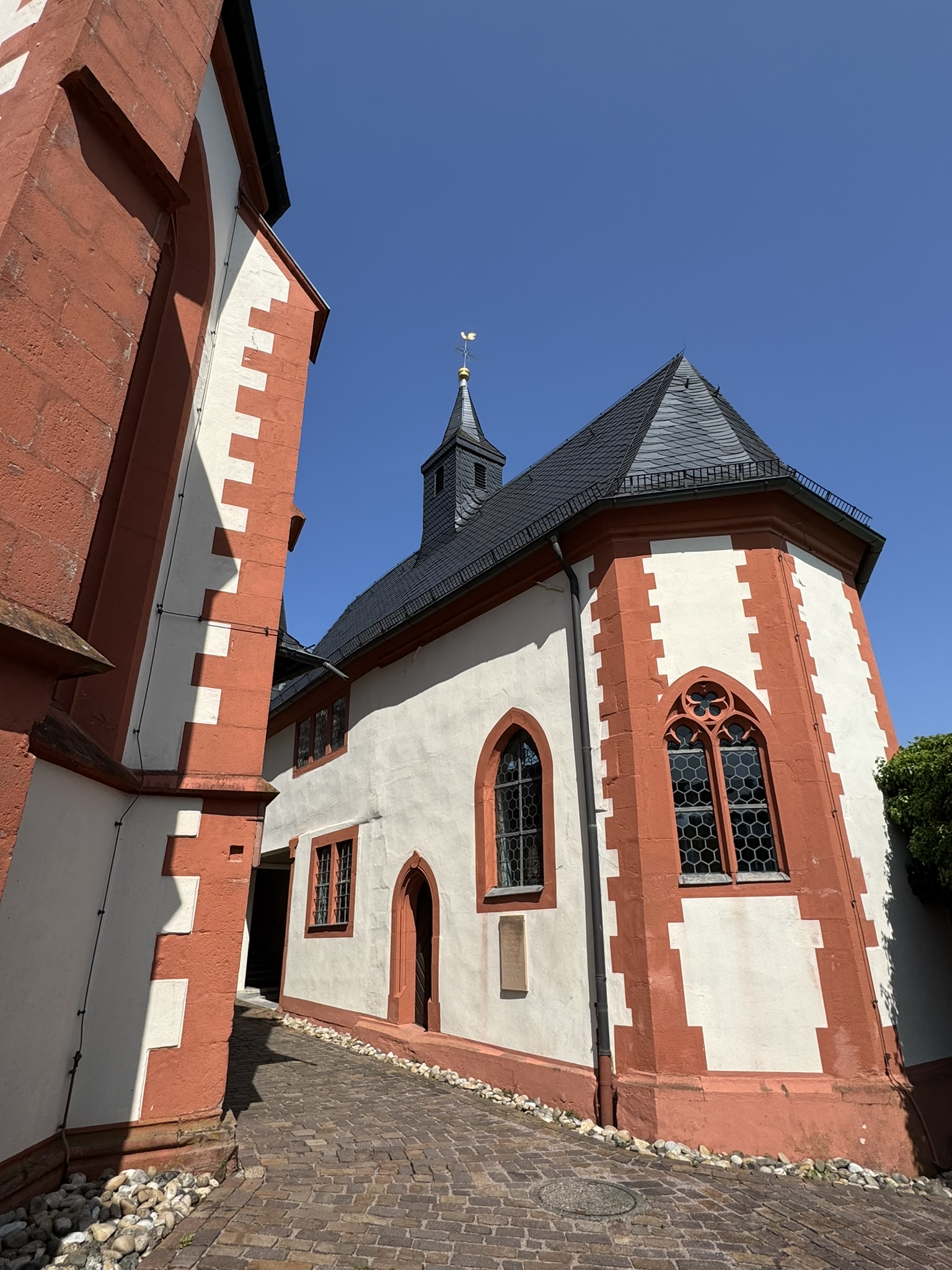
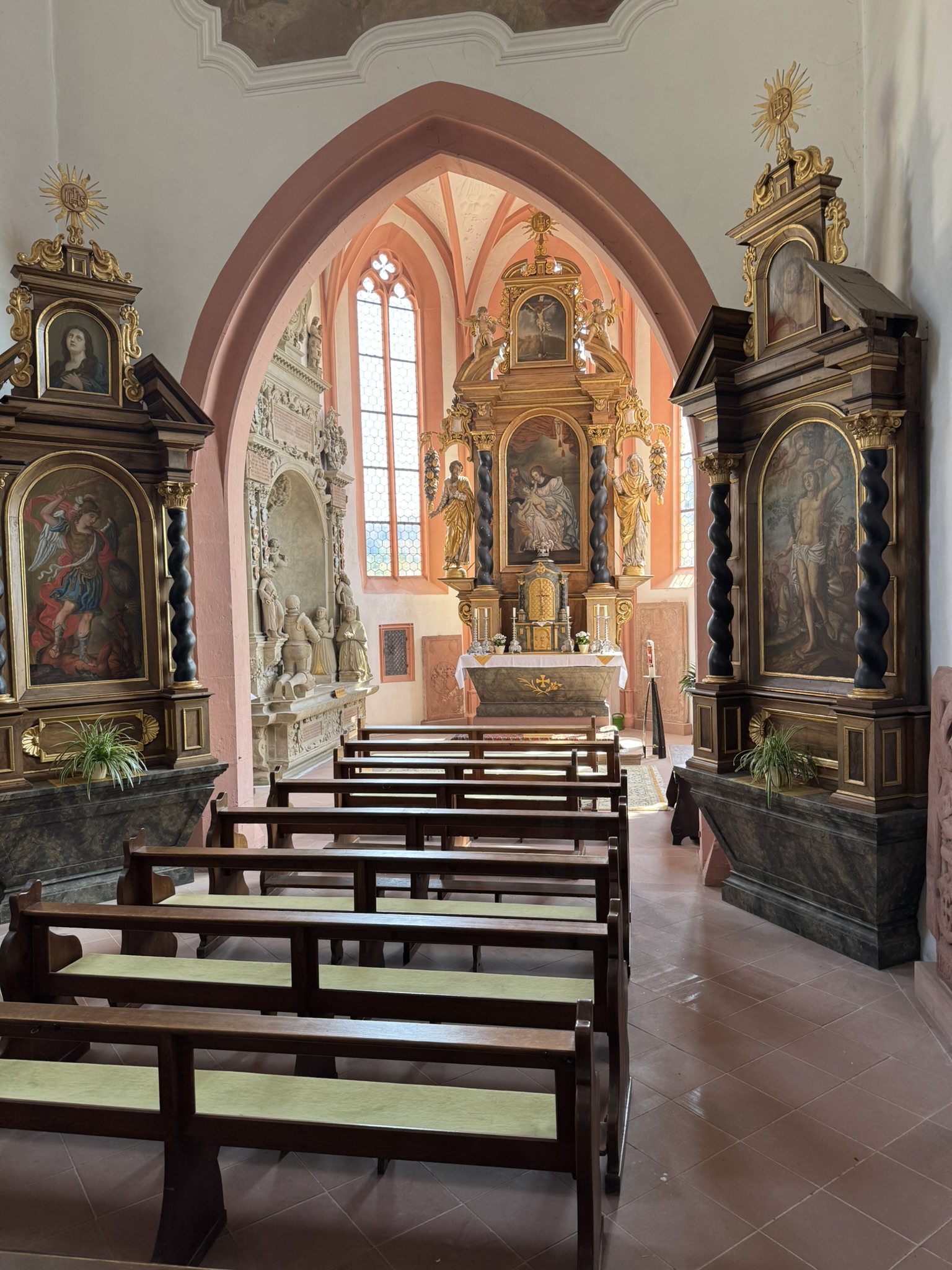
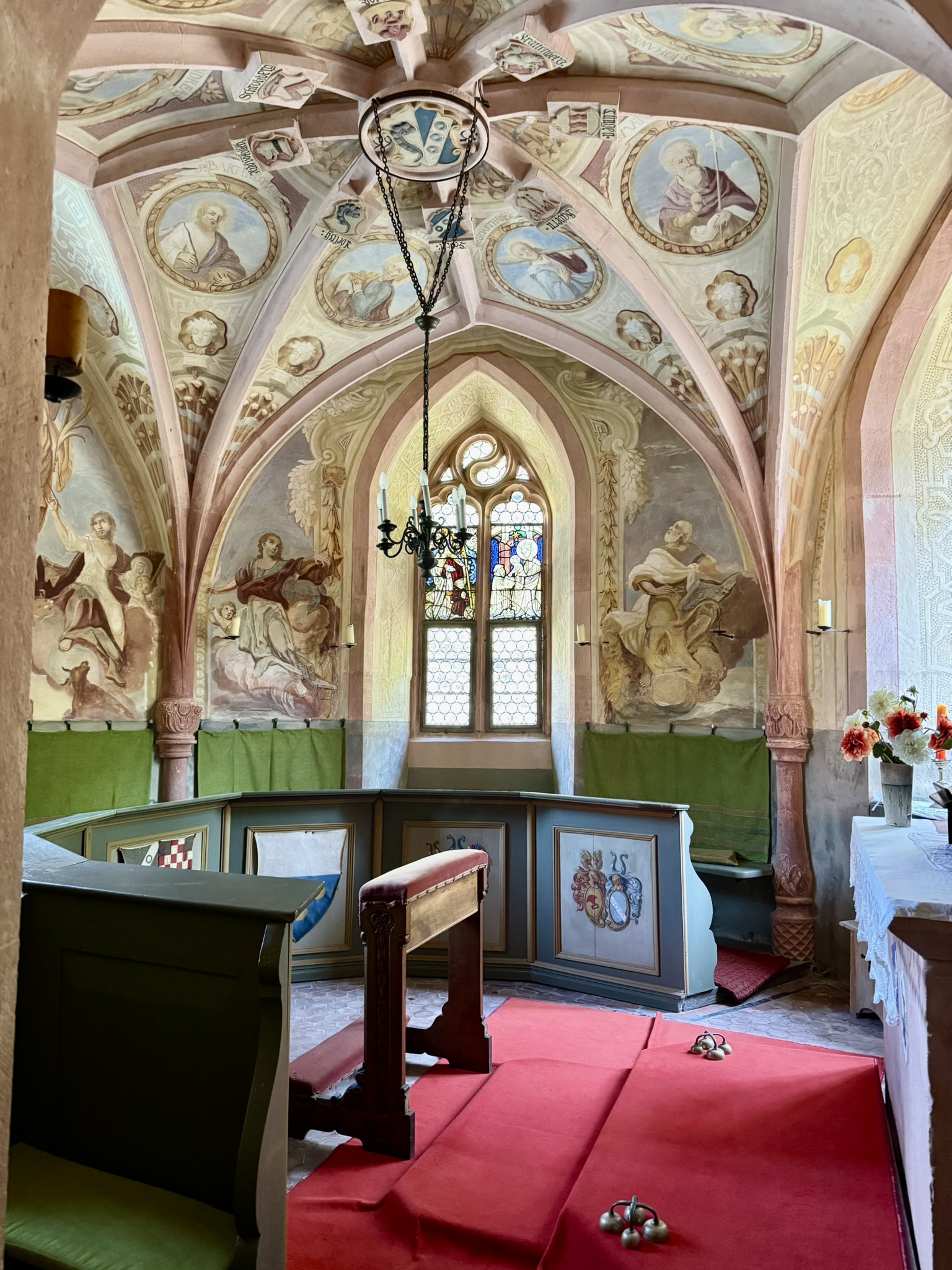
The pilgrimage church in Mespelbrunn was built in 1439. In 1452 the mercy chapel was added. These two chapels stand alongside the large pilgrimage church, constructed in 1954.


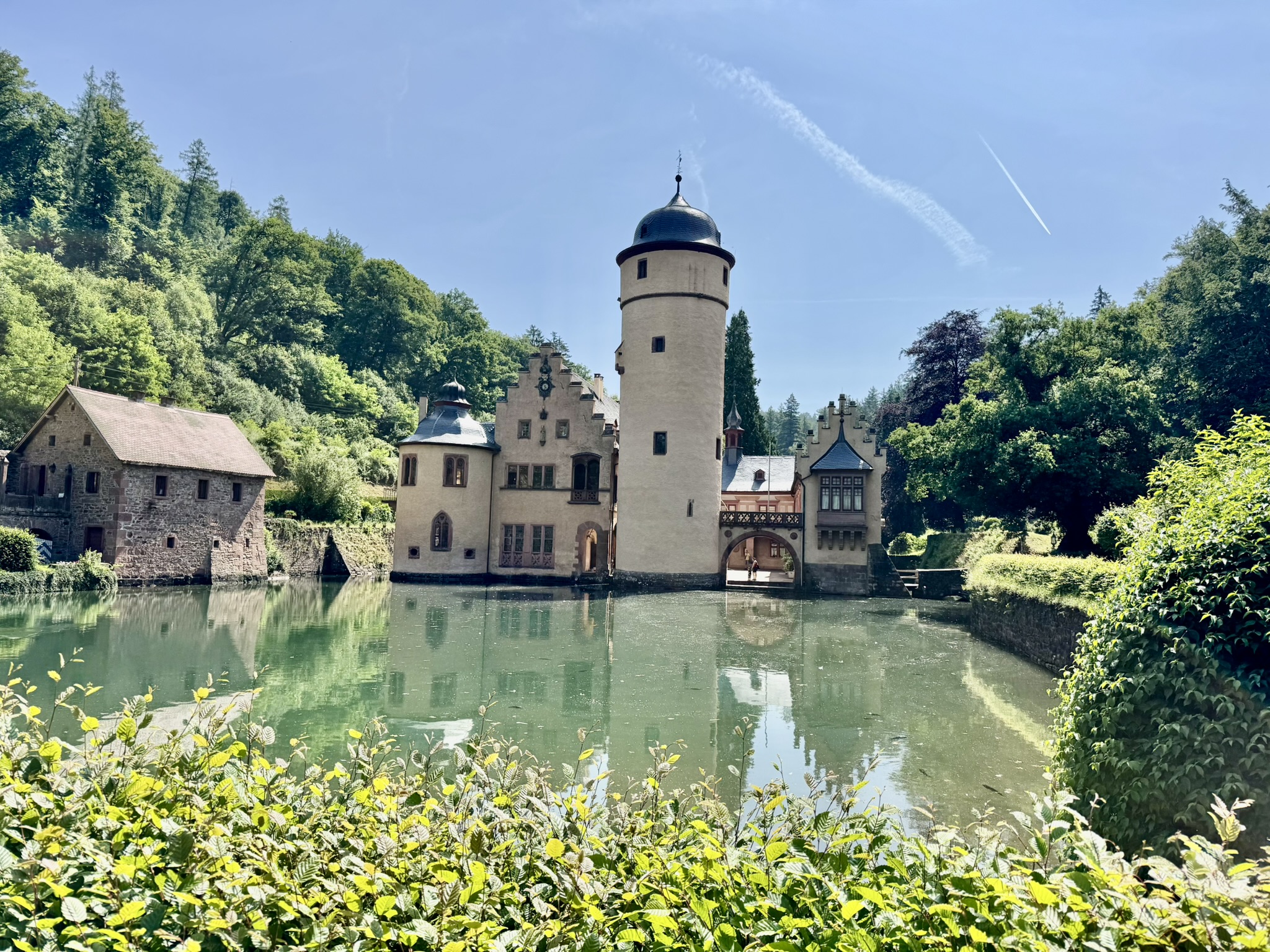
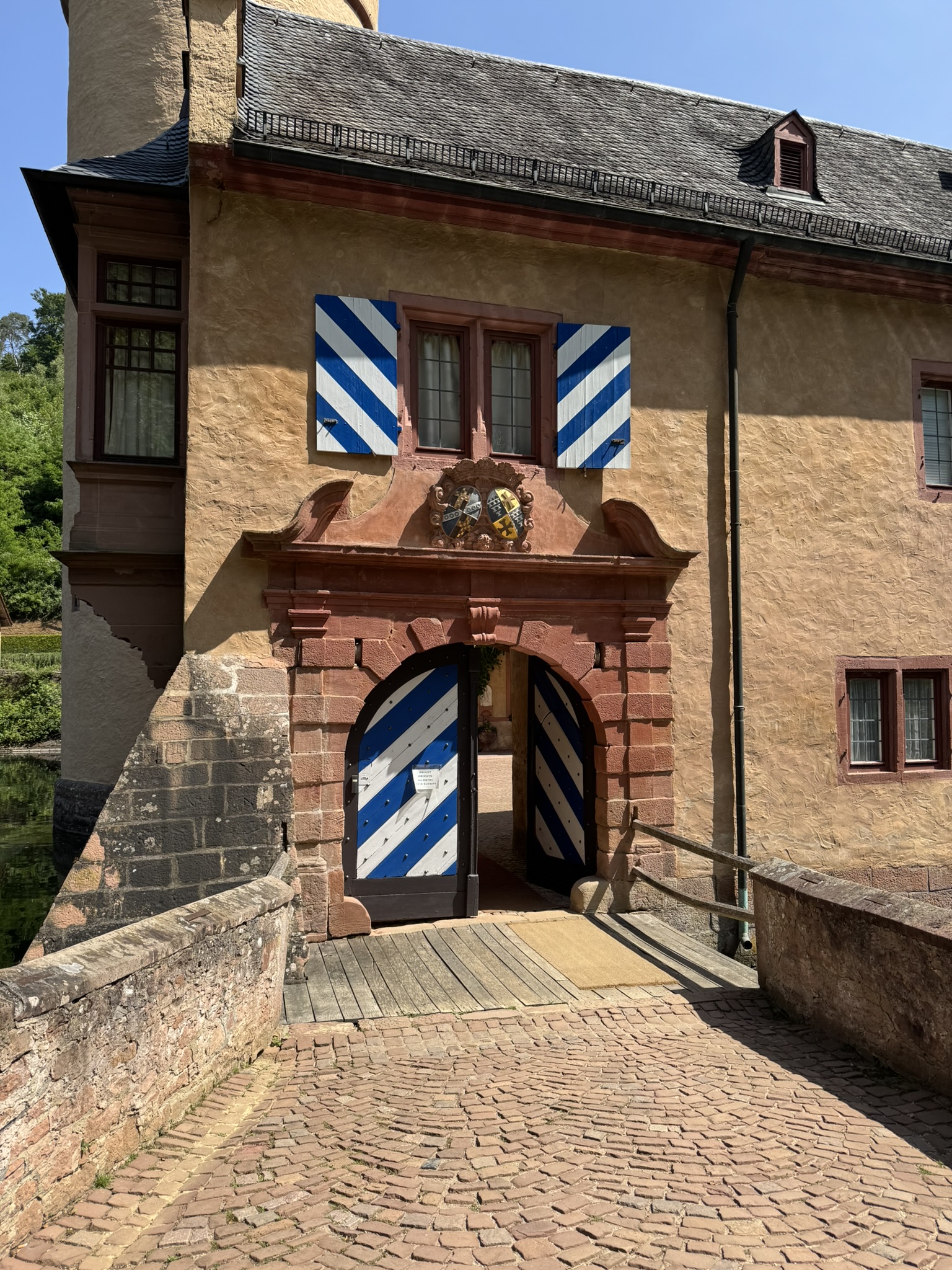
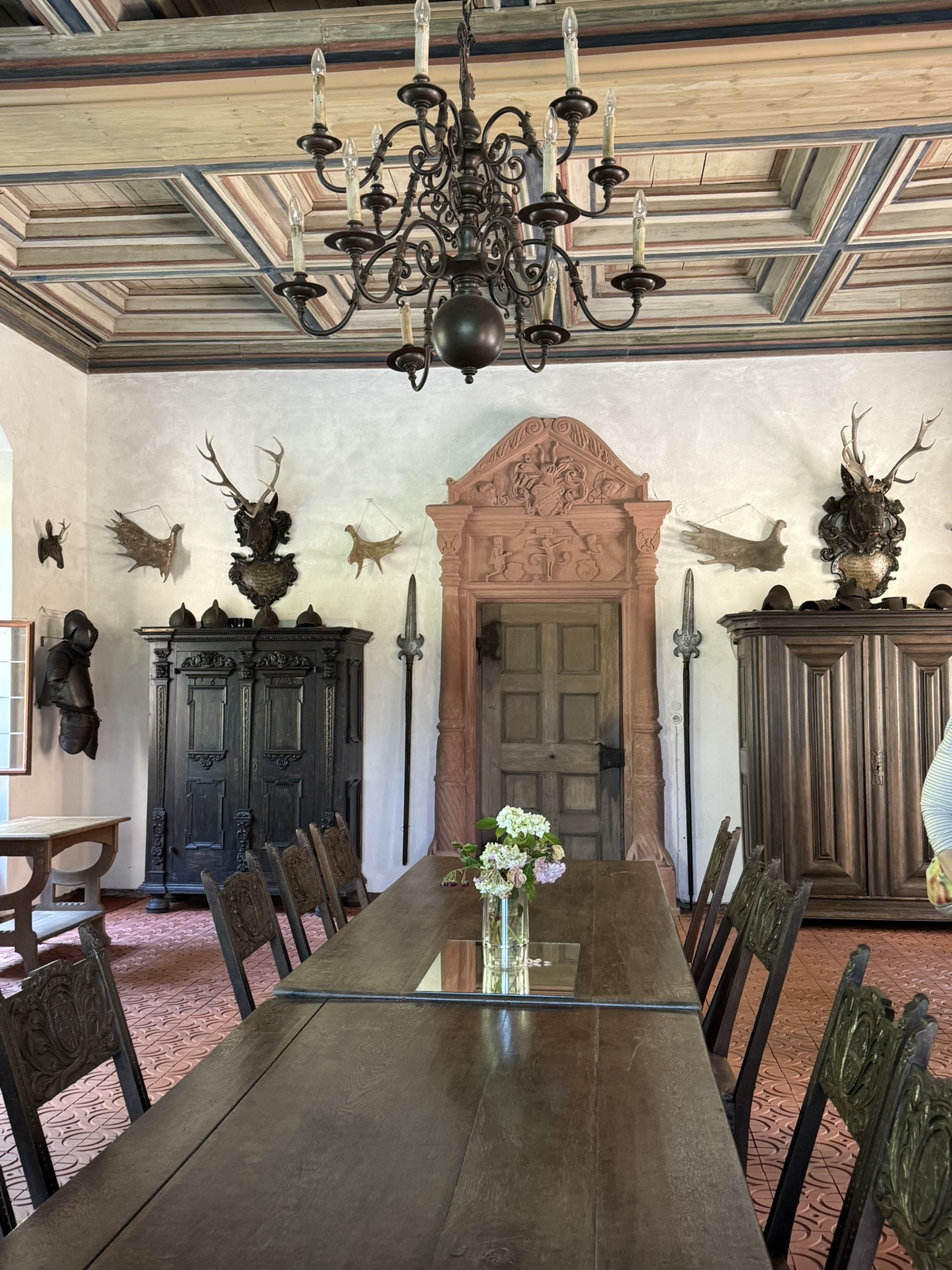
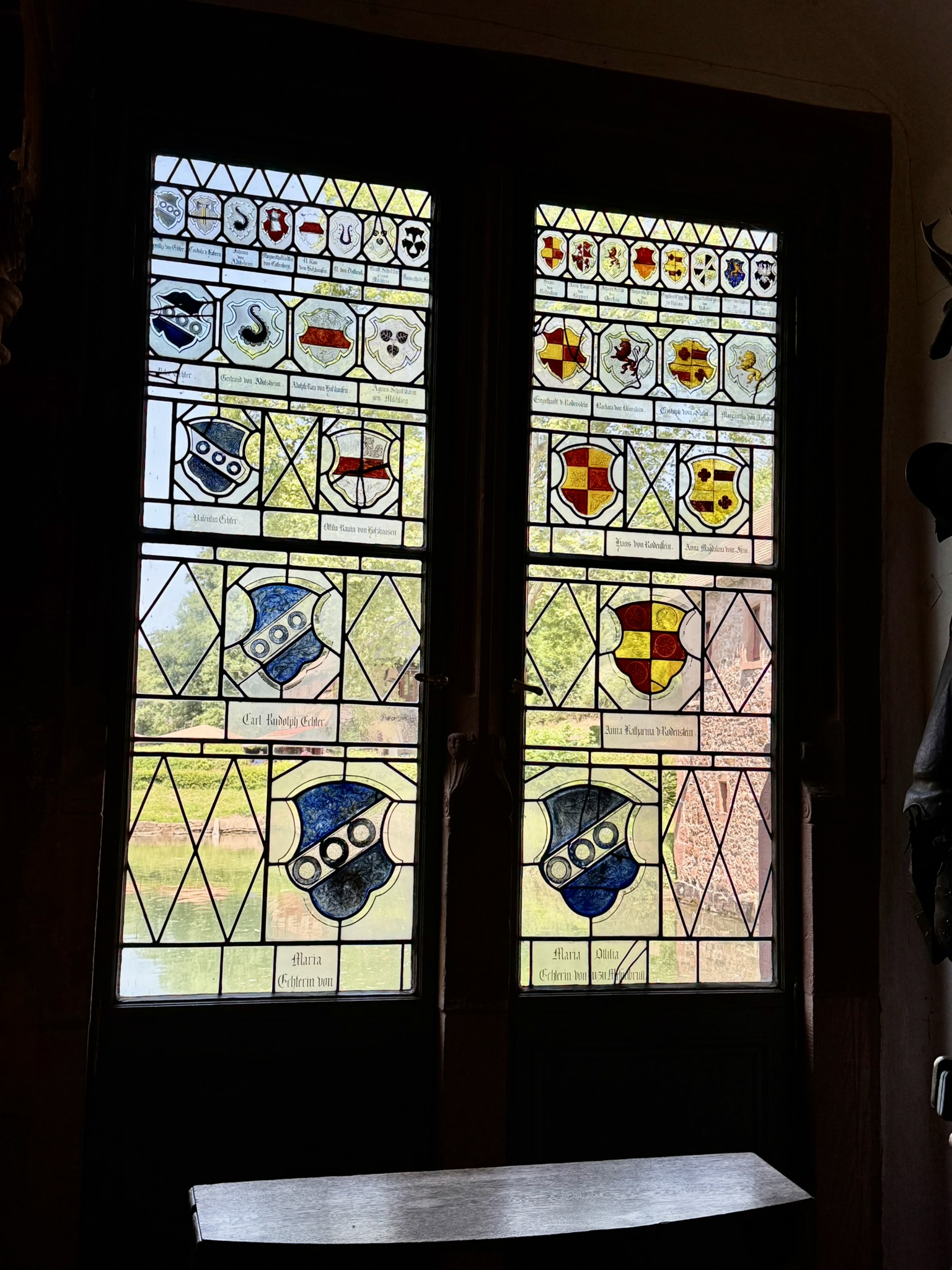
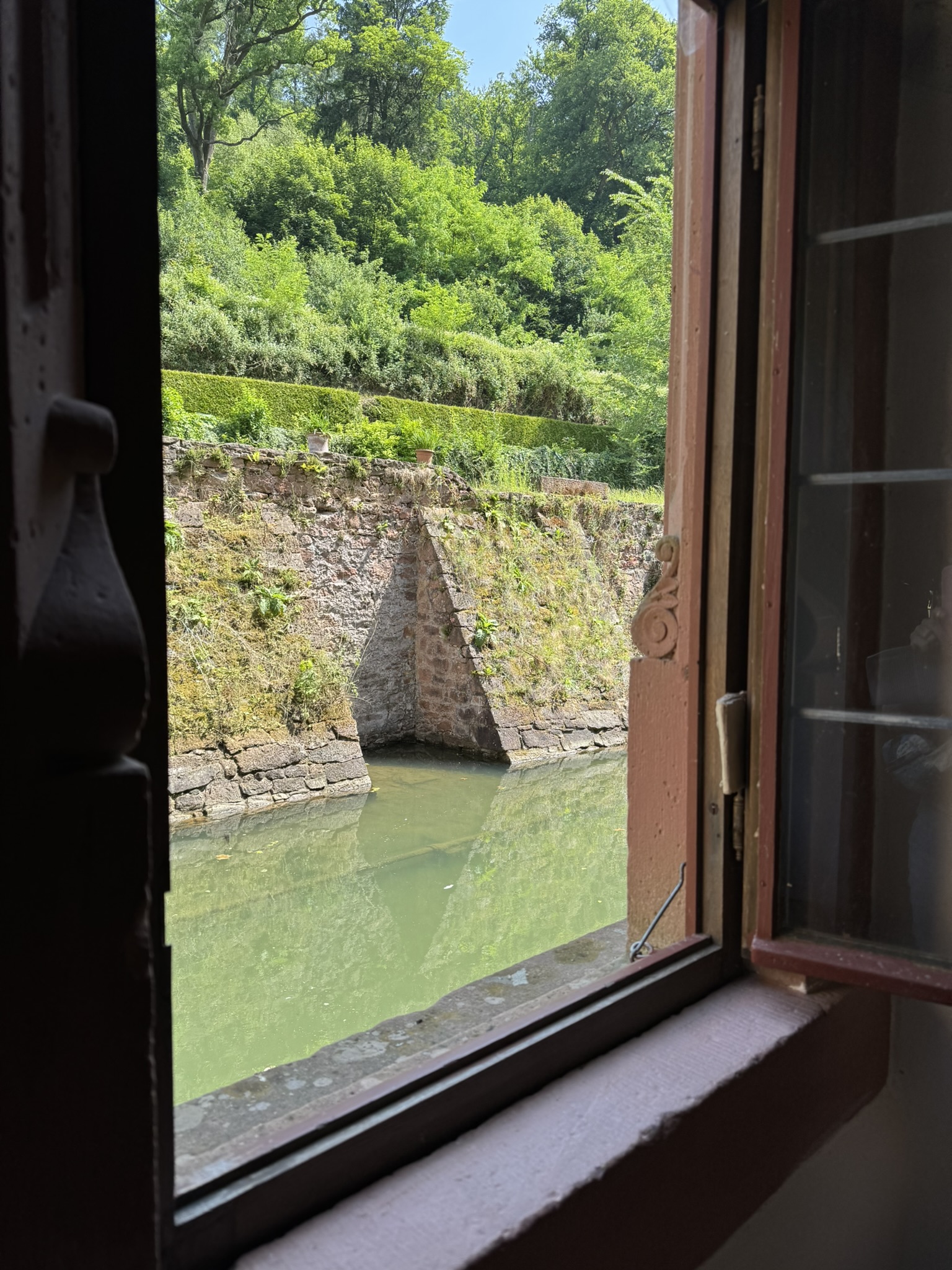
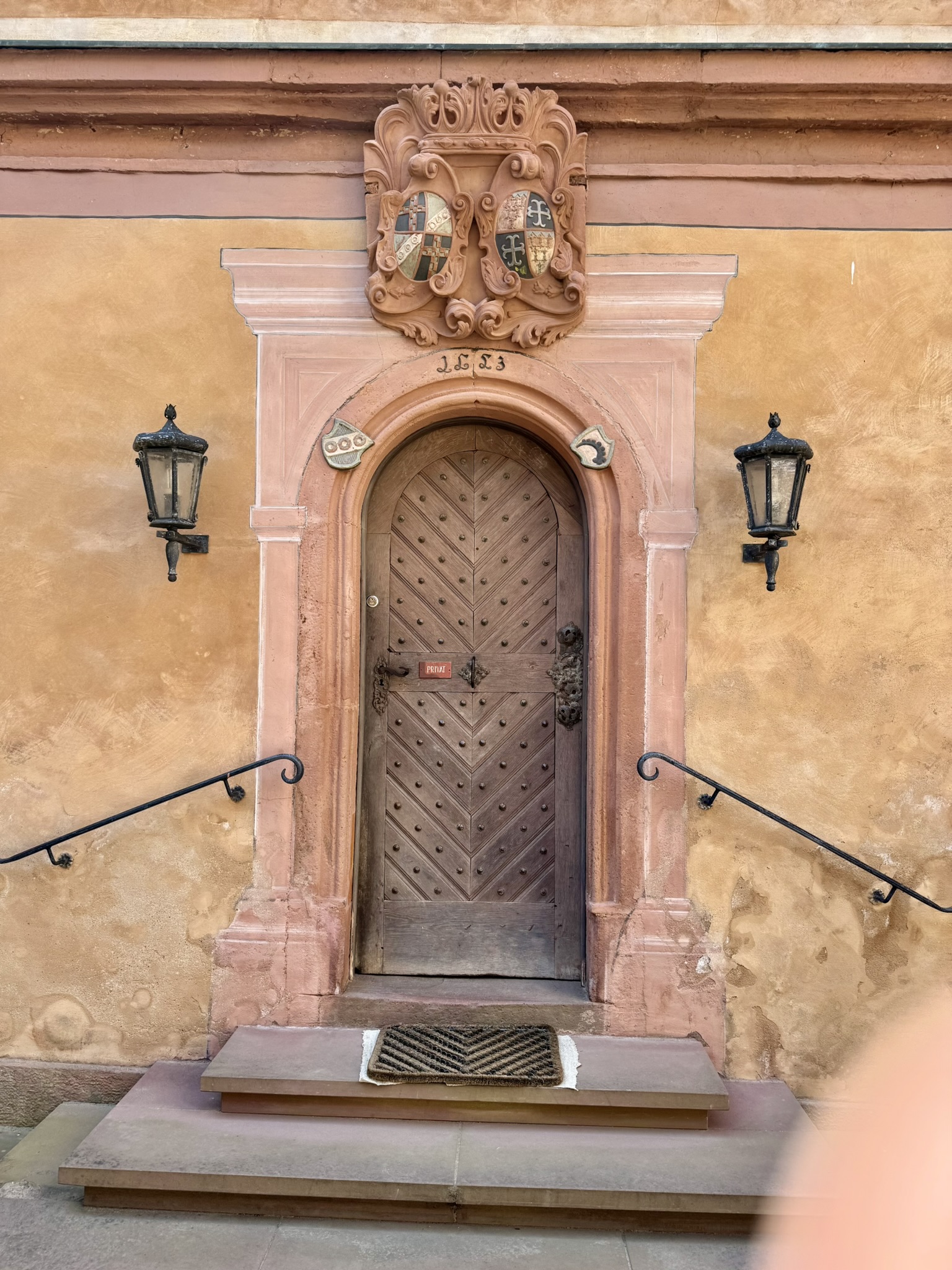
A moated castle, located in the Spessart mountain range, is nestled in the woods near Mespelbrunn. Built in 1412 by Hamann Echter as a house, it was later rebuilt as a fortified castle and remodeled several times in the 1500’s. It was one of the few castles to survive the 30-year war. It is still a private residence of the Ingelheim family, who live in the south wing. The family tree is beautifully preserved in the stained-glass windows.

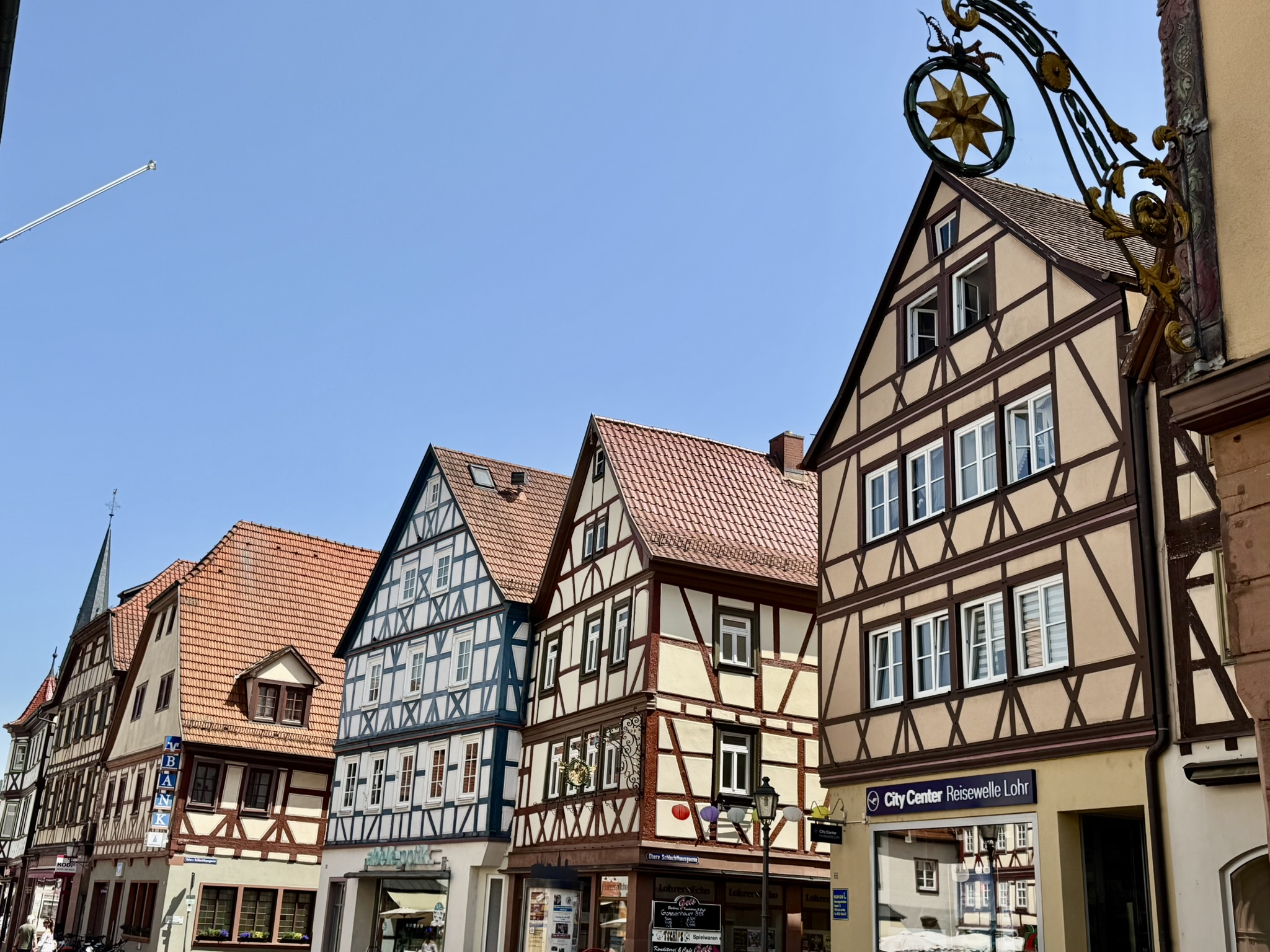
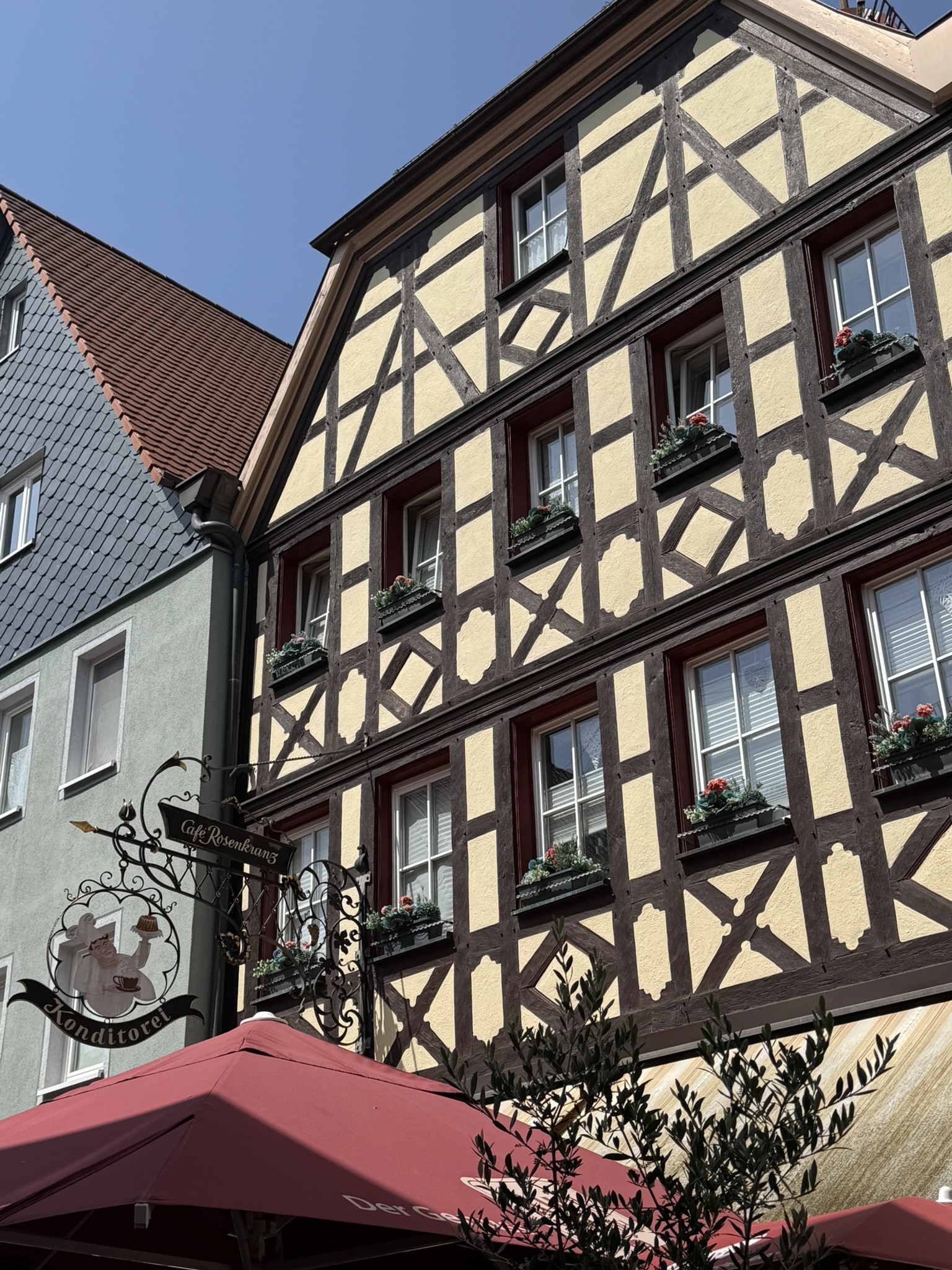
Lohr am Main
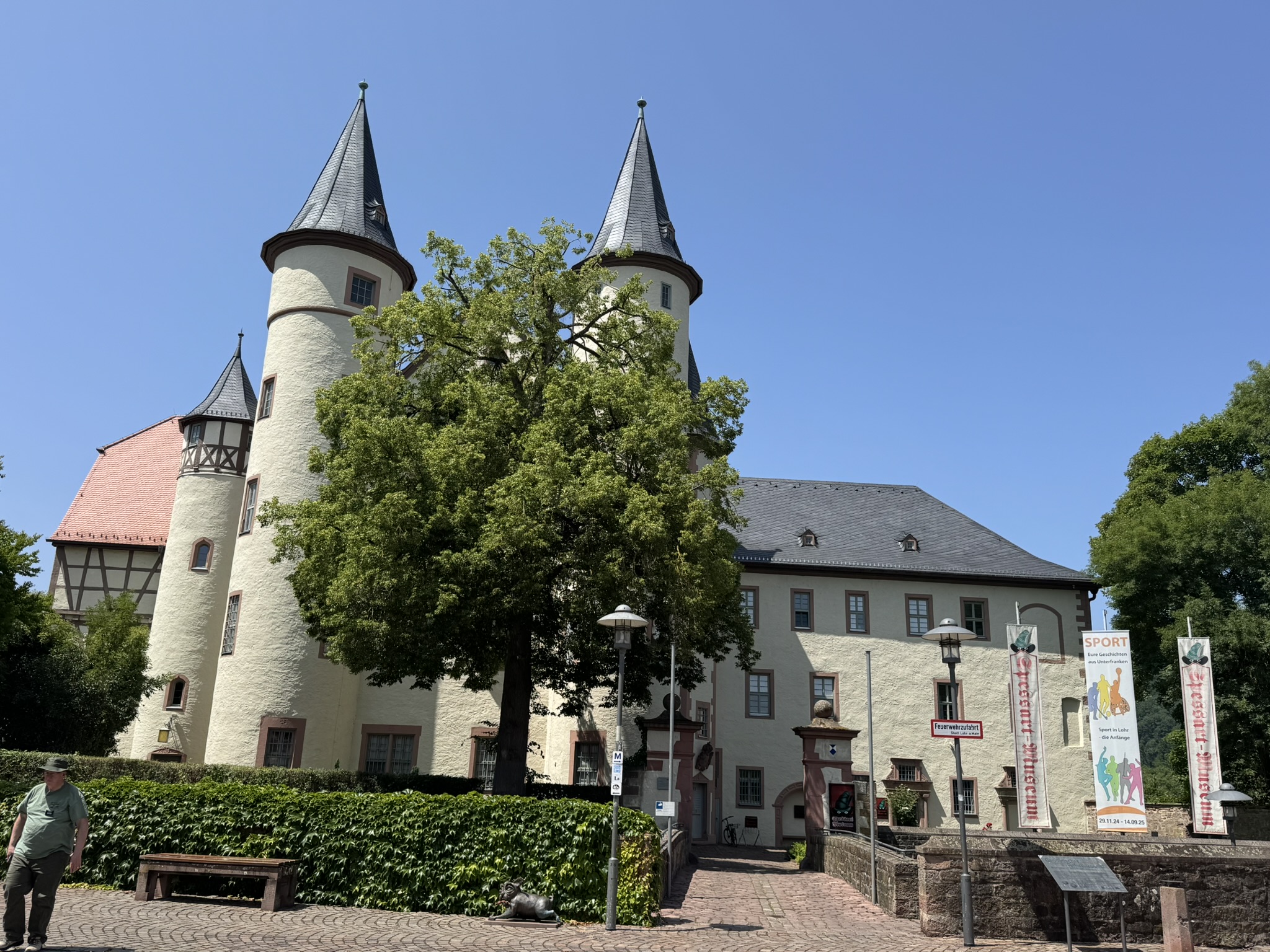
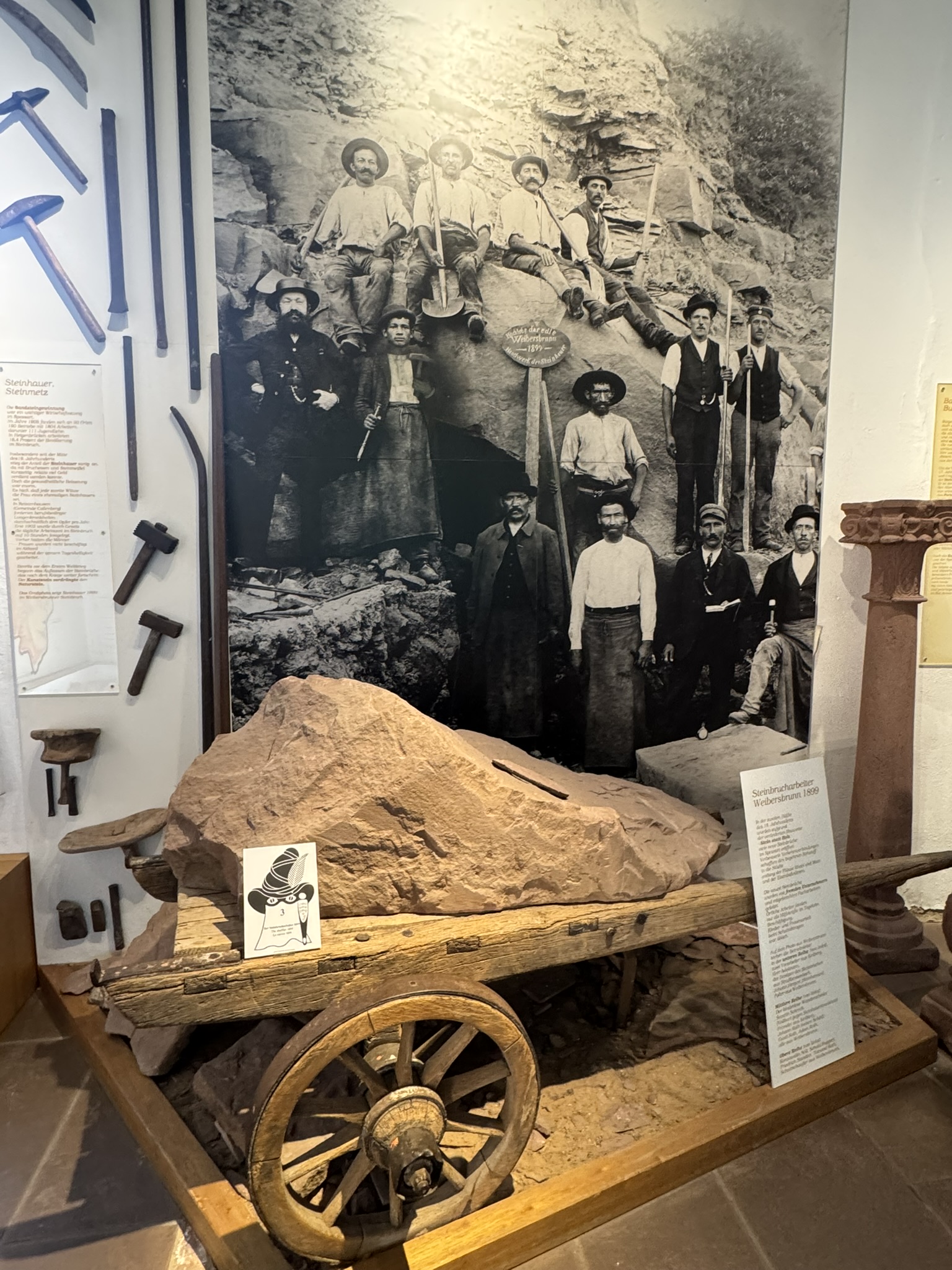
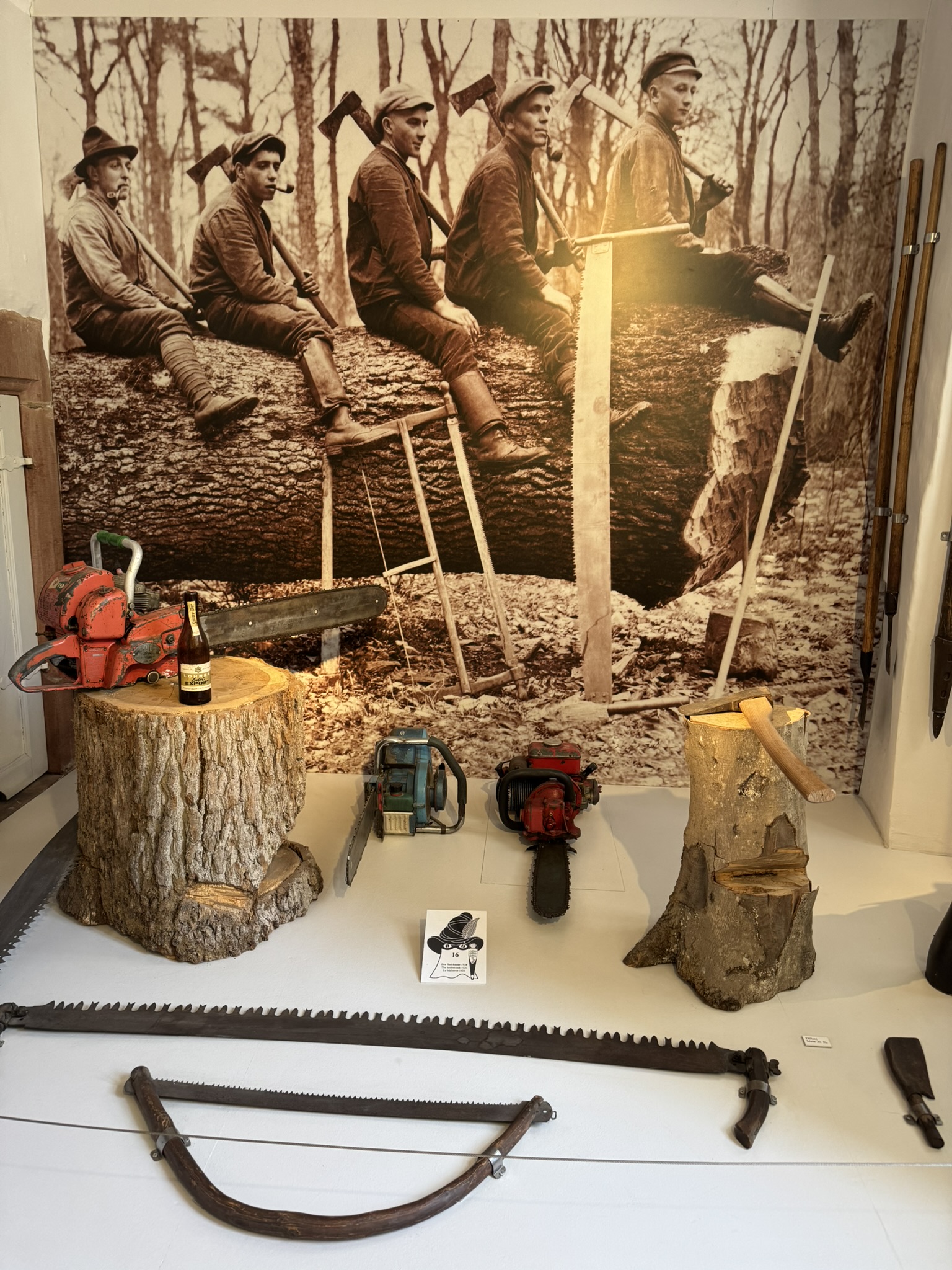
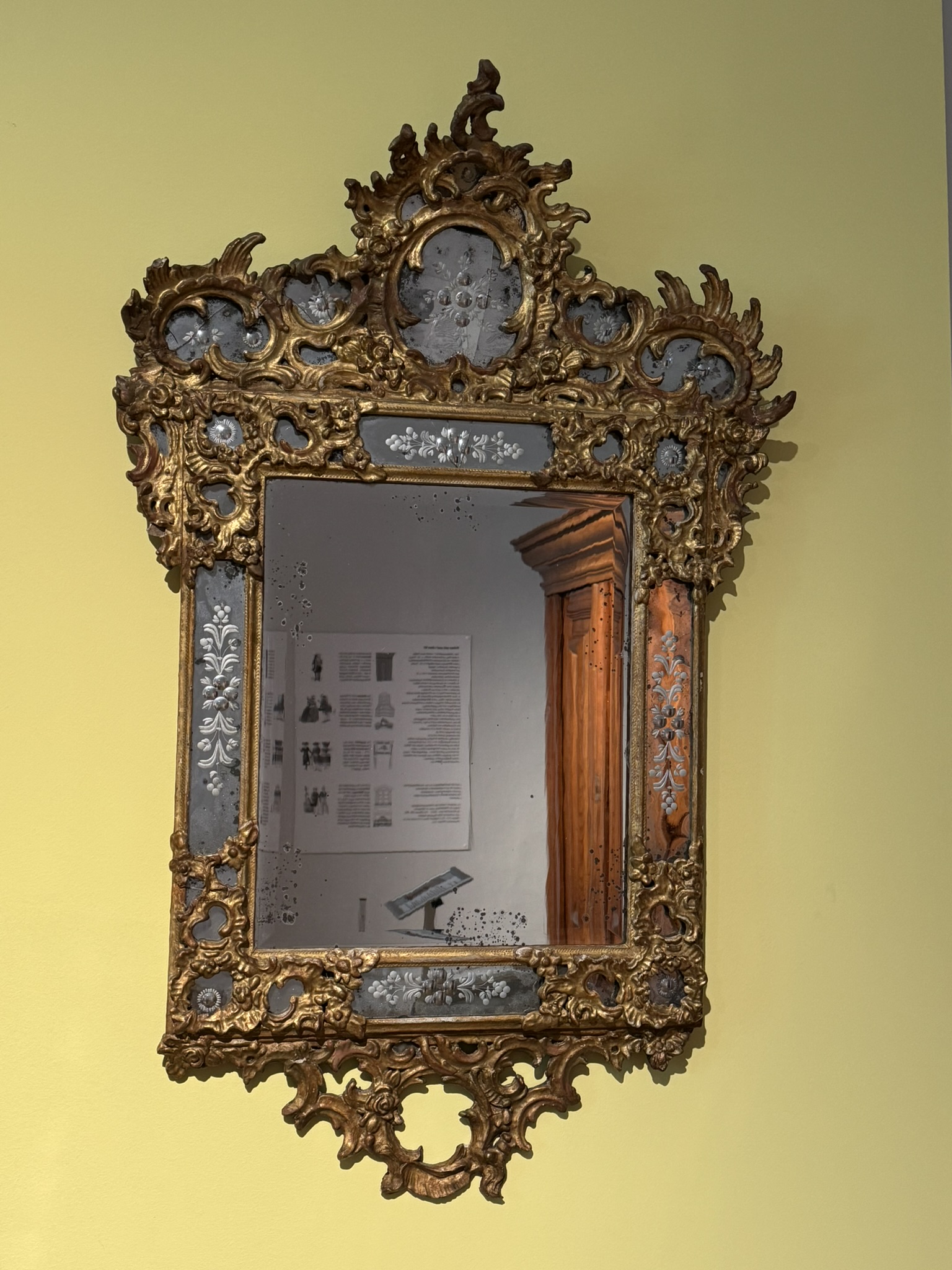
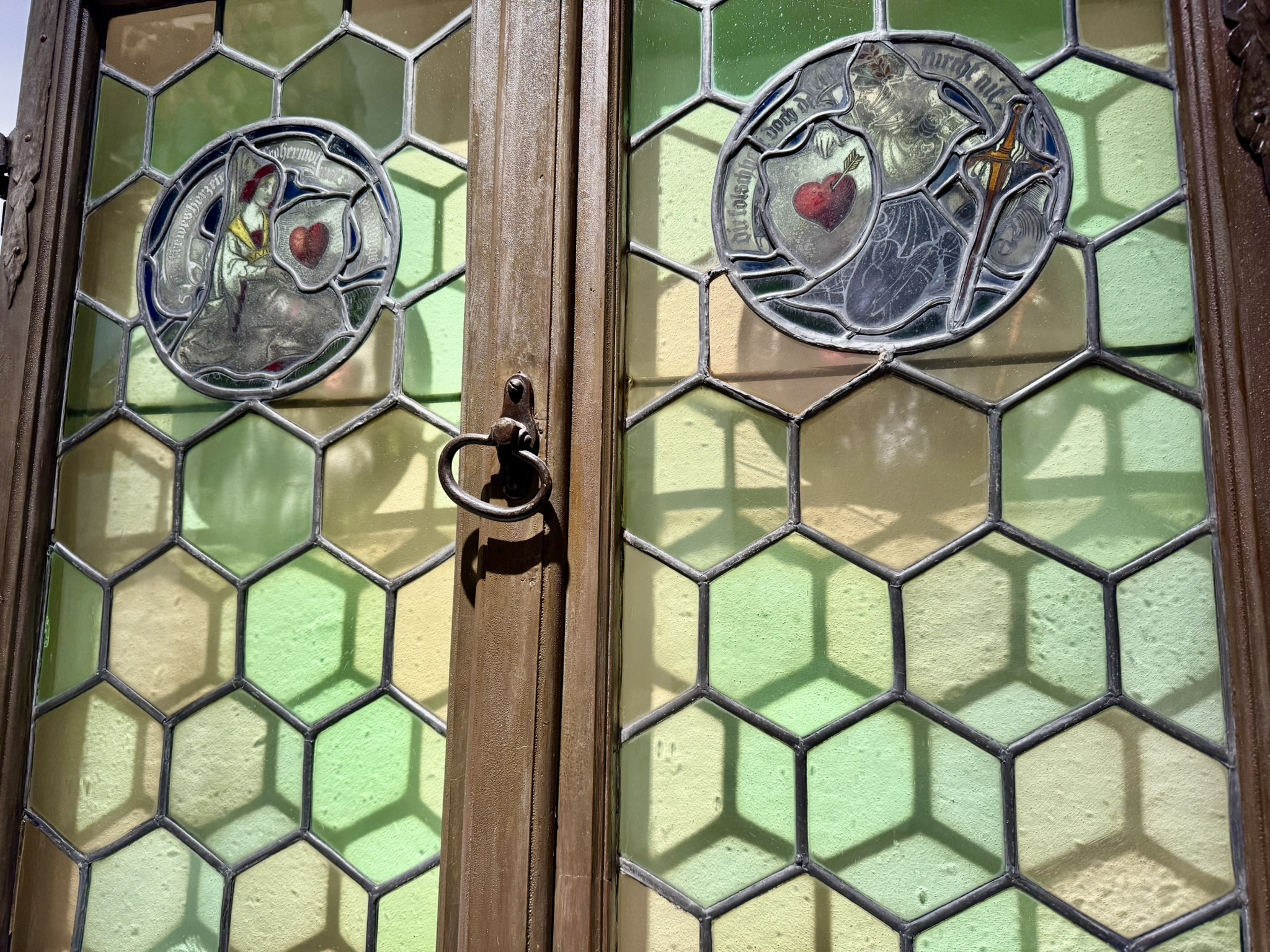
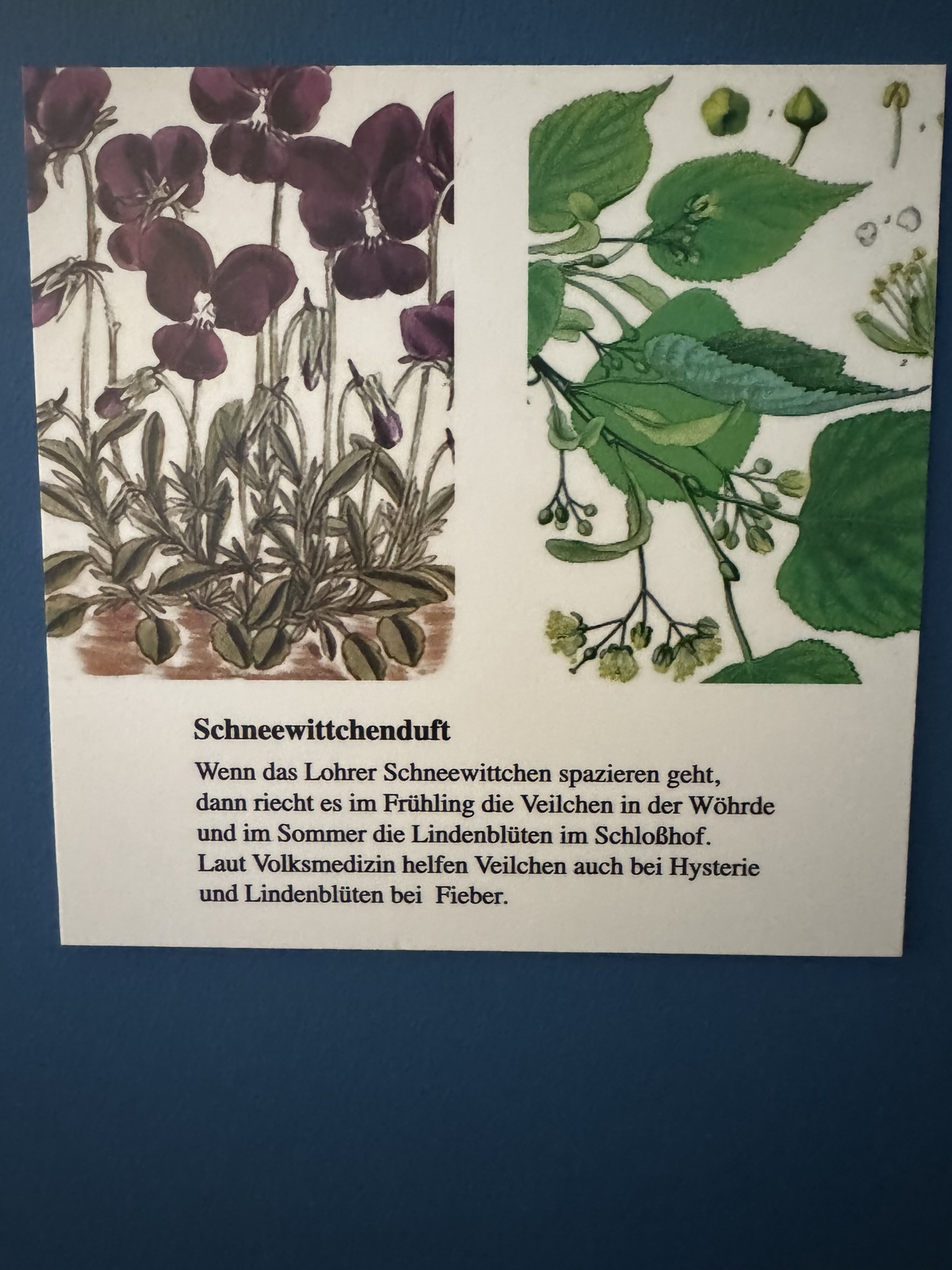
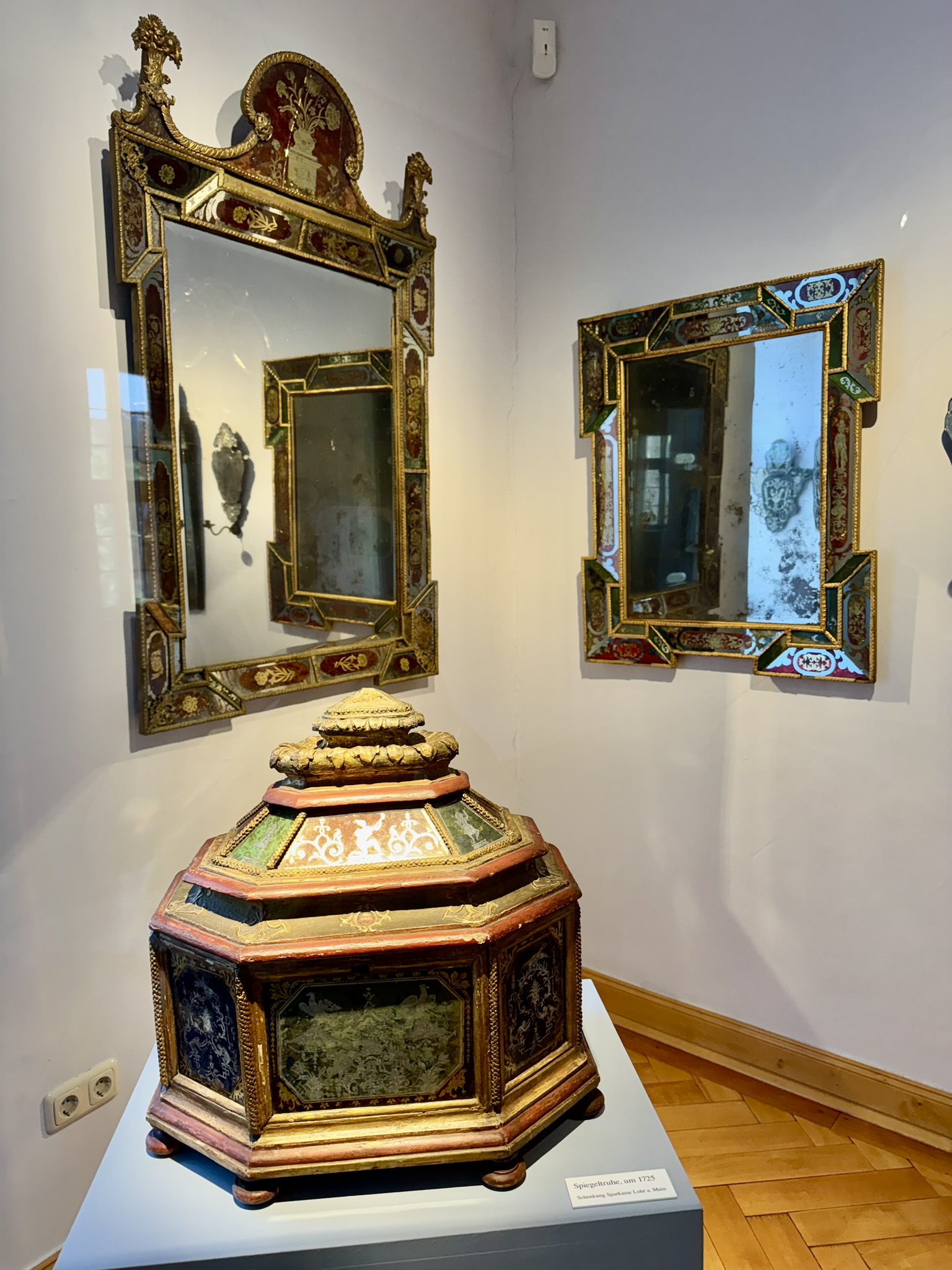
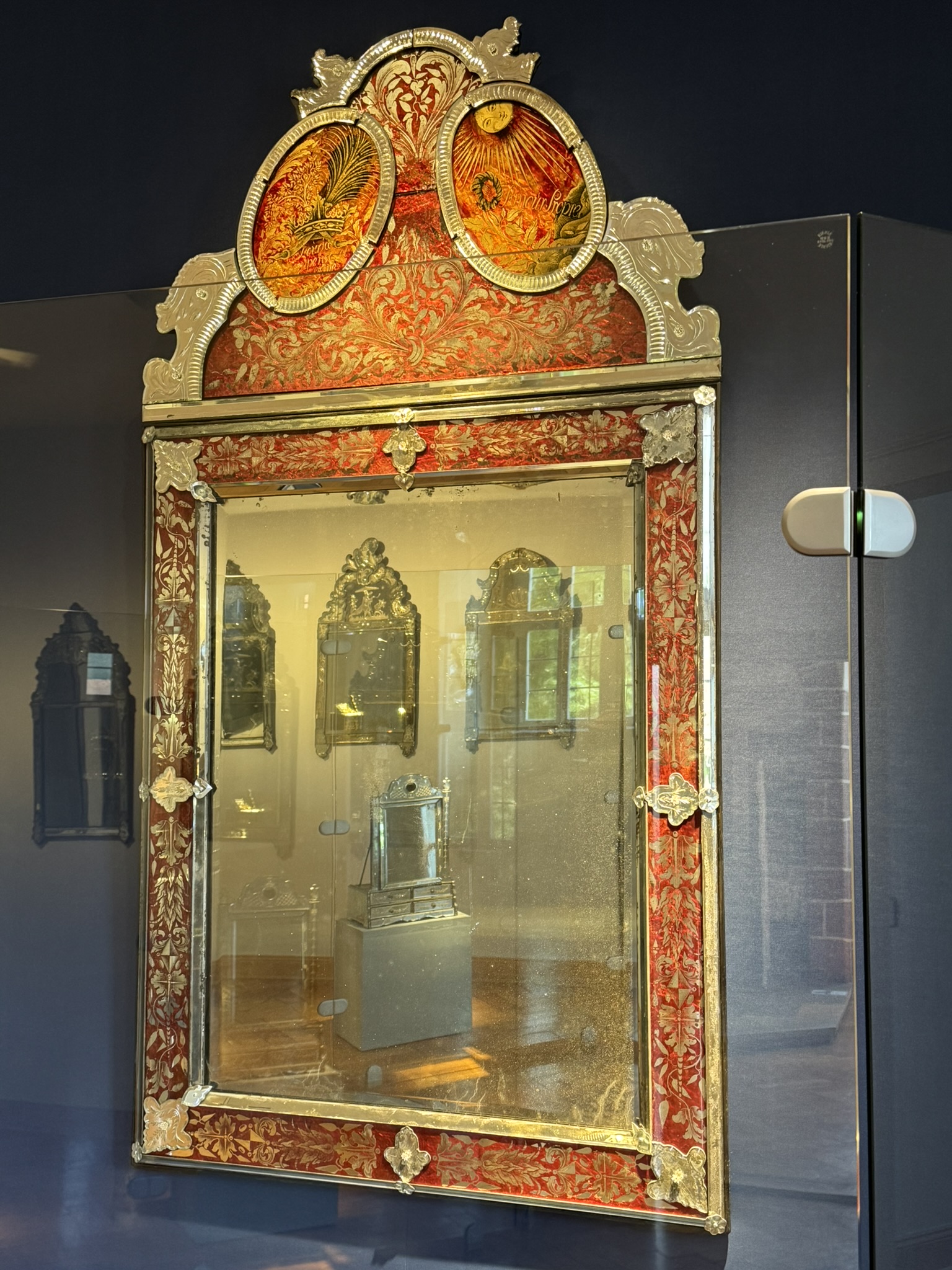
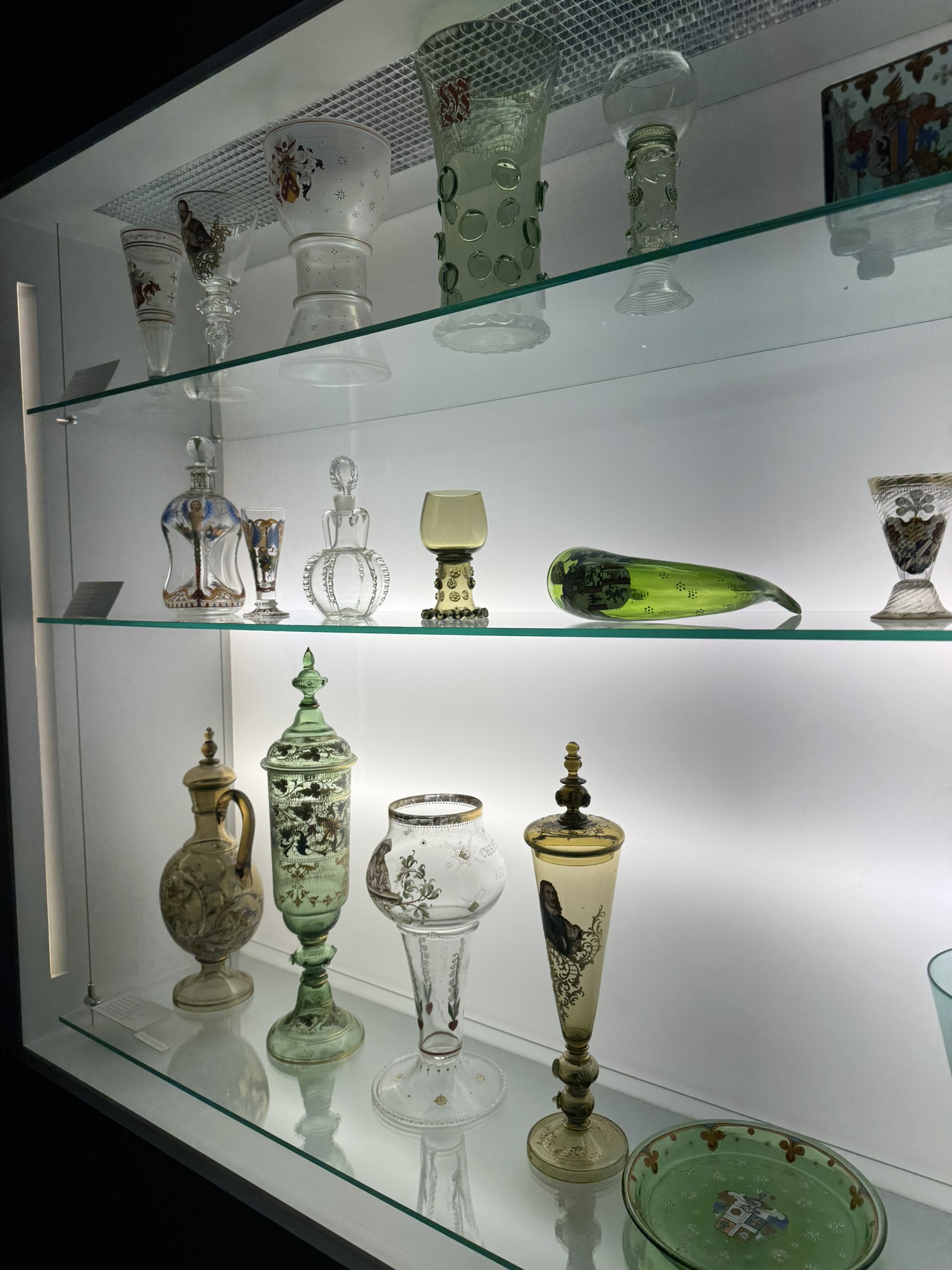
Thirty kilometers over the river and through the woods, in Lohr am Main lies the Snow White Castle. The town has adopted the fairy tale about Snow White as part of their folklore. Maria Sophia Margaretha Catharina von Erthal was the daughter of widower Philipp von Erthal who lived in this castle in the 1720’s. After his first wife’s death, Philipp married a widow who had children of her own and favored them over Maria. This 14th century castle is now a museum containing examples of the local trades of the Spessart forest. Glass and mirror making were common throughout the area (think ‘Mirror, Mirror on the Wall’ and Snow White’s glass casket). Lower classes were short of stature because of poverty and small people, at times even children were employed as laborers in the low mining tunnels. Hunting was common in the forest. Apple orchards were common on the edges of the forest in the 1700’s and Maria’s stepmother had access to a poisonous plant that could induce rigidity in a person who ingested it. Very interesting! The original story of Snow White is taken from a 19th century German fairy tale written by the Brothers Grimm who lived 75 kilometers from this village.



In 1972 it was declared in the US that the third Sunday in June would be a day to honor and recognize fathers. In Germany, Father’s Day is celebrated on Ascension Day (the Thursday forty days after Easter which was May 29 this year). Wherever you are fathers, thank you for your love and influence in our lives!
“Of all the titles God has chosen for himself, Father is the one he declares…His glory isn’t a mountain, as stunning as mountains are. It isn’t in the sea or sky or snow or sunrise, as beautiful as they all are. It isn’t in art or technology, be that a concerto or computer. No, His glory …is in His children. You and I, we are his prized possessions, and we are the earthly evidence, however inadequate, of what He truly is.” Jeffrey R Holland
With love, Elder & Sister Lamb (aka Ed & Debbie, Mom & Dad, Pop Pop & Tu Tu)
 Lambs in Central Europe