We rode our bikes to the office twice this week. It is an invigorating 20-minute ride through green farm fields. Among other things we prepared three humanitarian projects to present for approval on Monday.
Bern, Switzerland- Hygiene Care Bags for Women and Children Escaping Domestic Violence.
Women fleeing abuse arrive in shelters with few or no personal belongings. The institute students in the Bern, Switzerland stake will assemble 200 bags with basic toiletry items that include some art supplies for children. This gift bag will be on their bed at the shelter when they arrive. The hope is that these vulnerable women will feel seen and cared for.
Rome, Italy- Community Courtyard for Unaccompanied Minors
Programma Integra is committed to helping refugees and migrants integrate into their new home. Recent emphasis has been placed on supporting unaccompanied minors between the ages of 10 -18 that arrive in Italy from Africa without family members. Their parents have sent them over a treacherous sea route to keep them from being conscripted into the military. Renovation of an outdoor courtyard will provide a space for them to gather with other teenagers in the neighborhood.
Rome, Italy- Protection & Mental Health Services for Women & Children
Women who have survived gender-based violence find help at INTERSOS through support services that provide counseling, Italian language classes, vocational training, legal support, information dissemination and orientation to available social and health services and help with re-entering the job market. This project will provide funding for mental health consultants, cultural mediators, and a water treatment system.
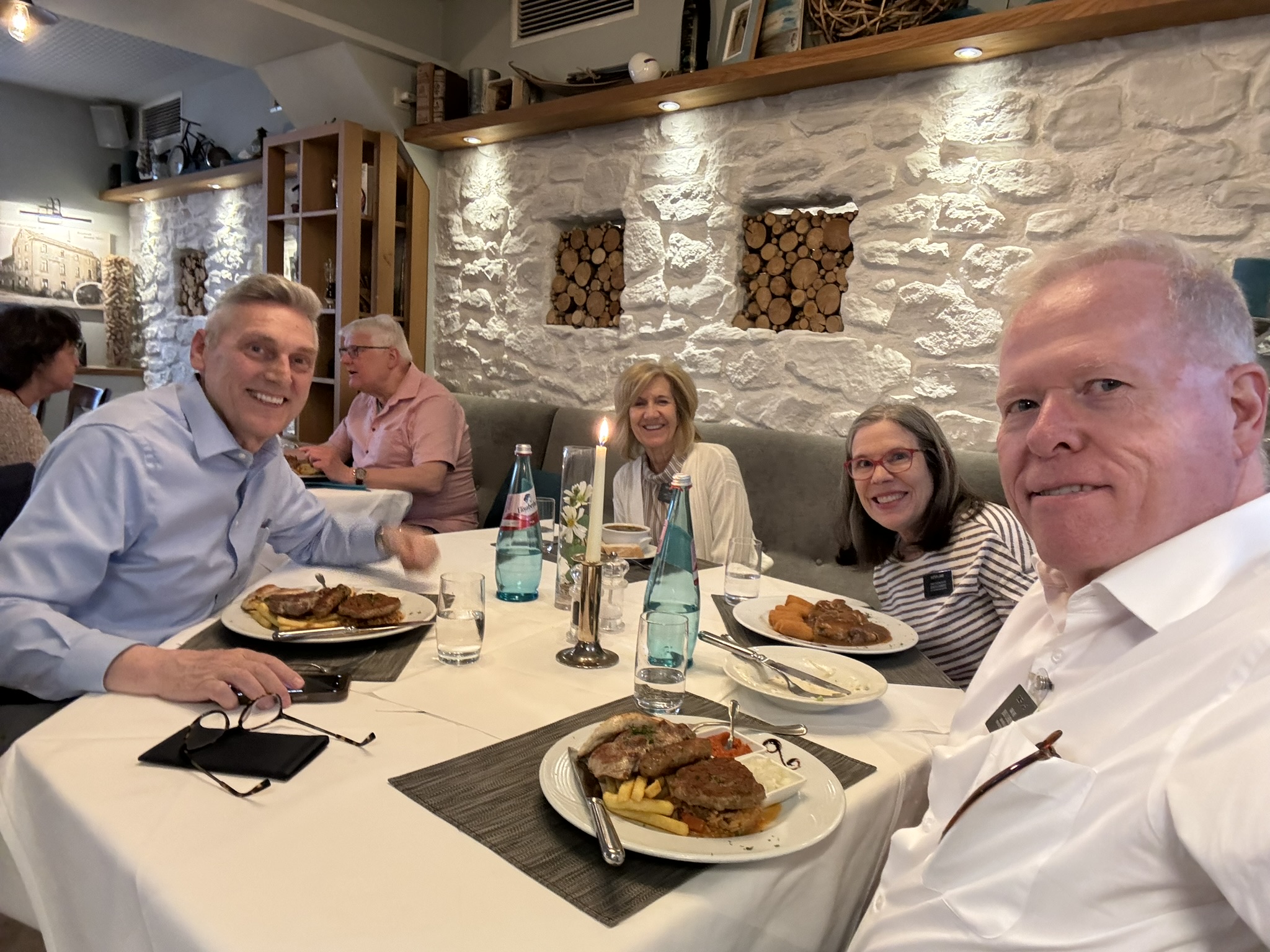
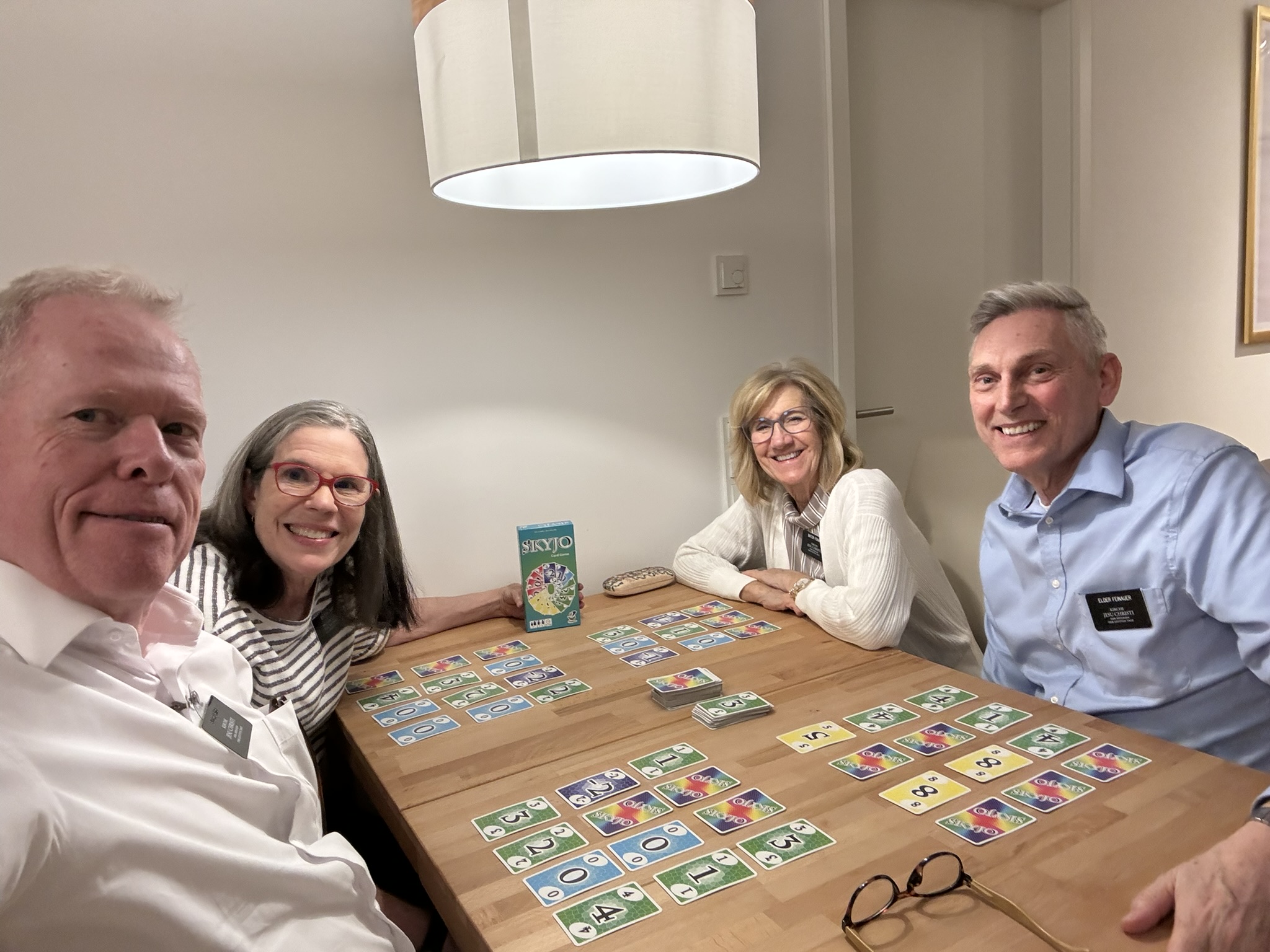
Friday Night Date with Elder and Sister Feinauer
Saturday in Budingen
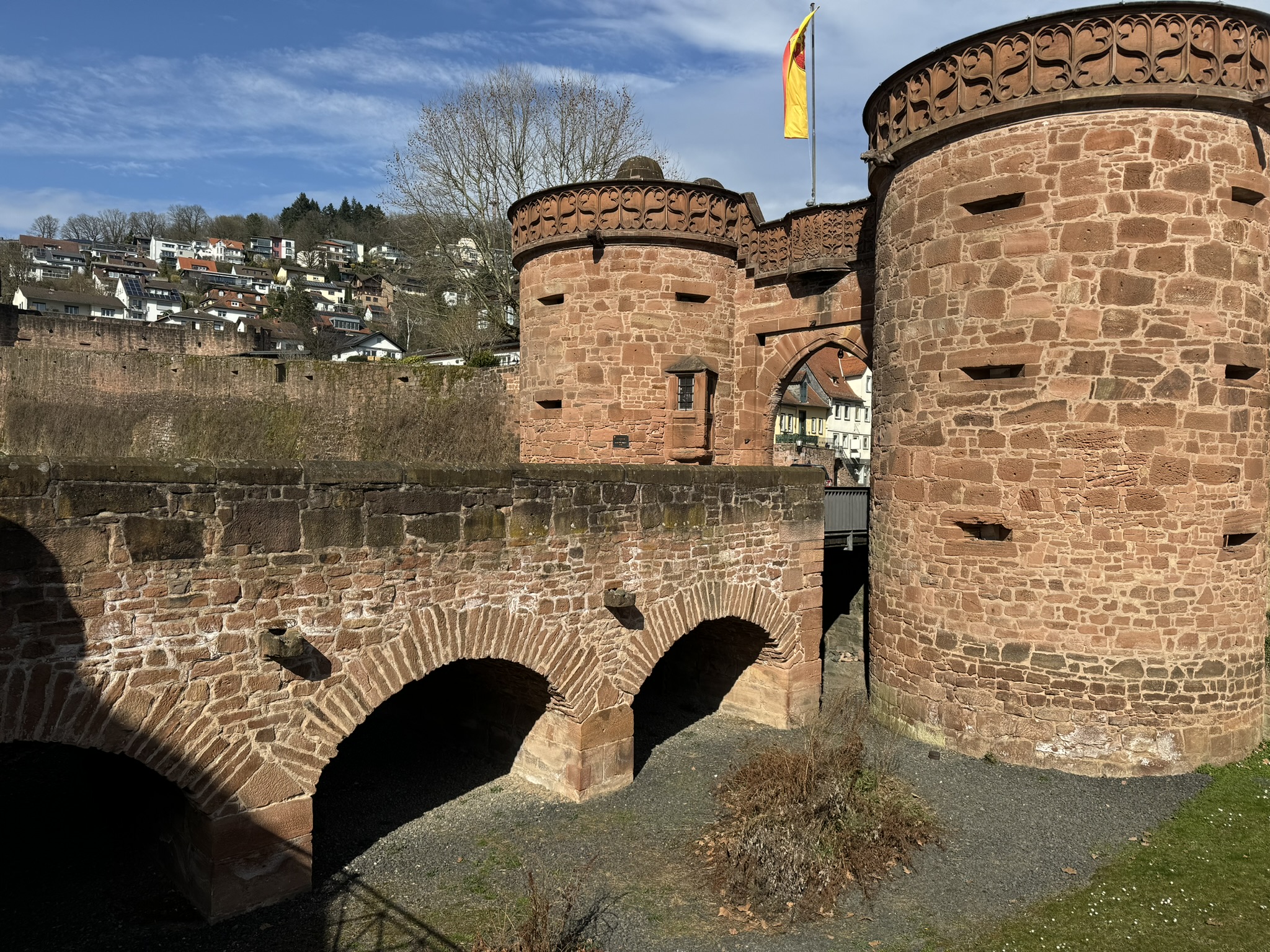
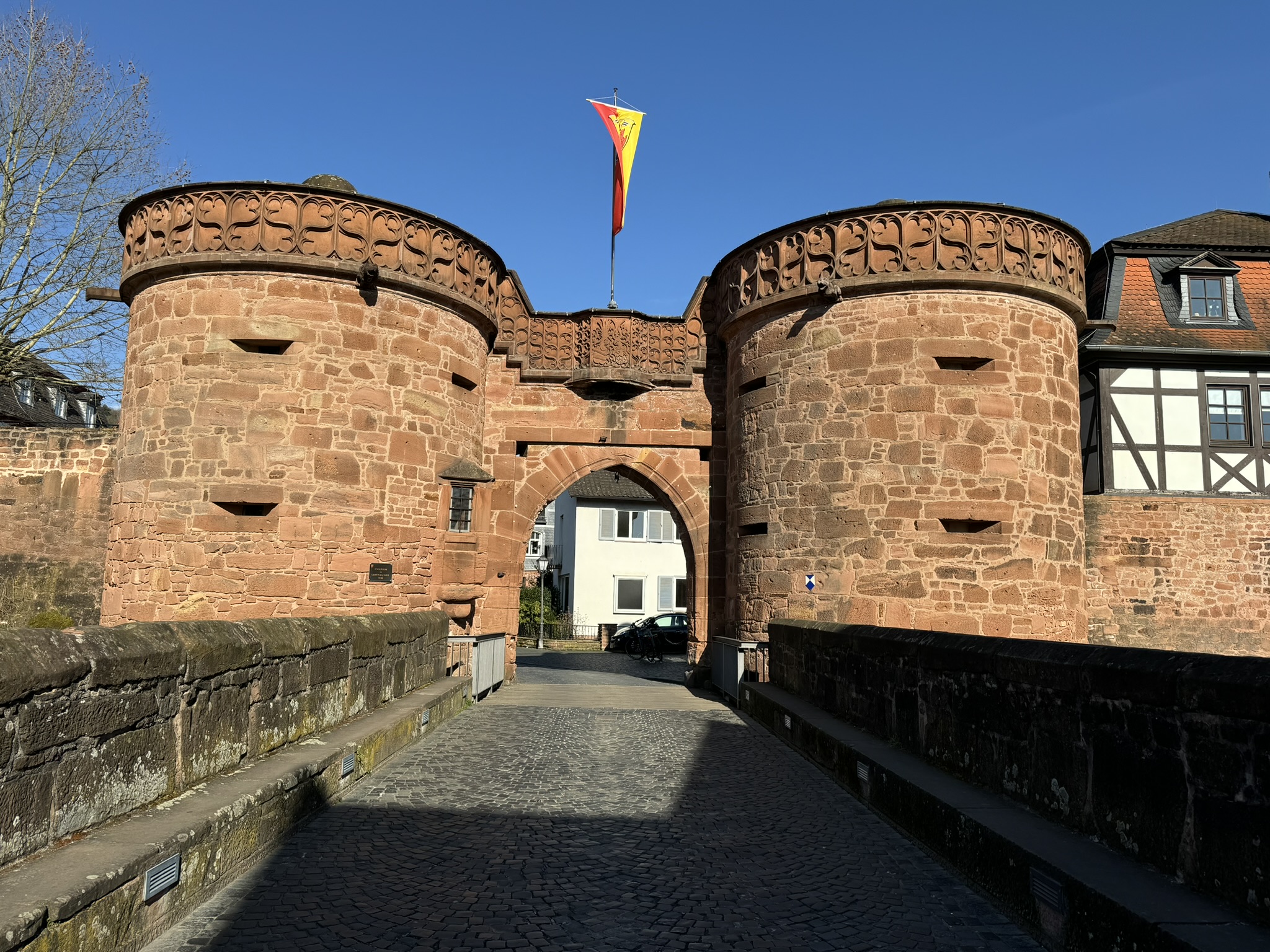
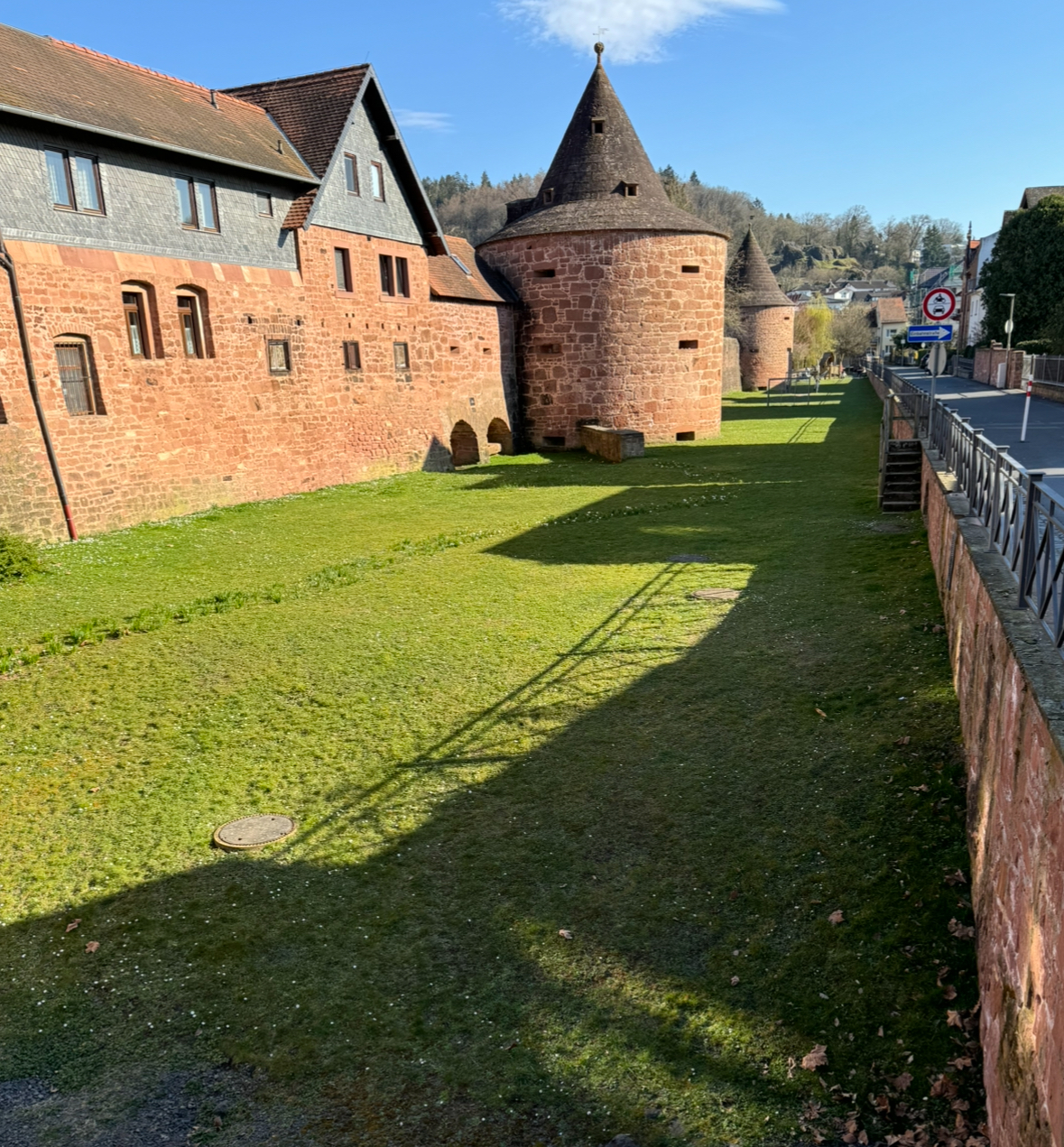
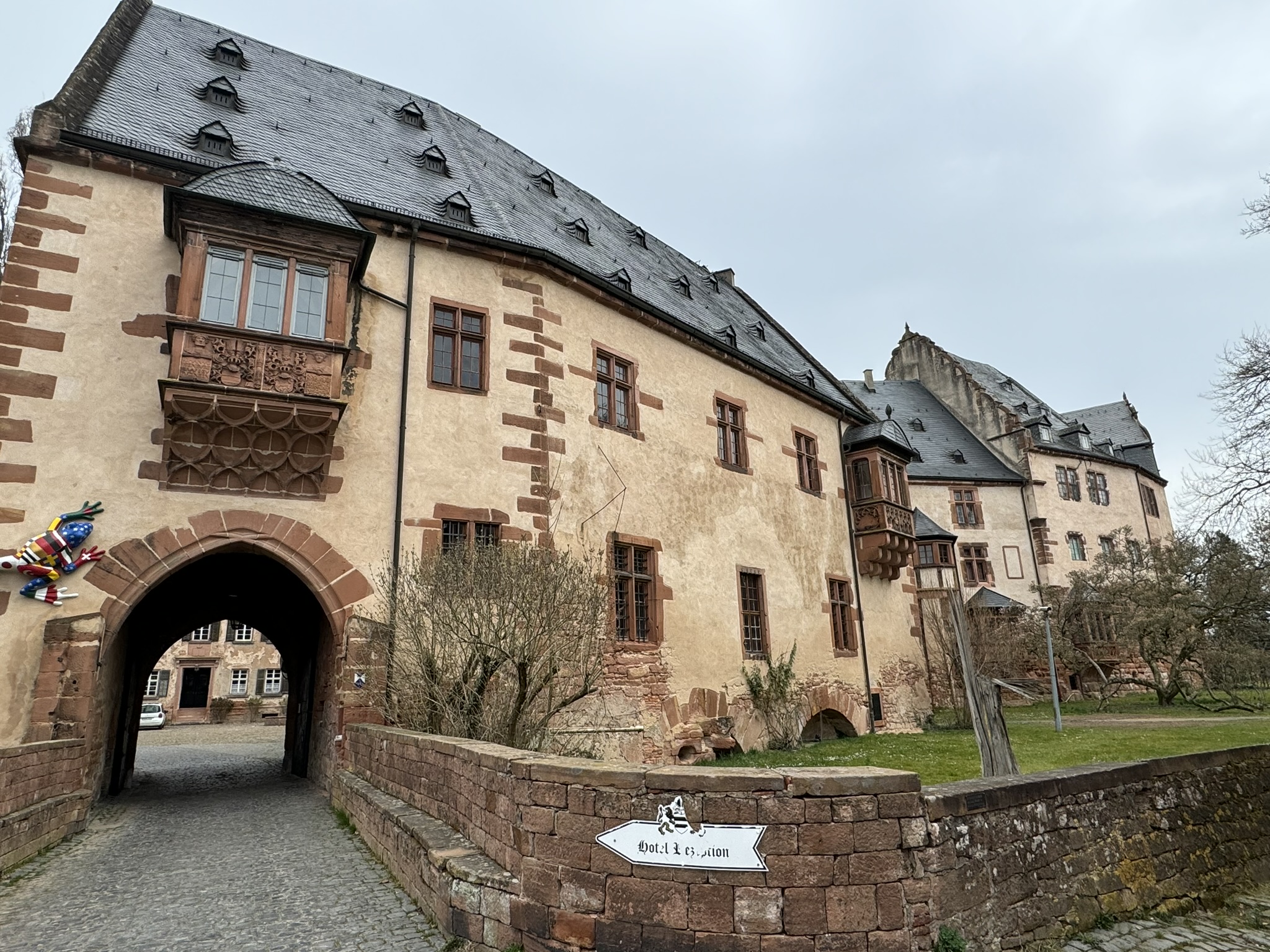
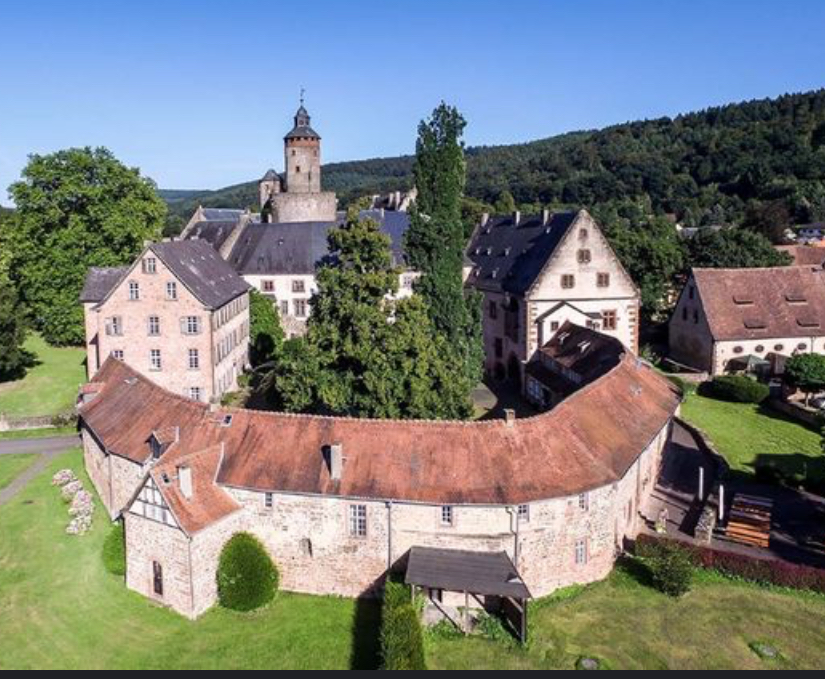
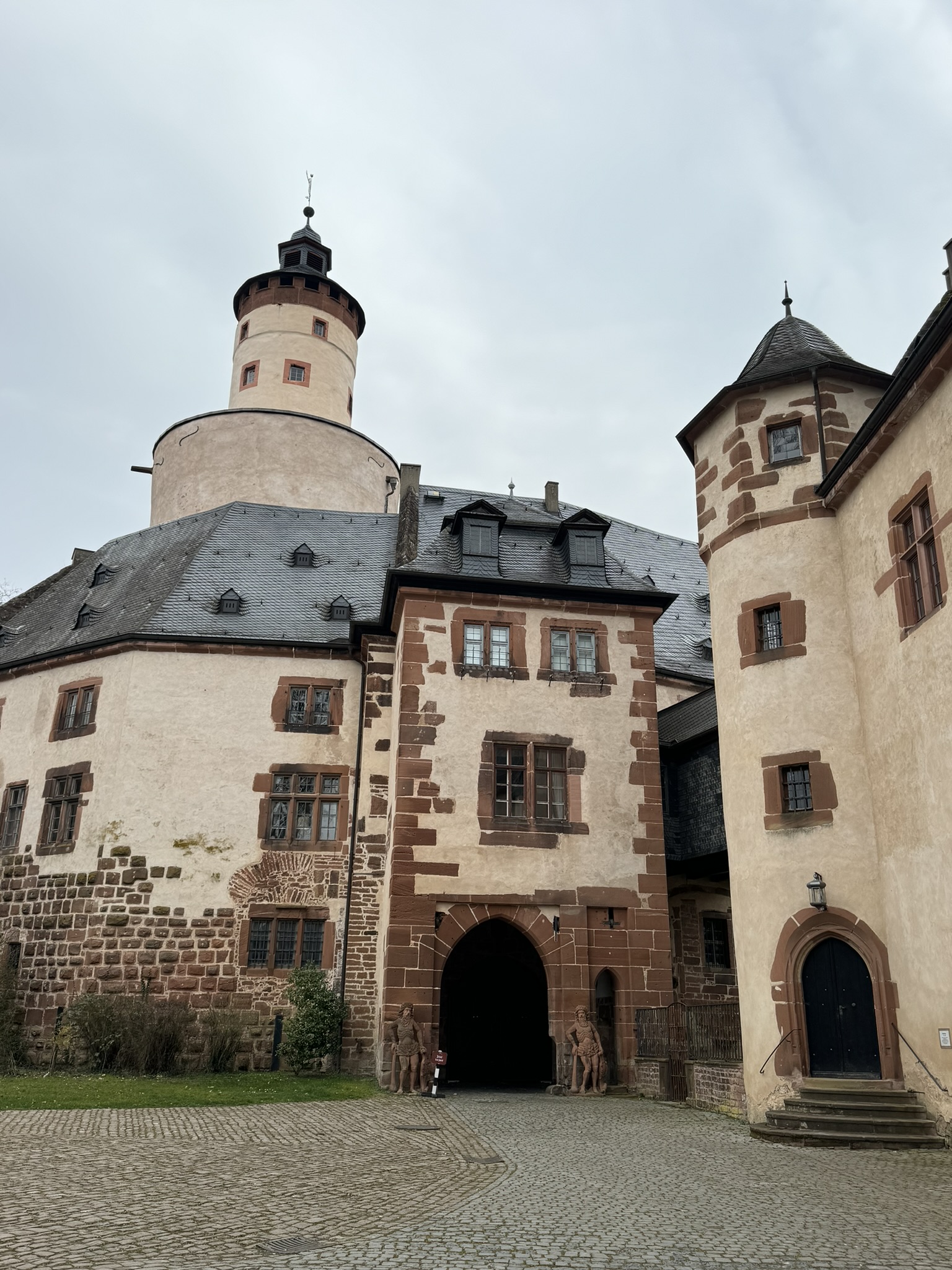
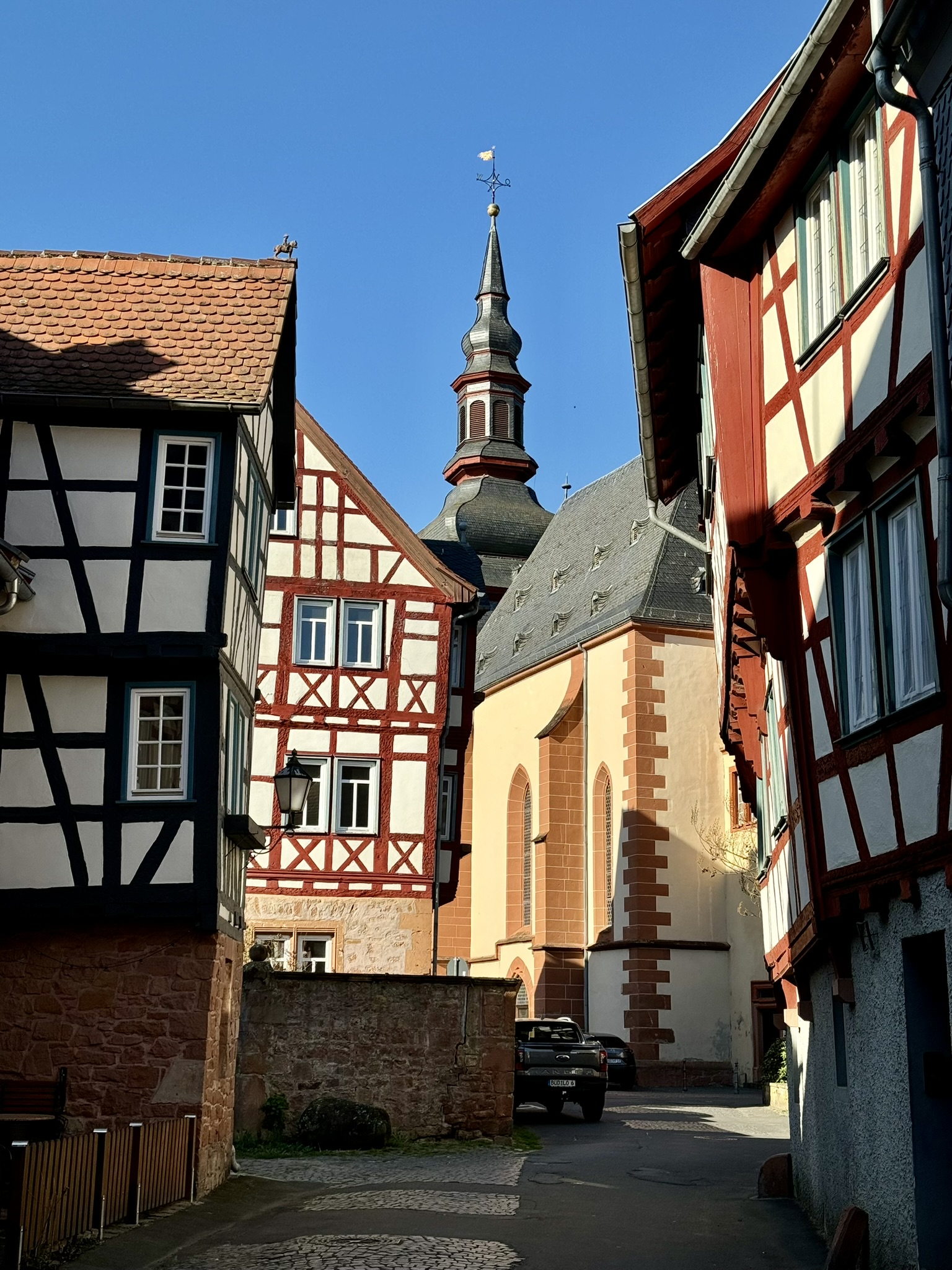
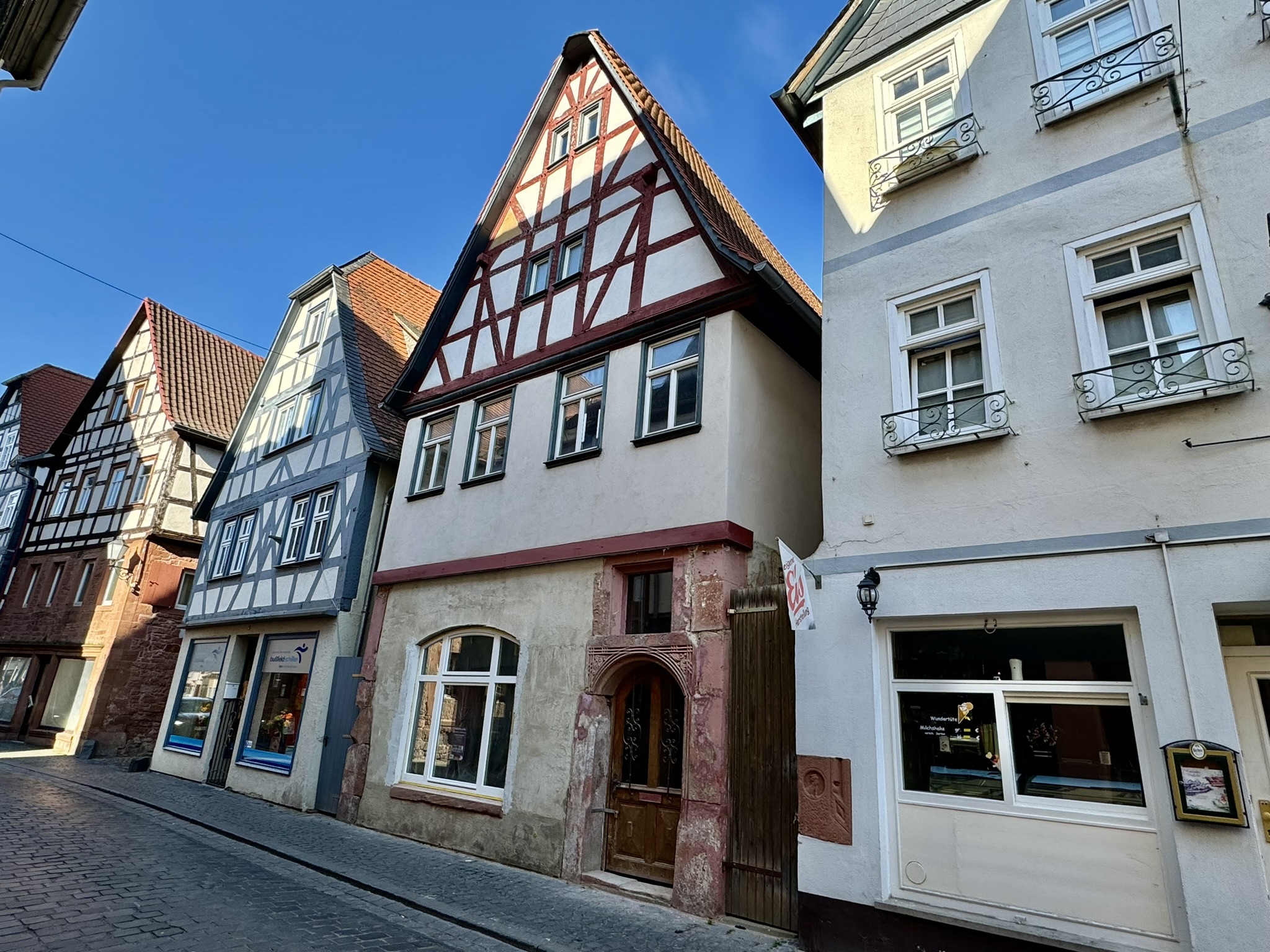
This walled medieval city was the perfect place to spend an afternoon.
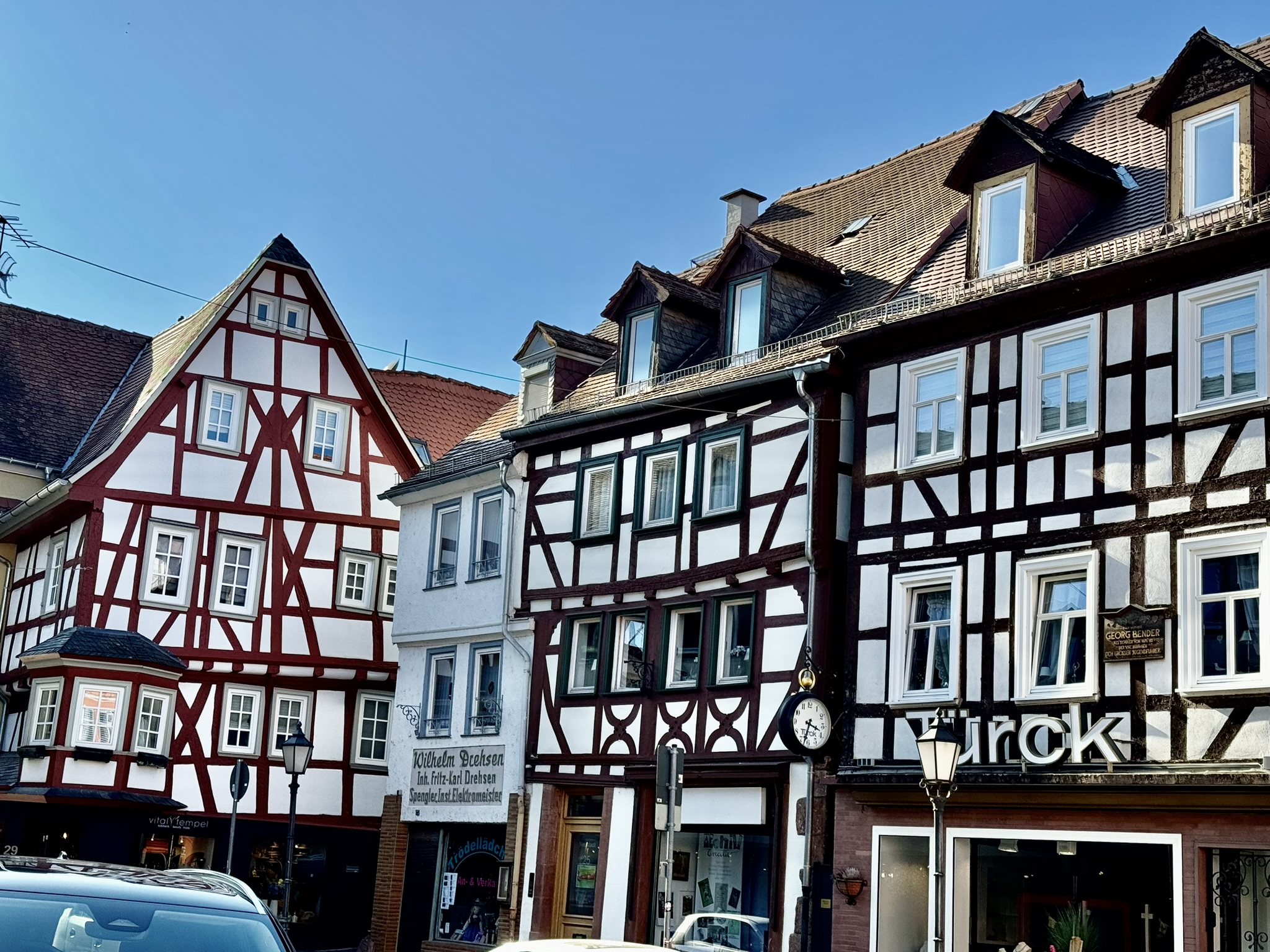
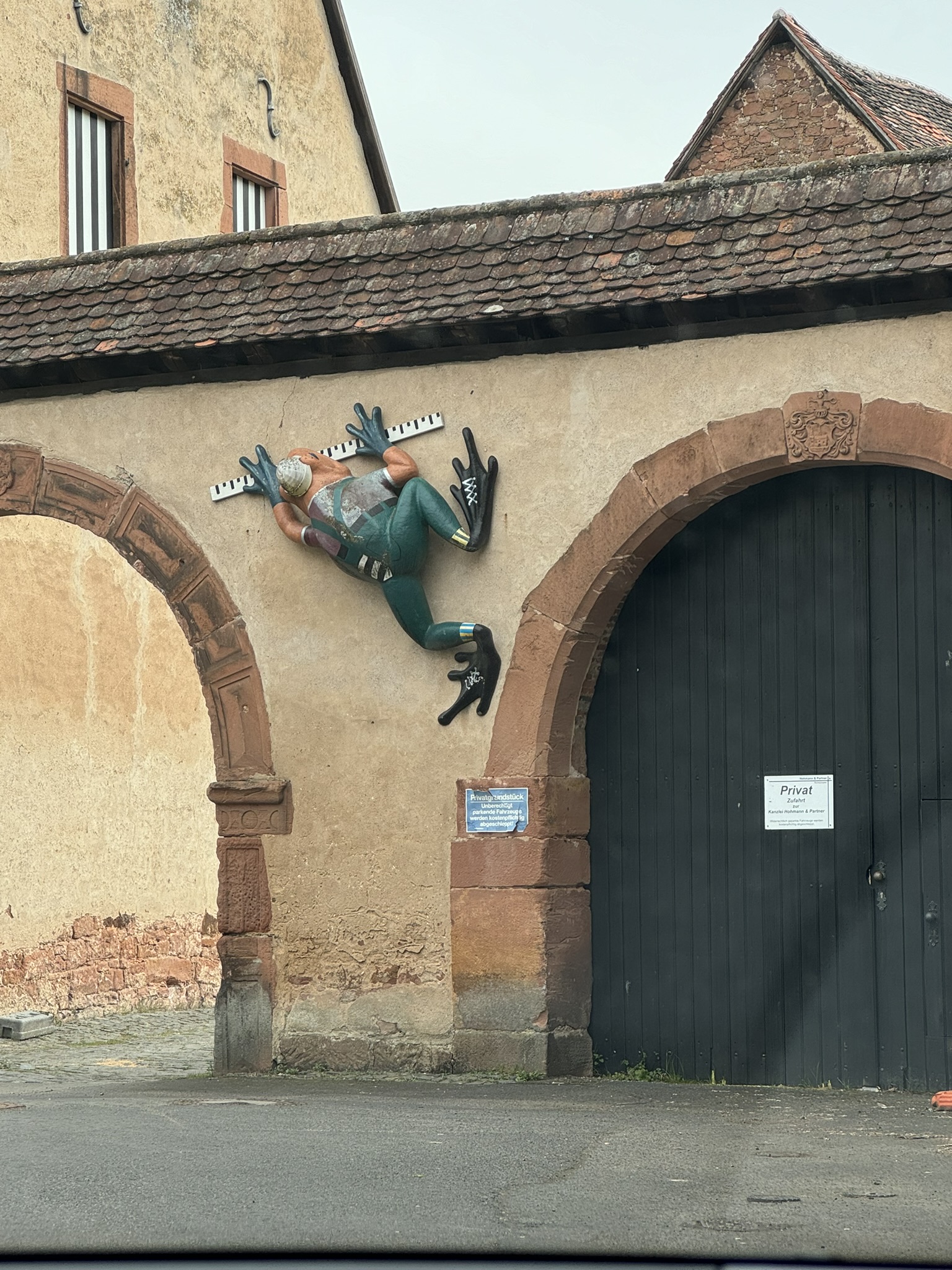
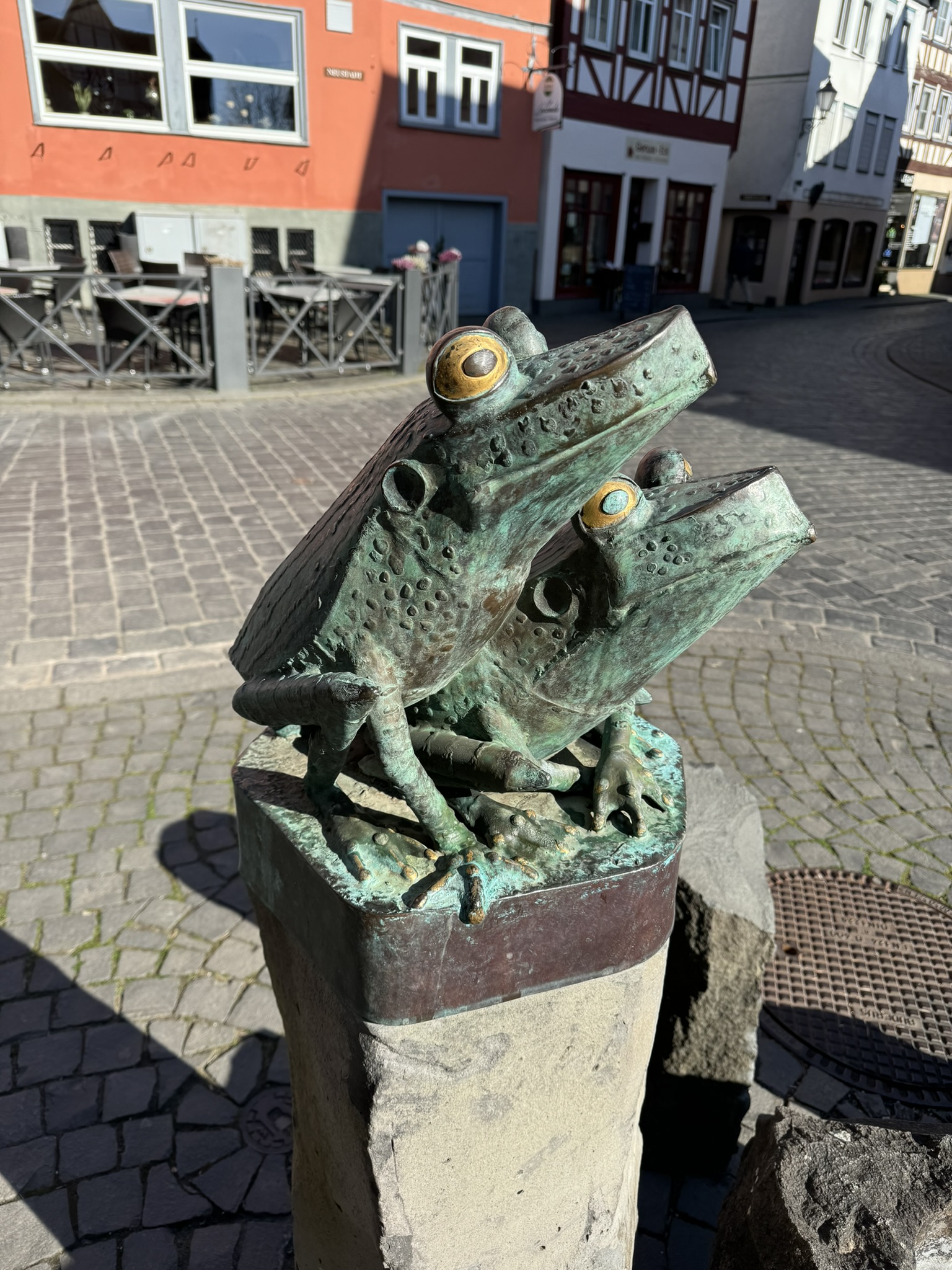
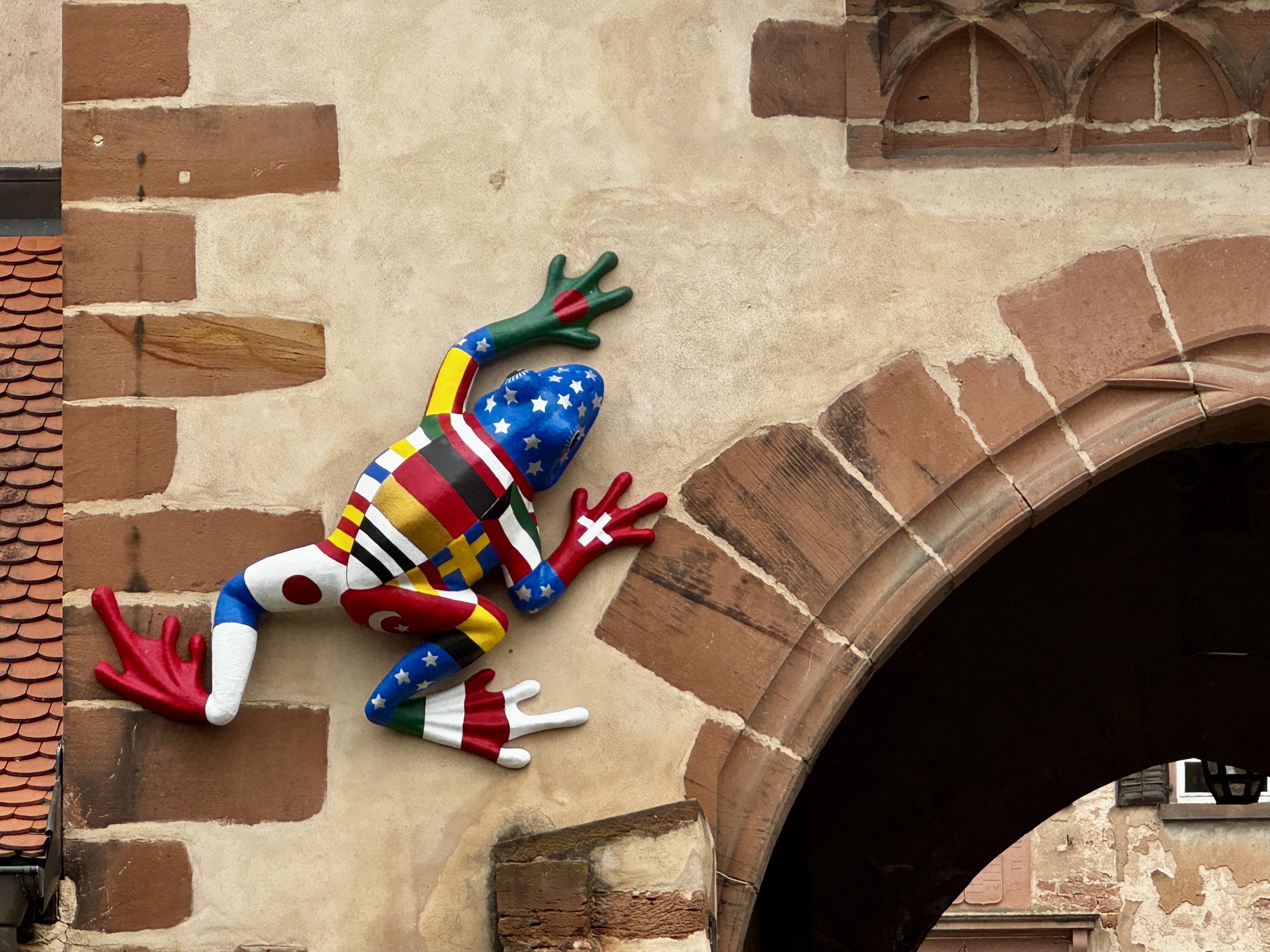
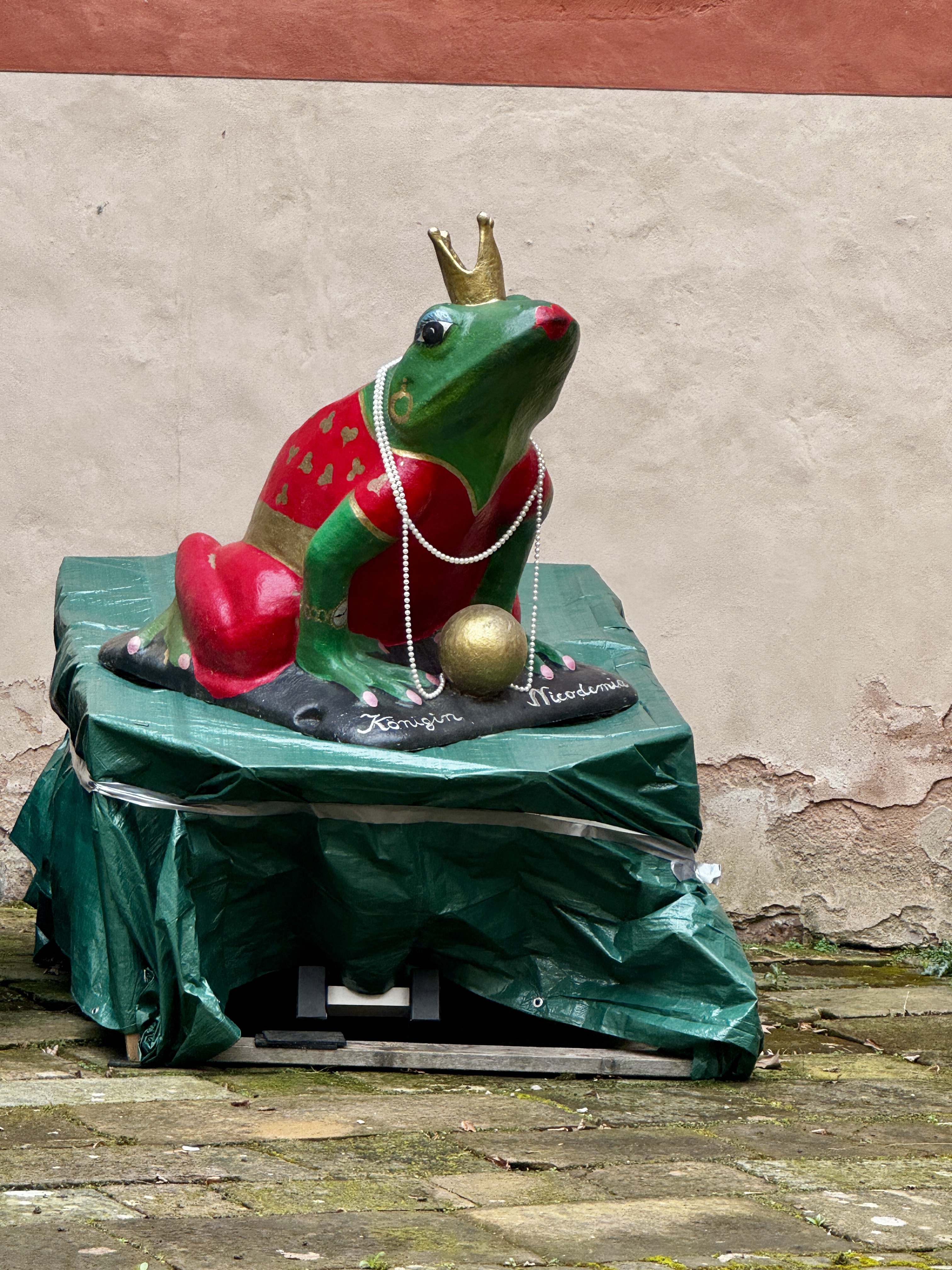
A popular folktale recounts the story that days into the marriage of the Count of Budingen and Elizabeth of Weid in the 1500’s, the new countess could not sleep because of the deafening sounds of croaking frogs. The moat that surrounded the castle was full of them. The count rallied the citizens to rid the village of frogs to save his marriage. This mascot is found all over town.
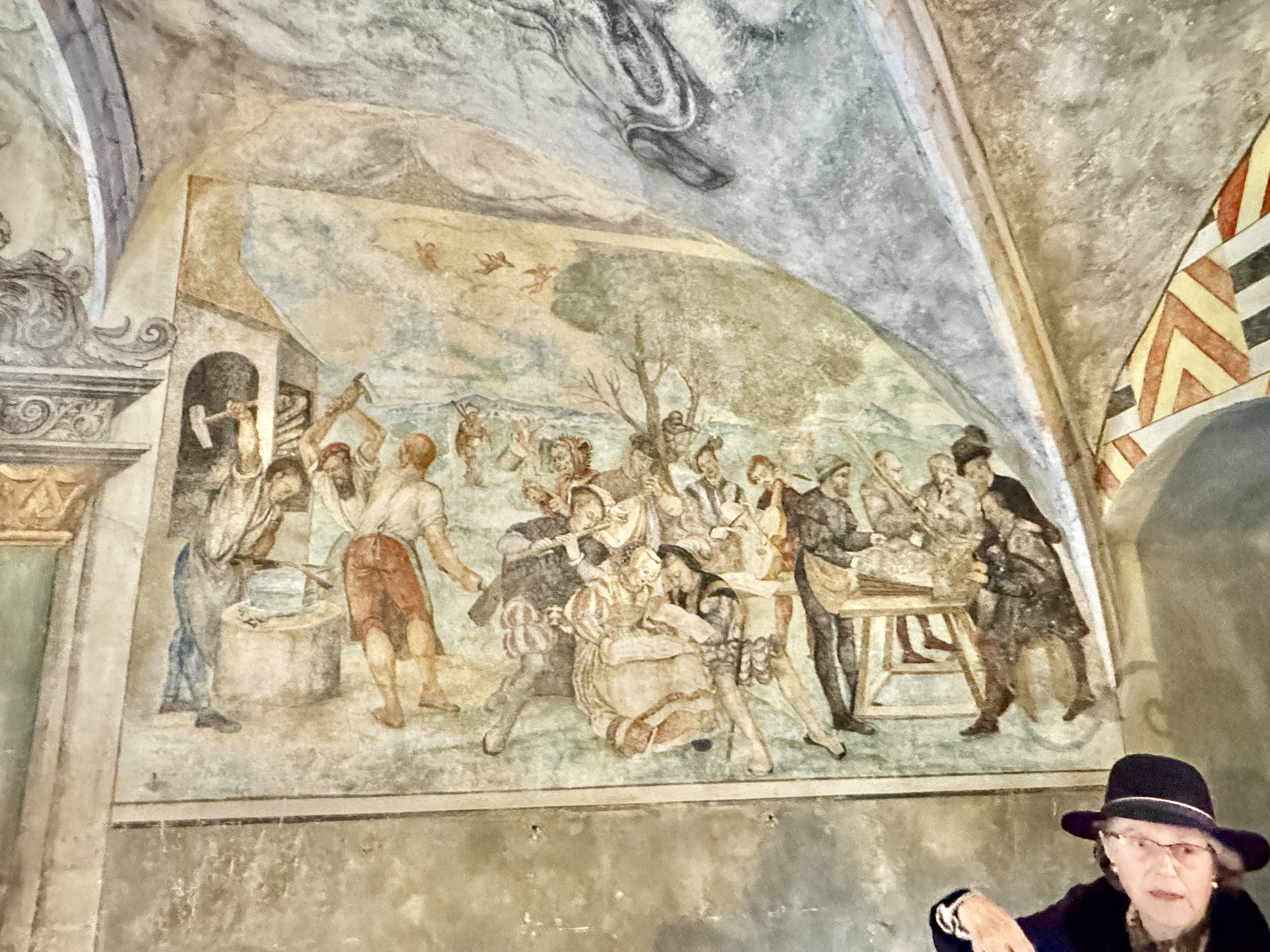
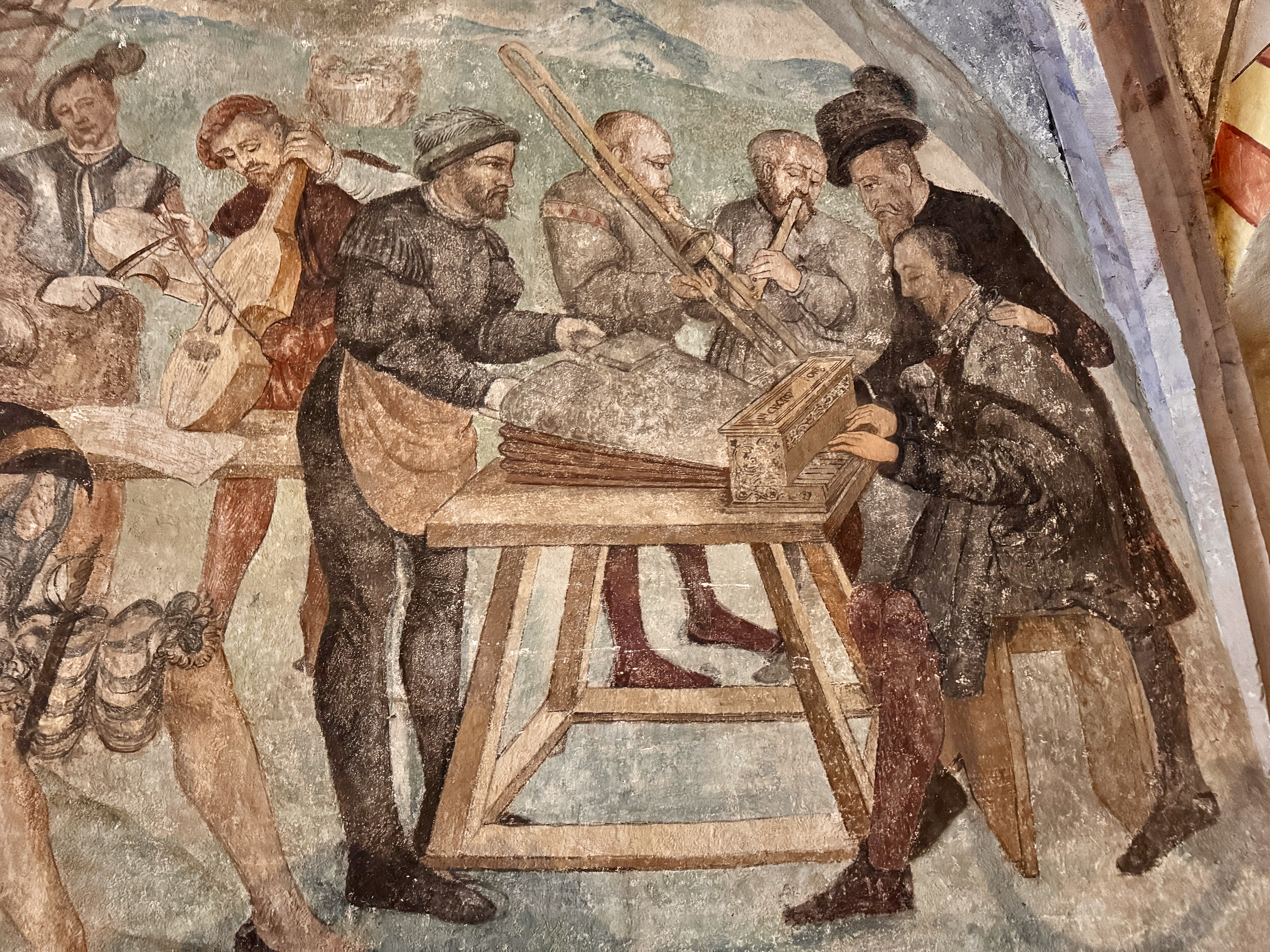
When Elizabeth died in her 30’s, giving birth to their 16th child, the Count had this painted on one of the interior walls. Representing the many facets of music, Elizabeth is sitting at the center singing with courtiers. The Count is in black clothing on the far right. Ed was interested in this scene that depicts a hand organ.
The fortress was built in 1170 with a unique 13 cornered walled configuration. The building design is unique in that it includes Romanesque, Gothic and Renaissance architecture. It is a history book in and of itself. The family still lives in the Renaissance section of the castle.
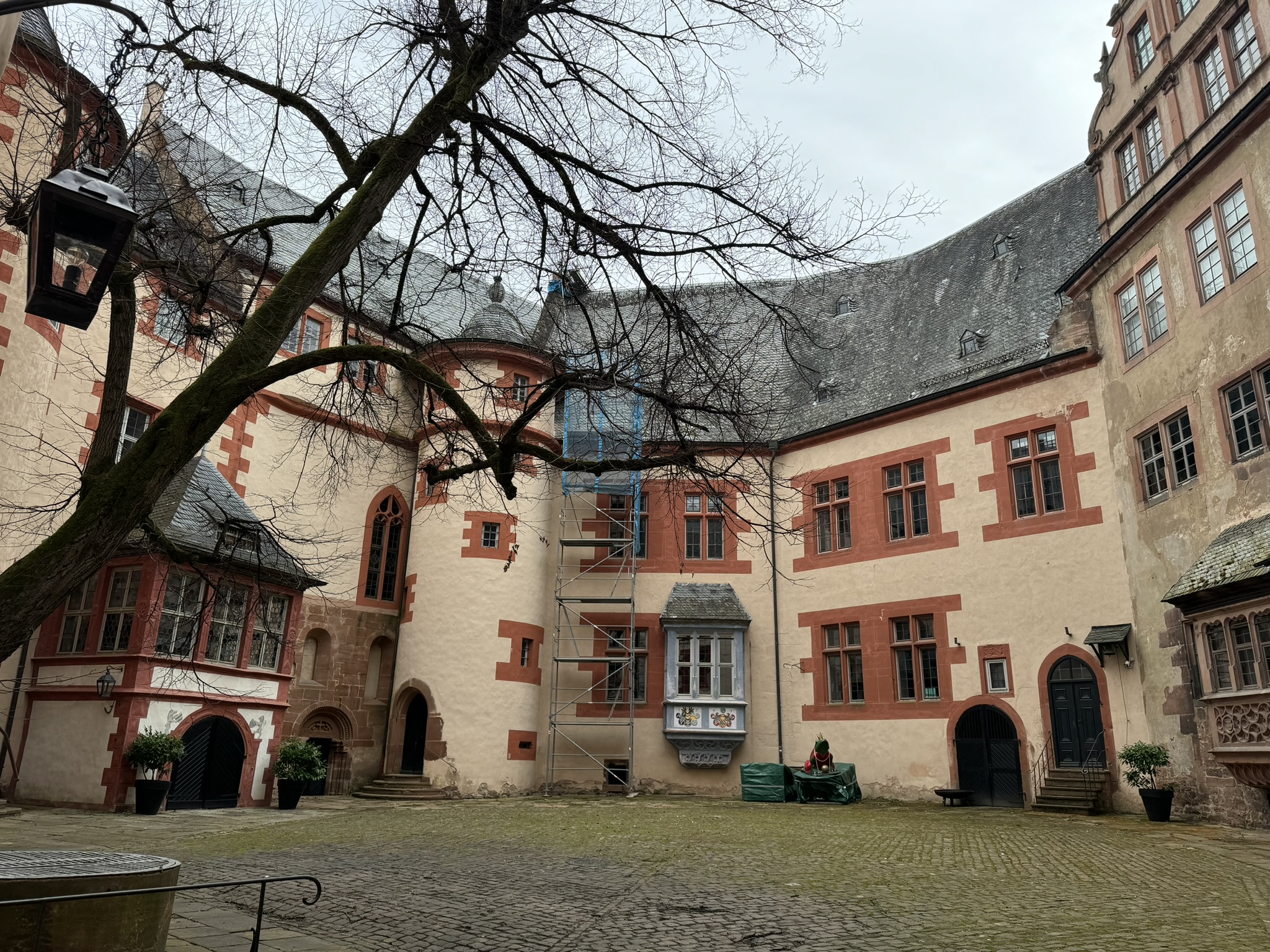
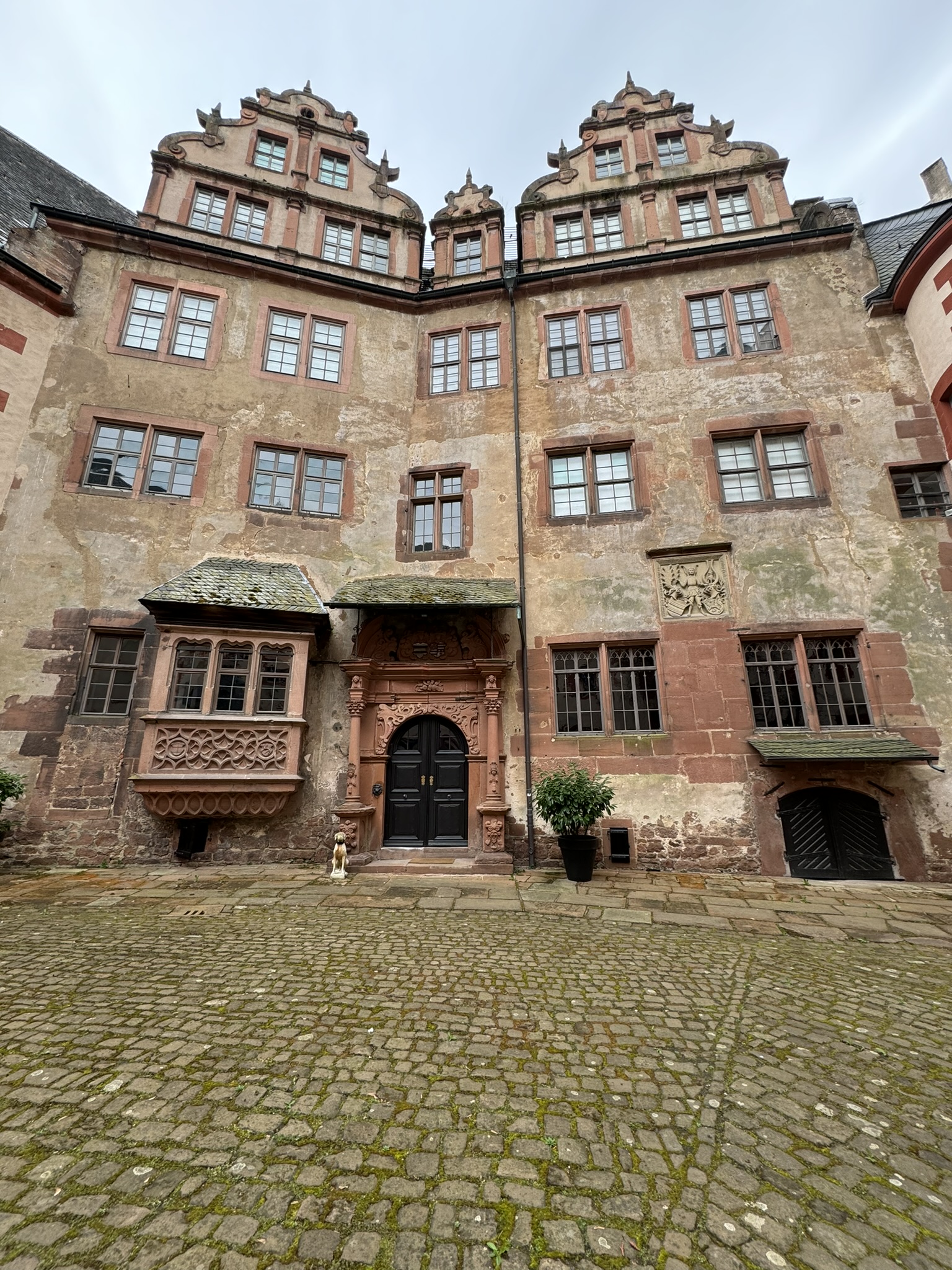
The interior is also a time capsule, reflecting the different periods of time and the interests of its residents.
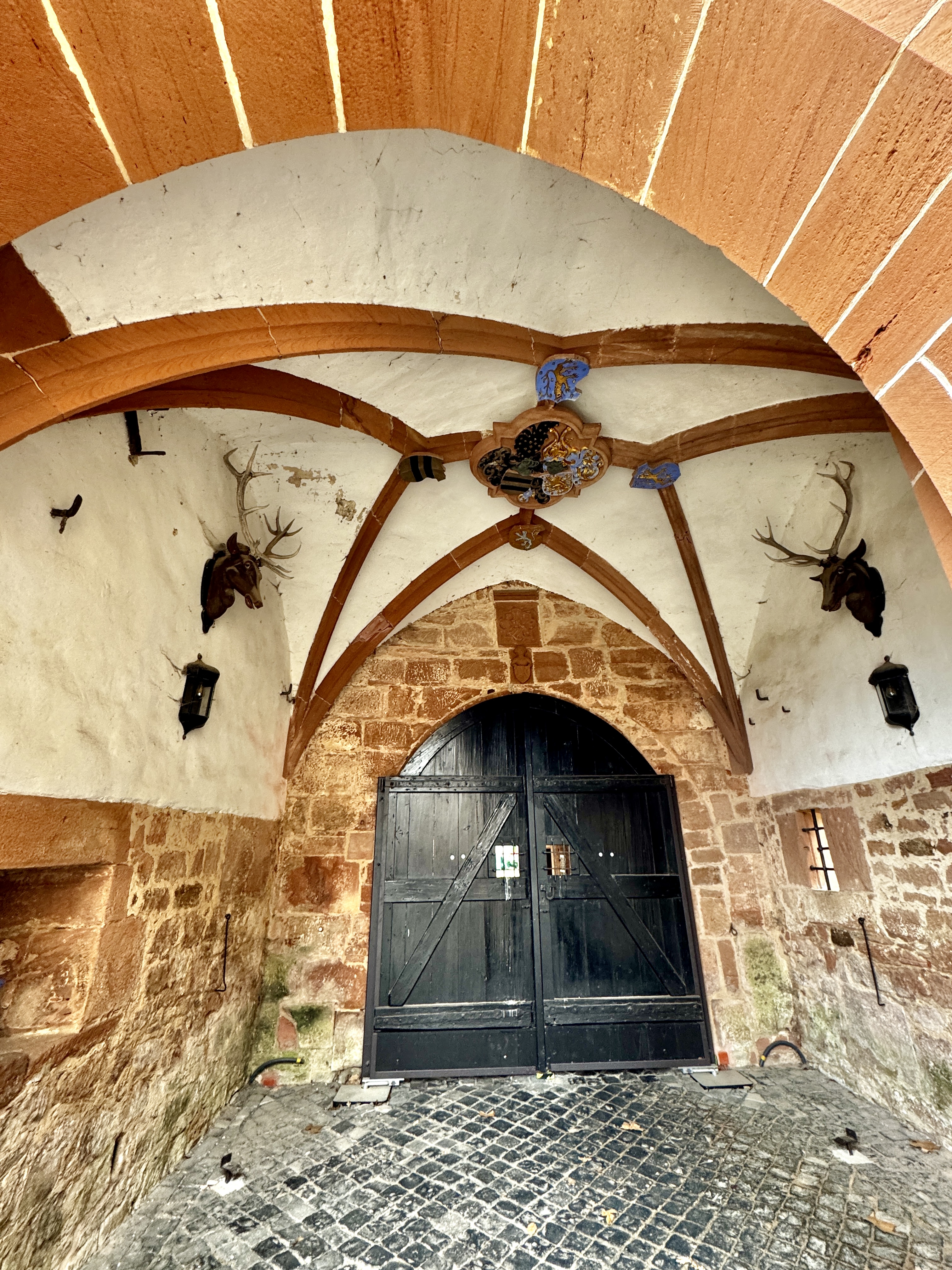
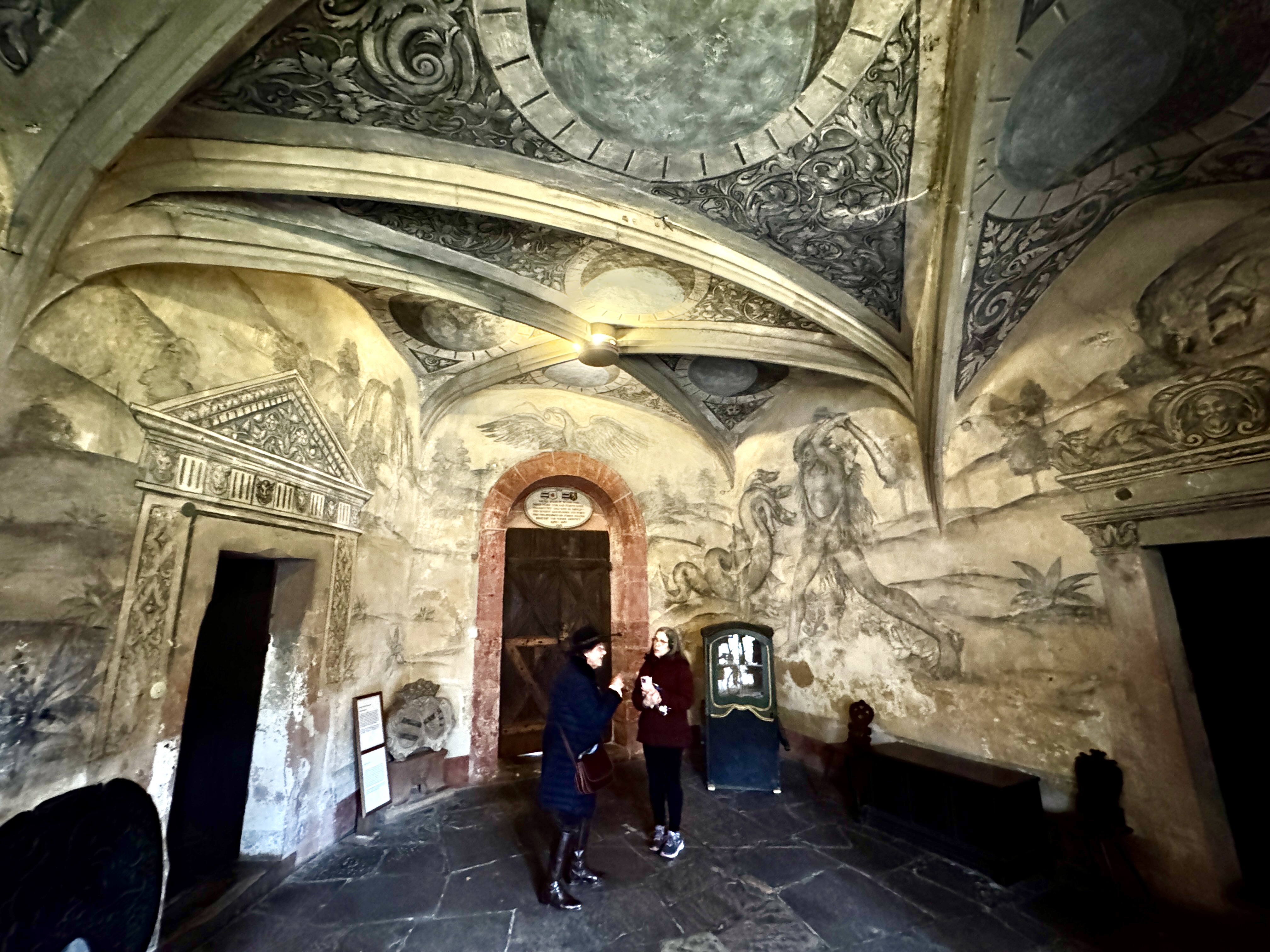
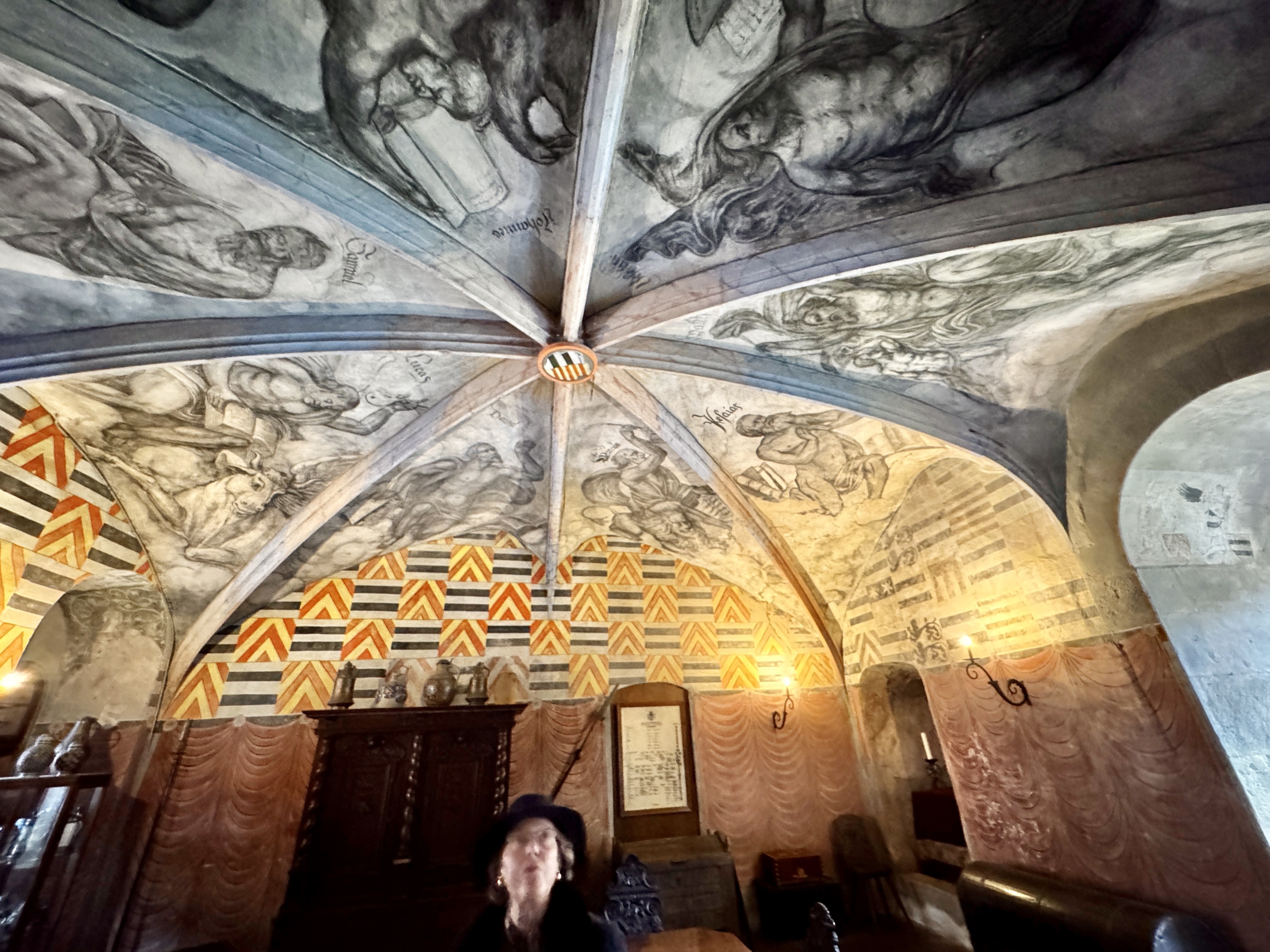
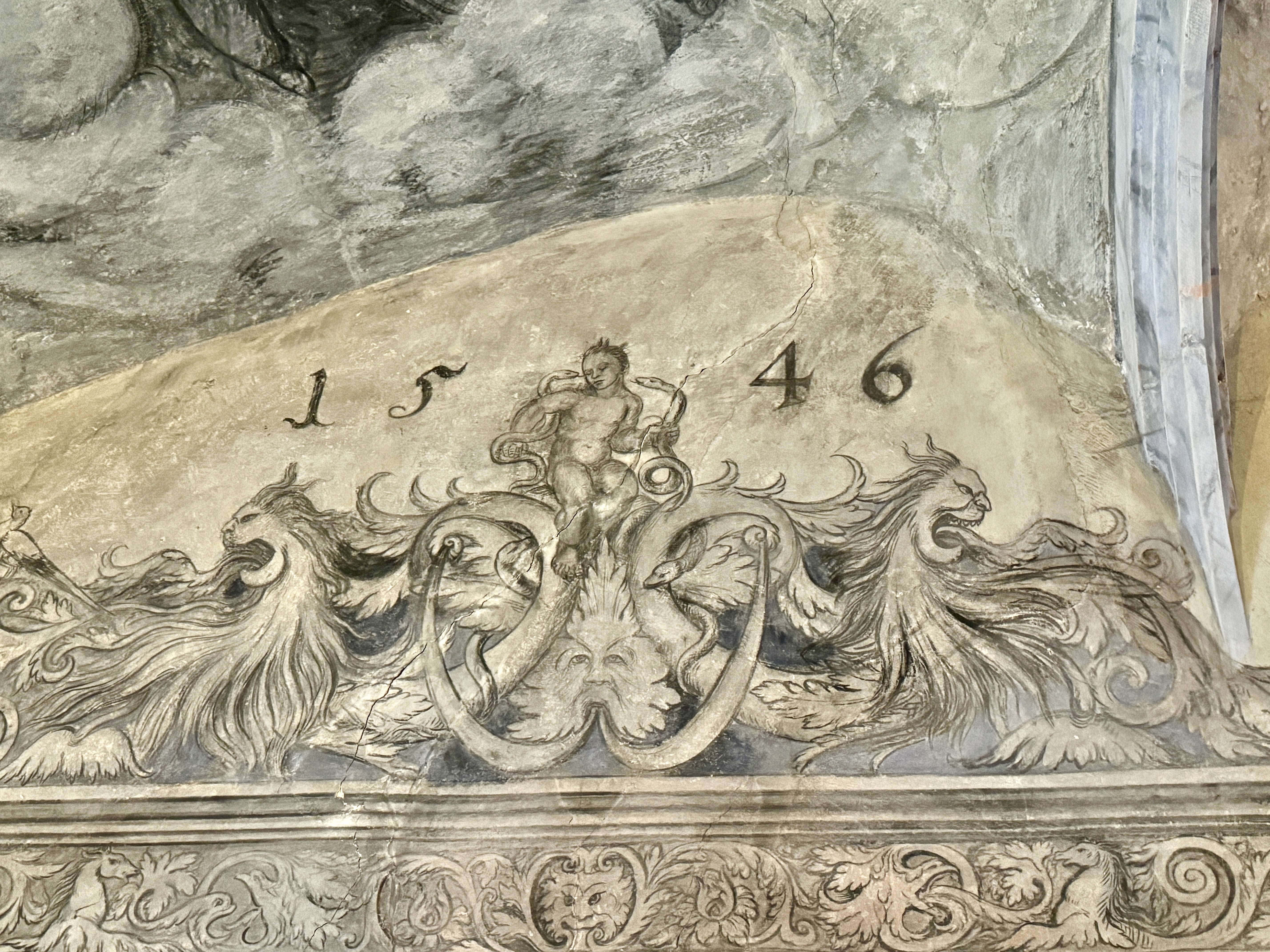
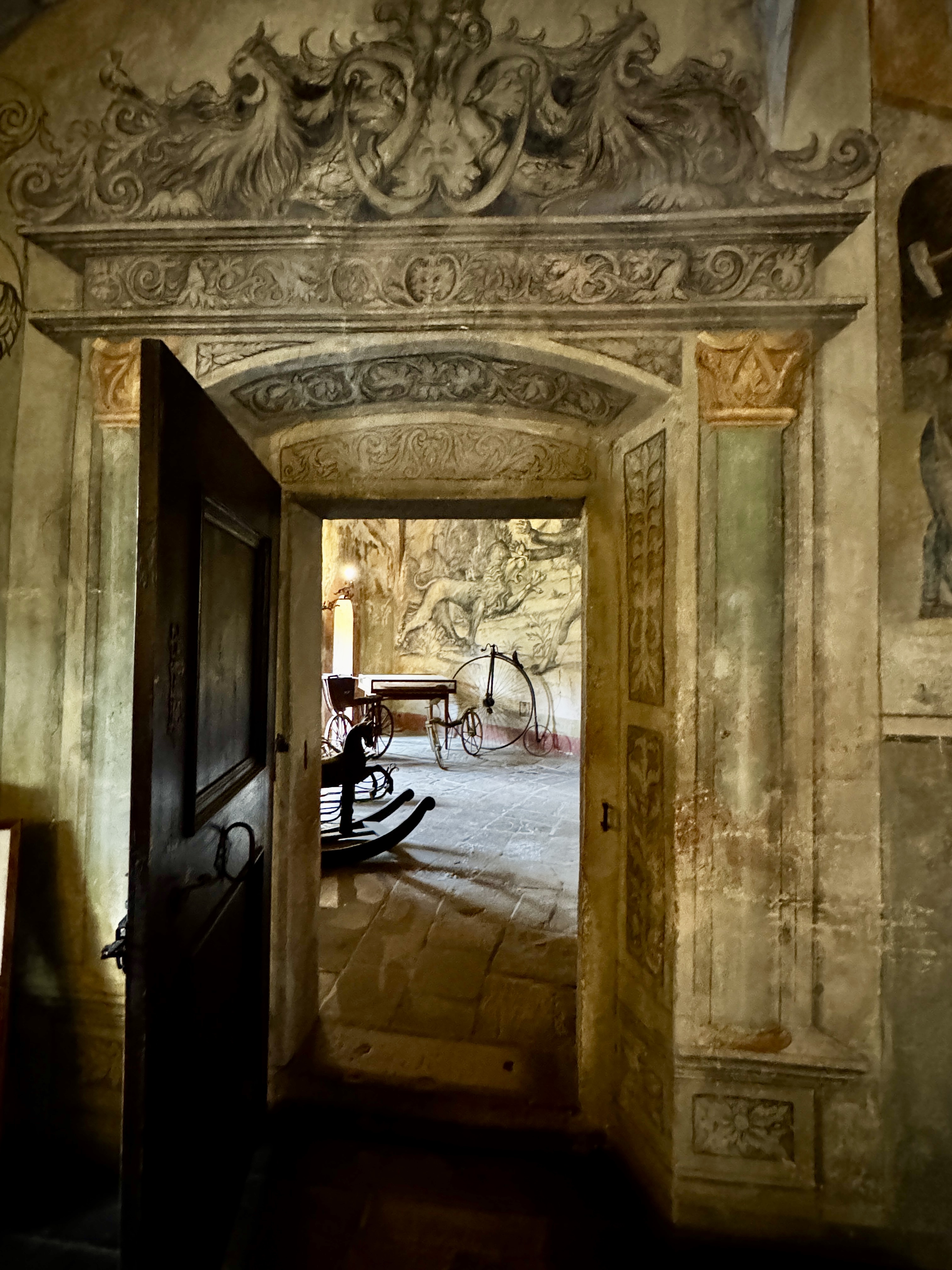
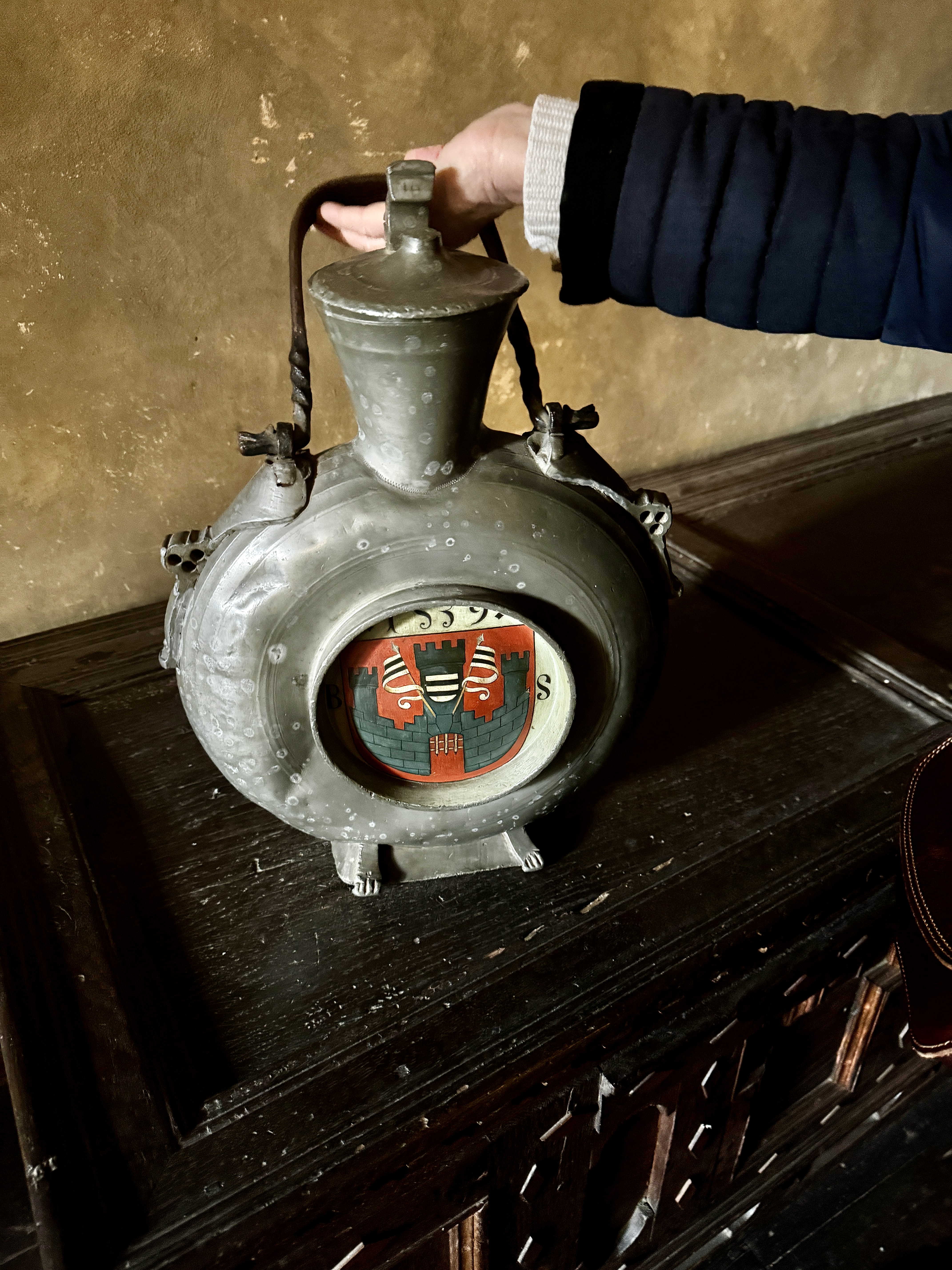
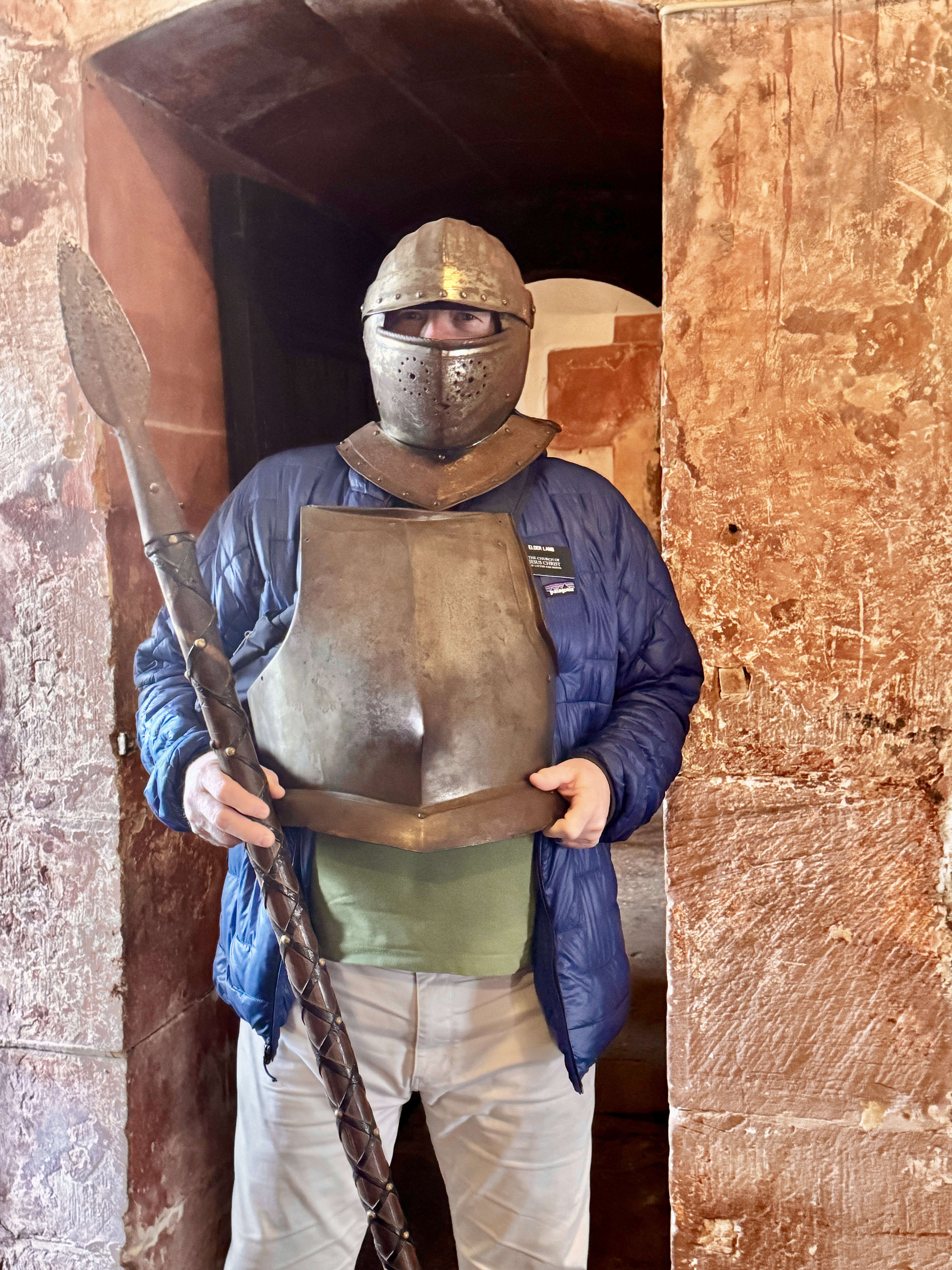
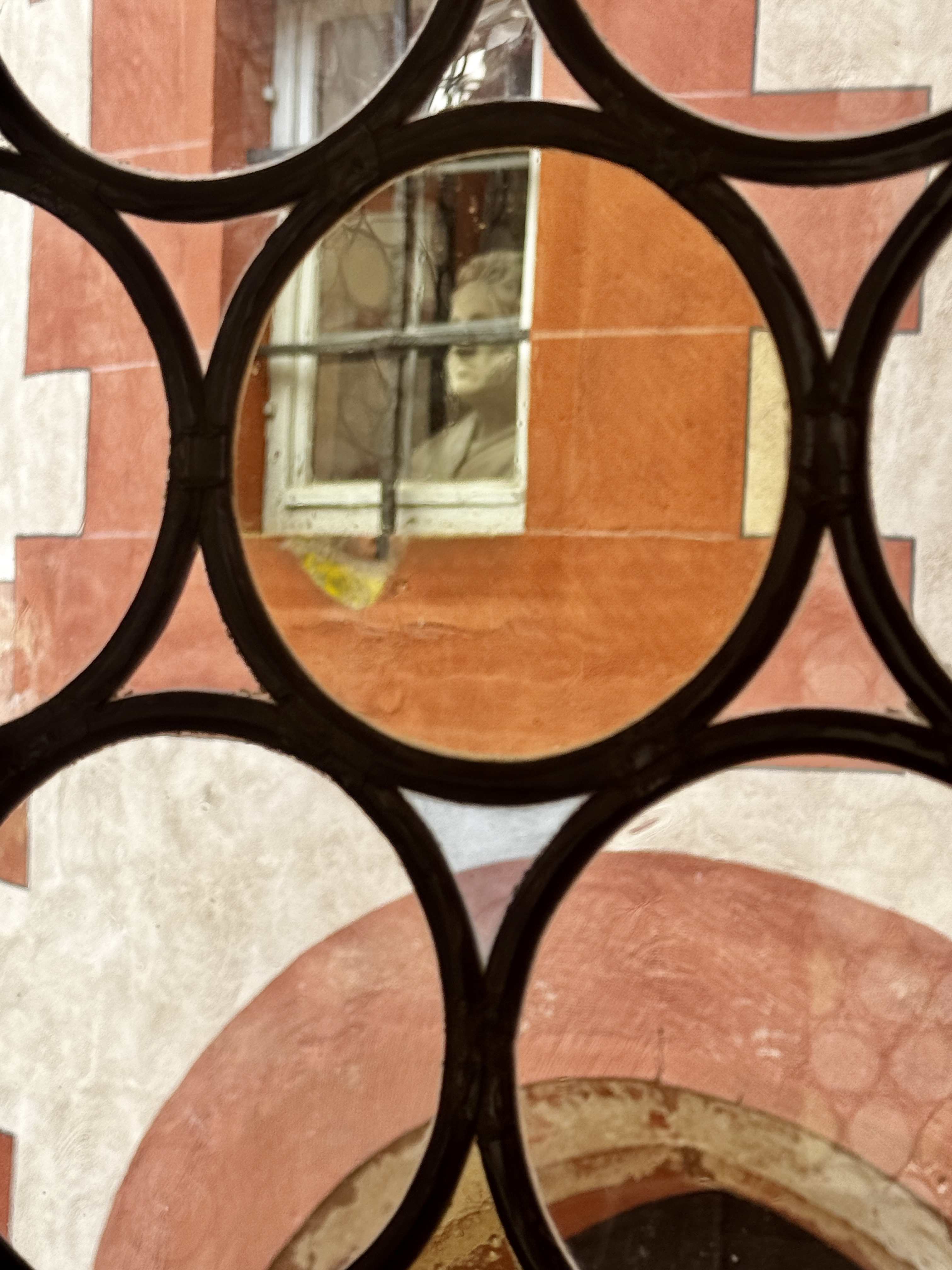
Beautiful wood carvings are found in the chapel.
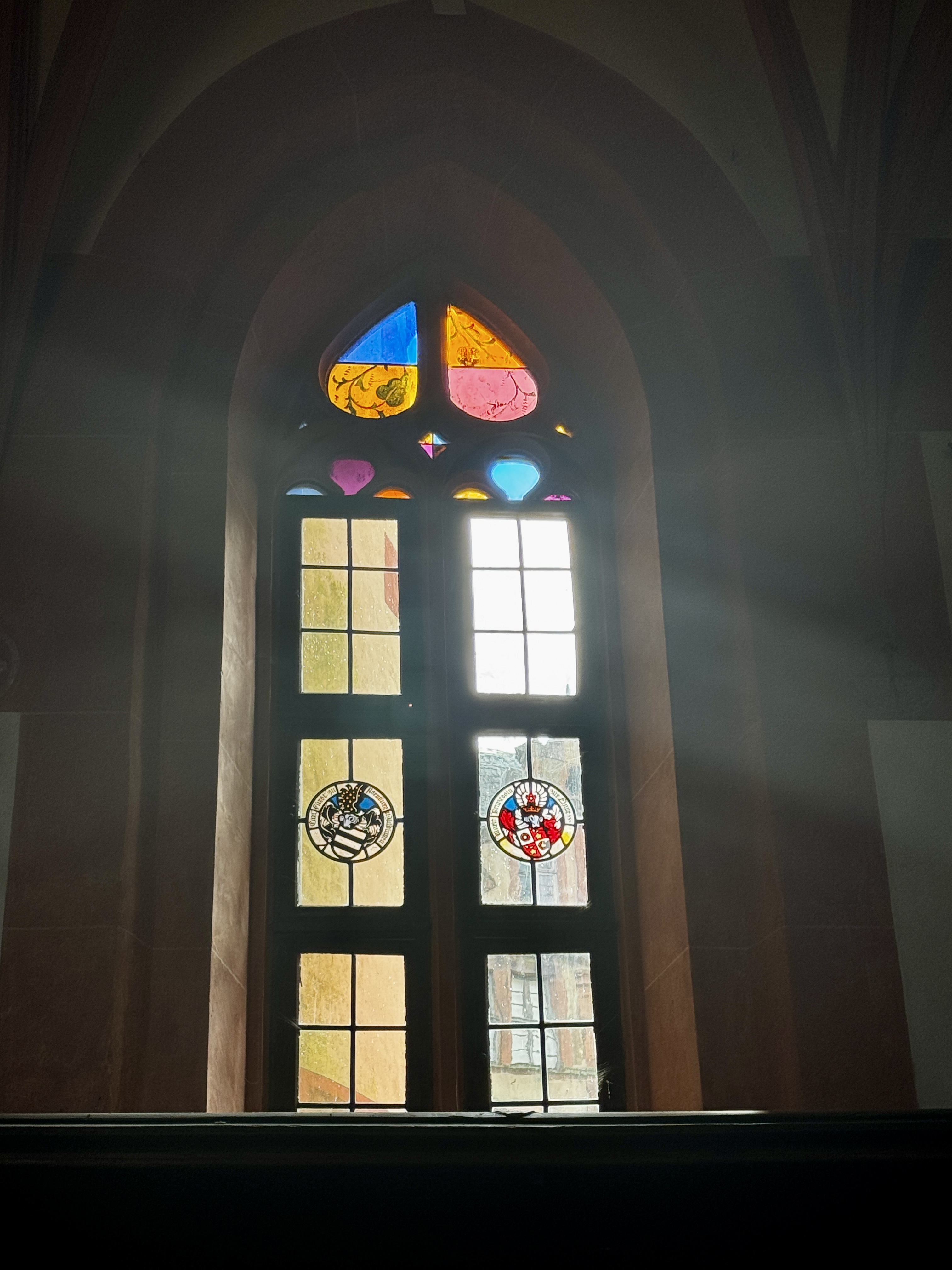
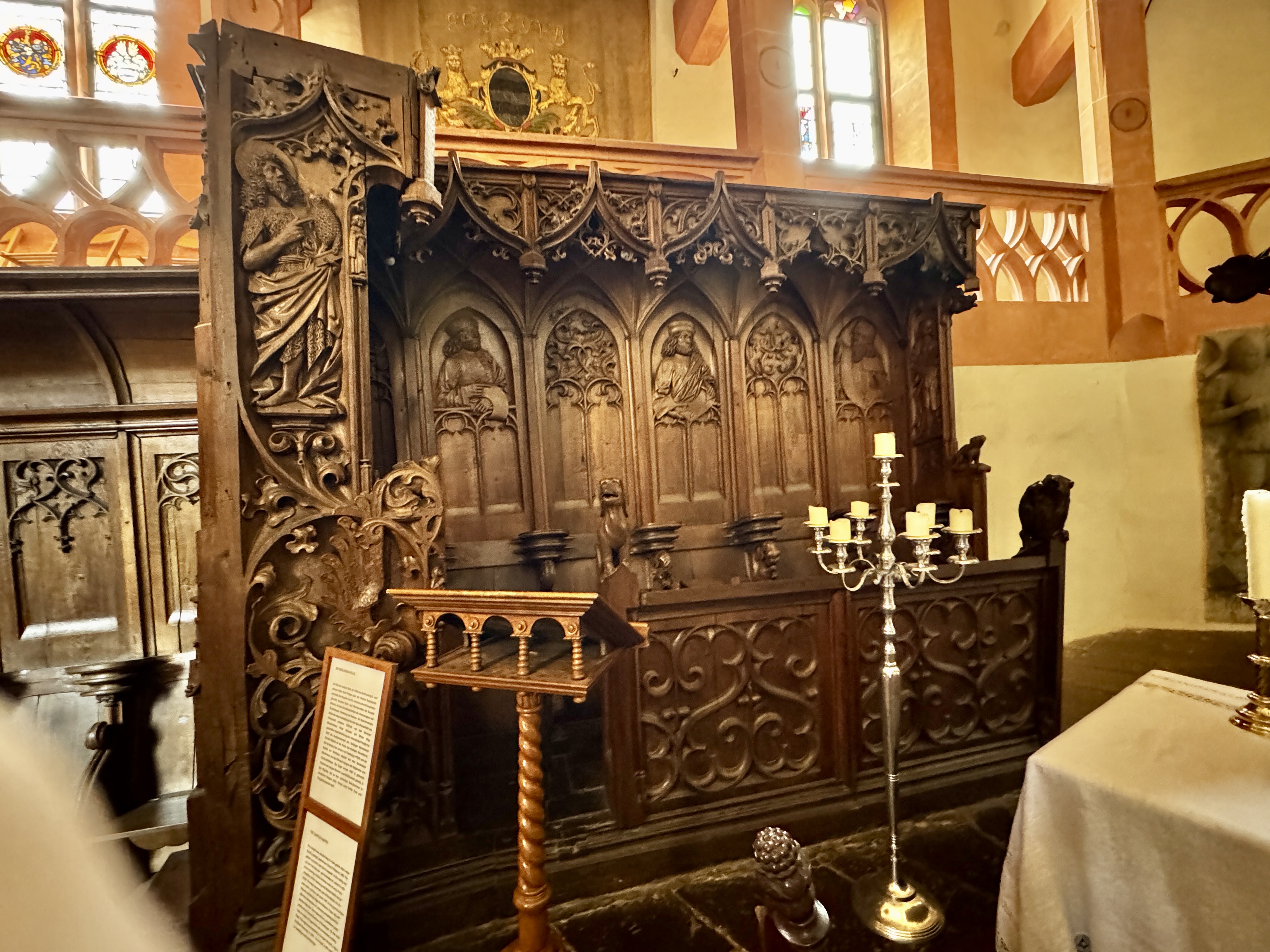
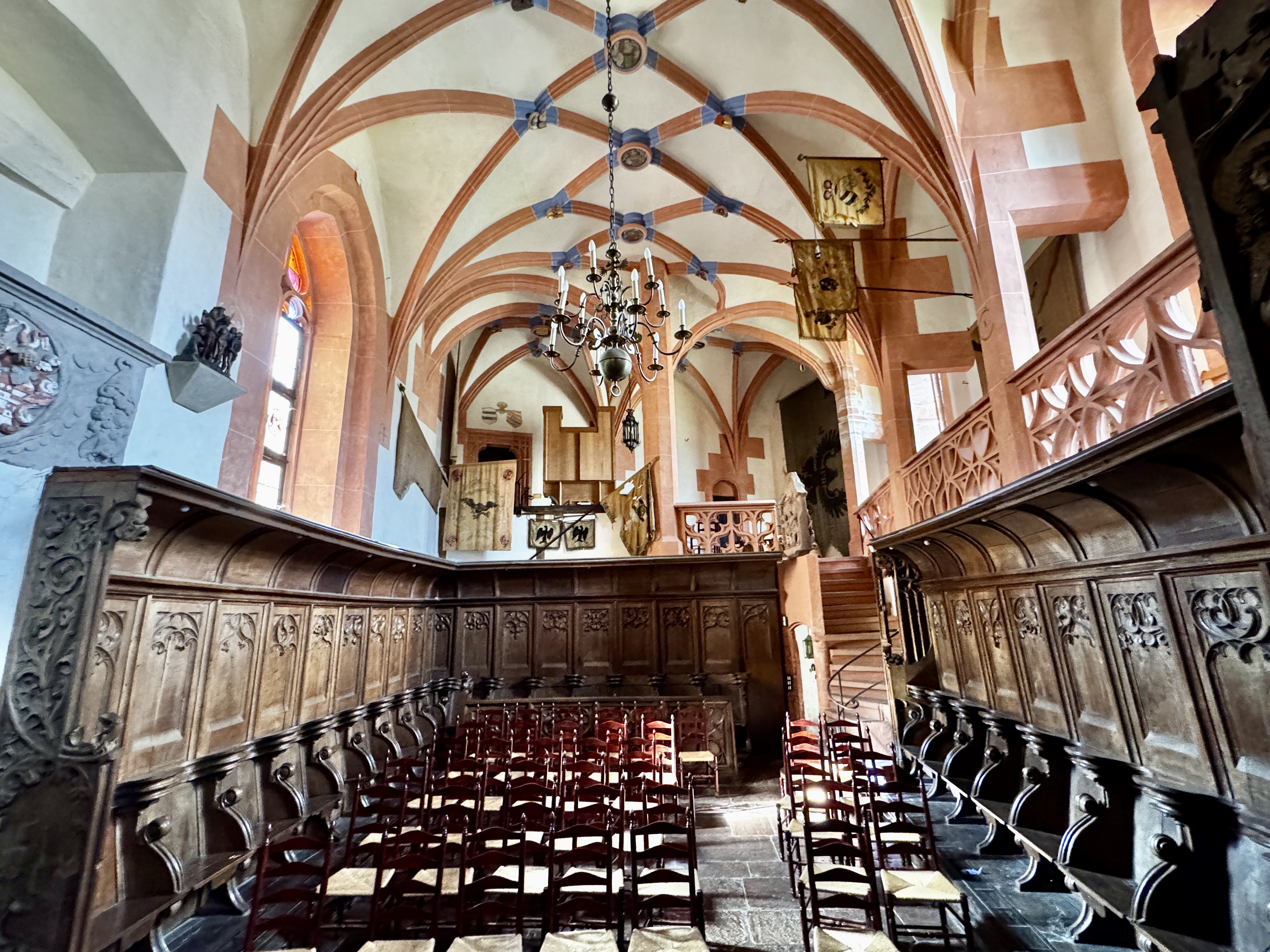
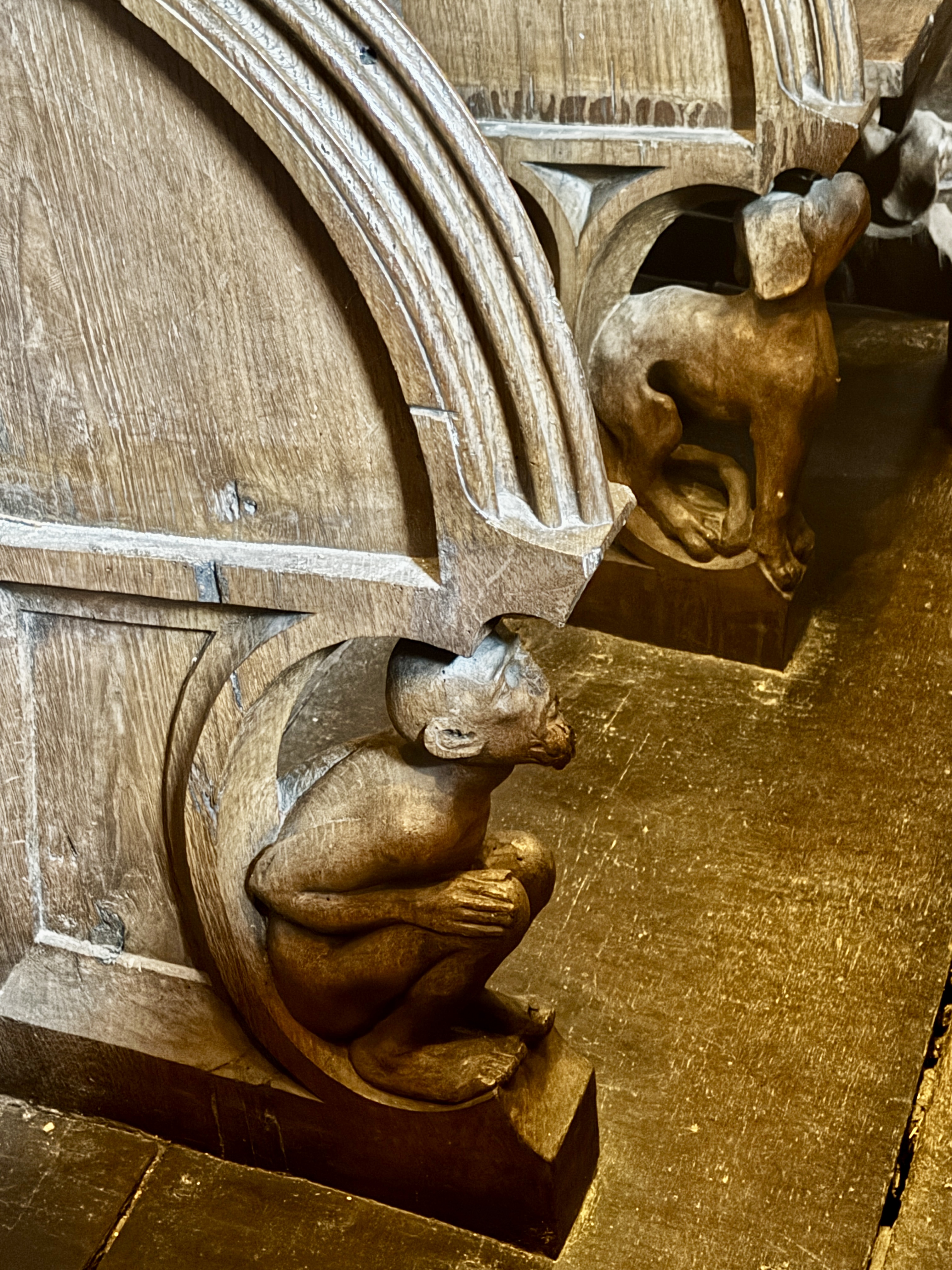
We enjoyed the peeling of bells from the neighboring church, but the music played from the castle tower was especially beautiful.
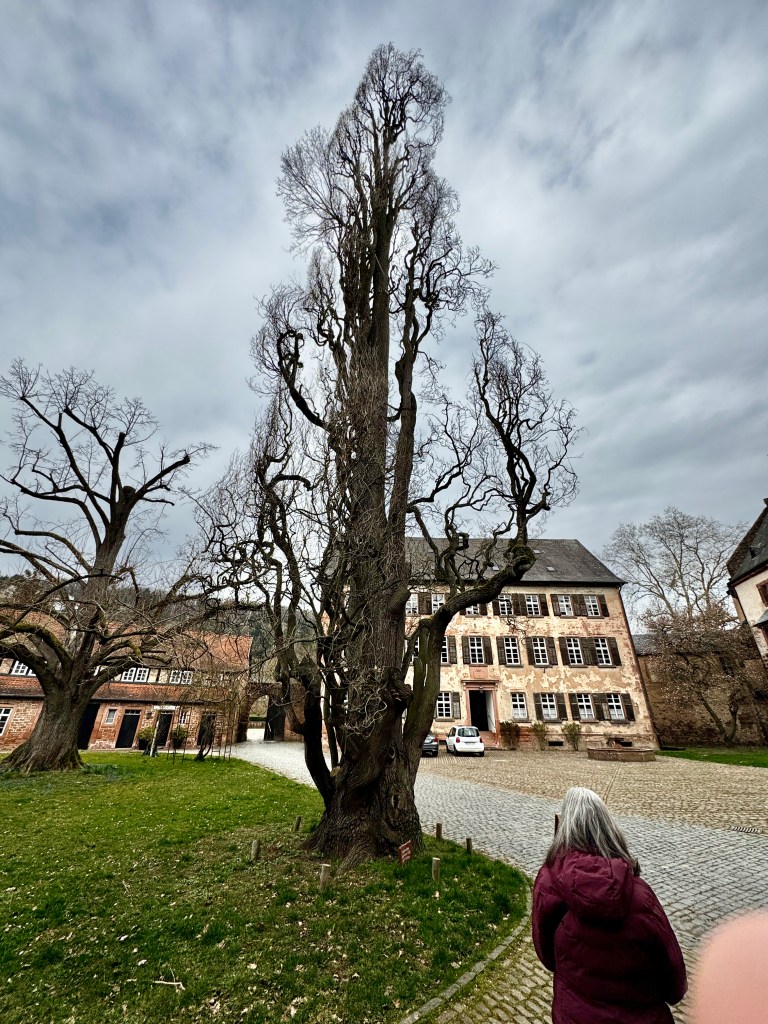
This oak tree was planted in 1766 when immigrants gathered here, bound for Russia. Catherine the Great invited Germans to come to Russia to share their knowledge of cultivation. It is called the “Pyramid Oak.”
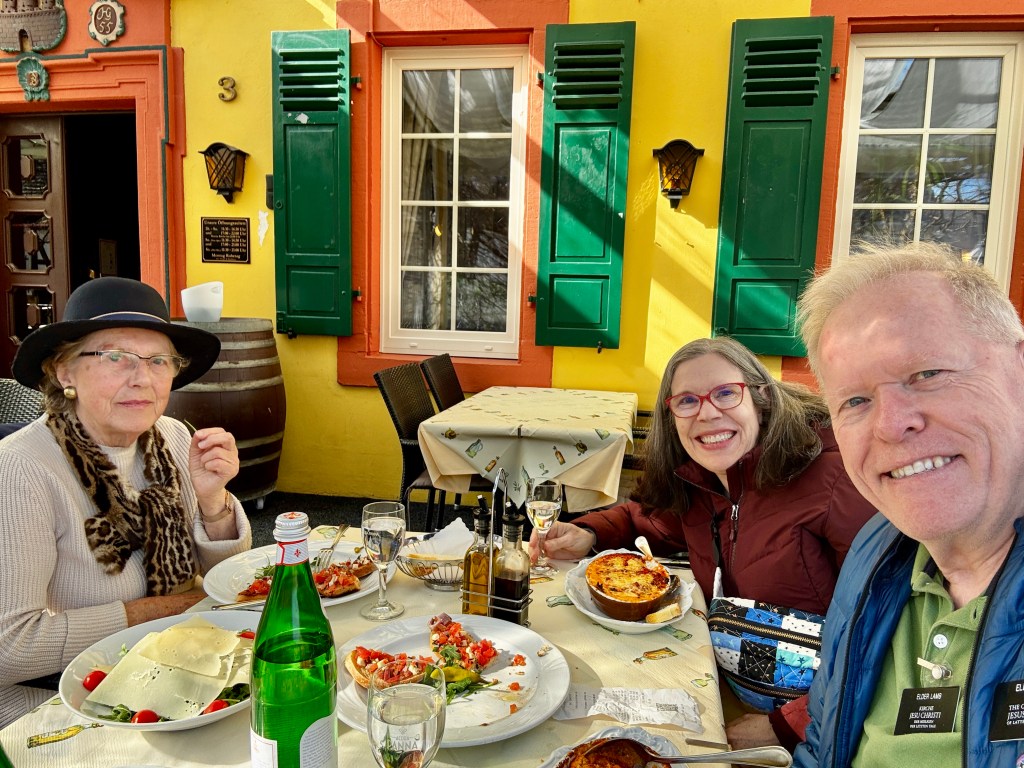
The highlight of the day was our 87-year-old personal tour guide, Christa Hollnagel. We booked and English tour and had no idea we were going to be the only participants. She was a walking encyclopedia and an intelligent passionate woman with a lovely demeanor.
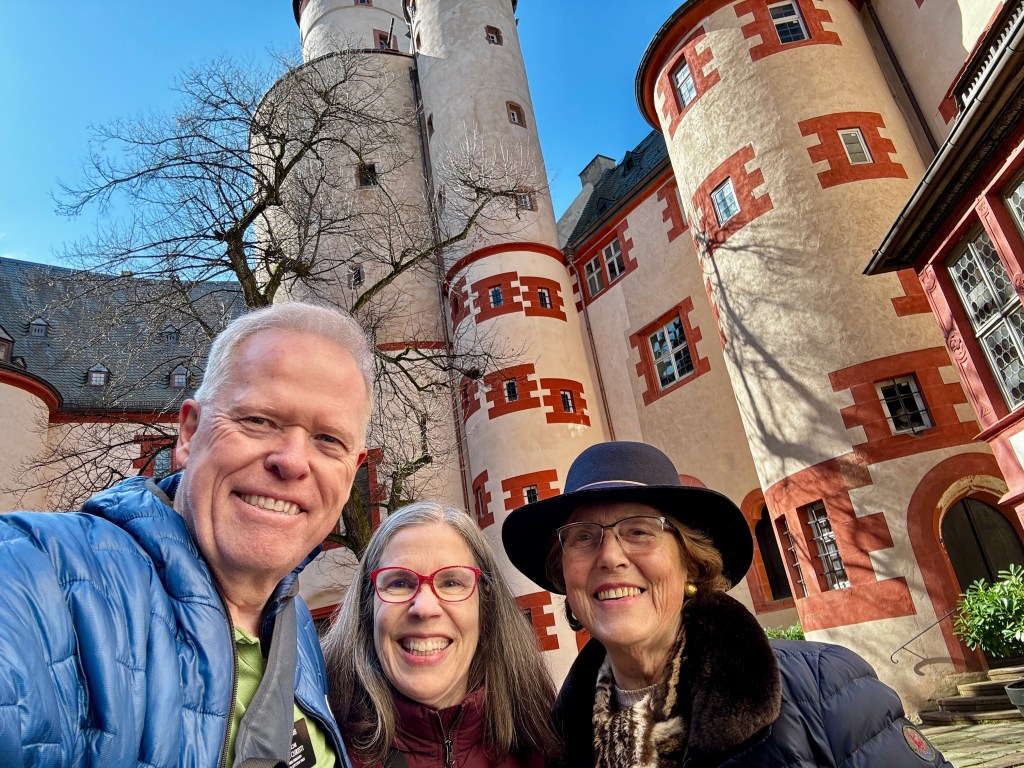
We invited her to lunch after our tour to learn more about her fascinating life. She was a young child in Frankfurt when the city was bombed during WW2. Her family fled east to avoid the bombing. A few years later they fled again just ahead of the Russian army invasion. She shared many miracles that preserved her life. Her family was in the Dresden train station just one day before it was decimated by bombs. Her family lived in a rural village for 11 years as Frankfurt was all but destroyed by the time the war ended. She was not treated well by local children because she was a ‘city girl.’ Christa has strong opinions about current events and world leaders who do not promote peace. It felt like a sacred space to share an afternoon with this amazing woman.
Christa went out of her way to find us a place to have a memorable lunch. By the time we finished the tour at 2:00 she was afraid most restaurants would be closed. In small villages it is common for restaurants to close between 2:00 and 6:00. She insisted that we get in her car and cruise the old town to see what was open. Here we were careening through narrow cobblestone streets with a sweet lady with very poor eyesight. She stopped traffic at one-point and got out of the car to go talk to a restaurant owner who was closing his doors for the afternoon. She worked out a deal that we could sit on the terrace, order and pay quickly, then he would close. We would be free to enjoy our meal for as long as we wanted. Magical!
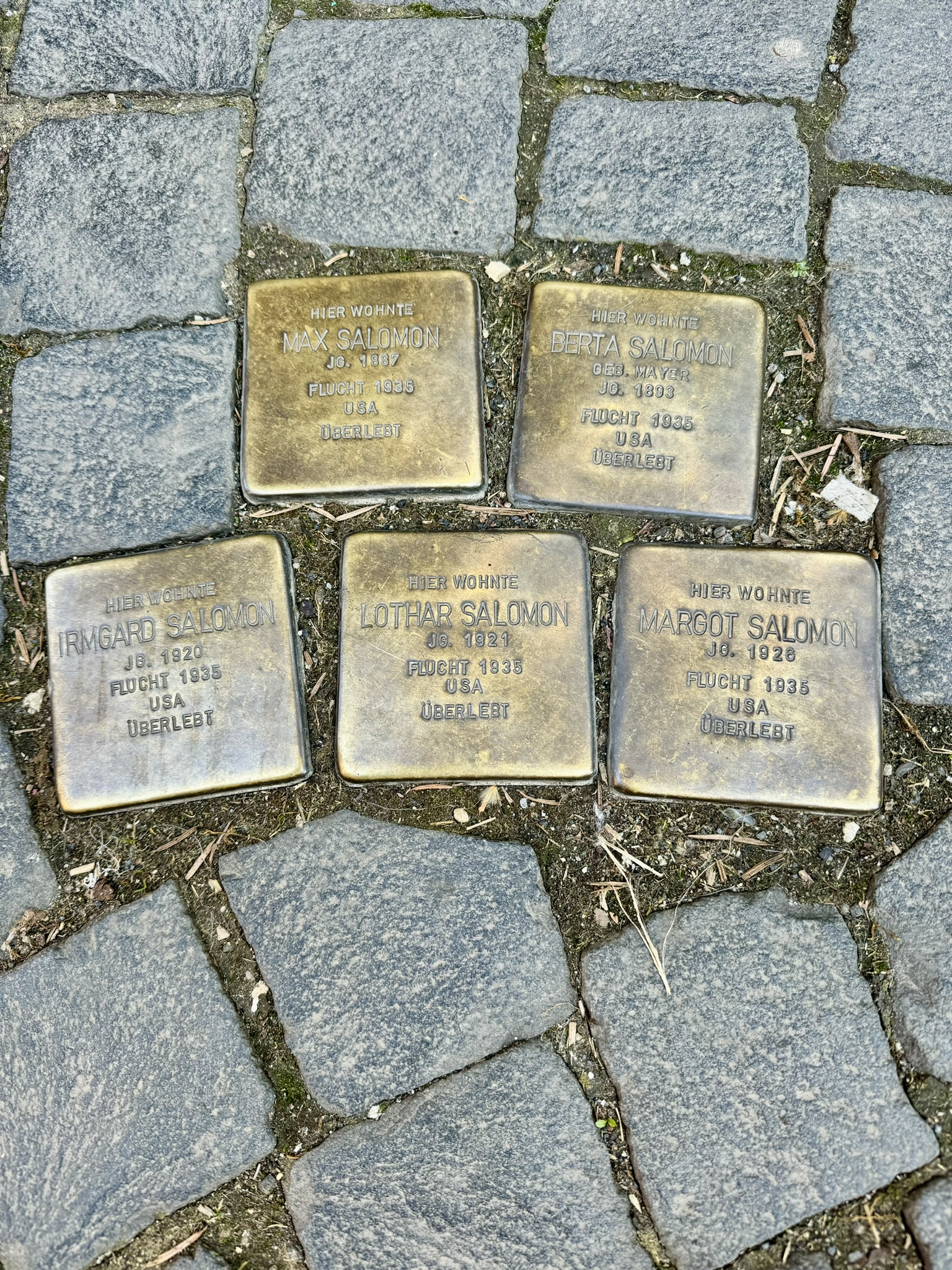
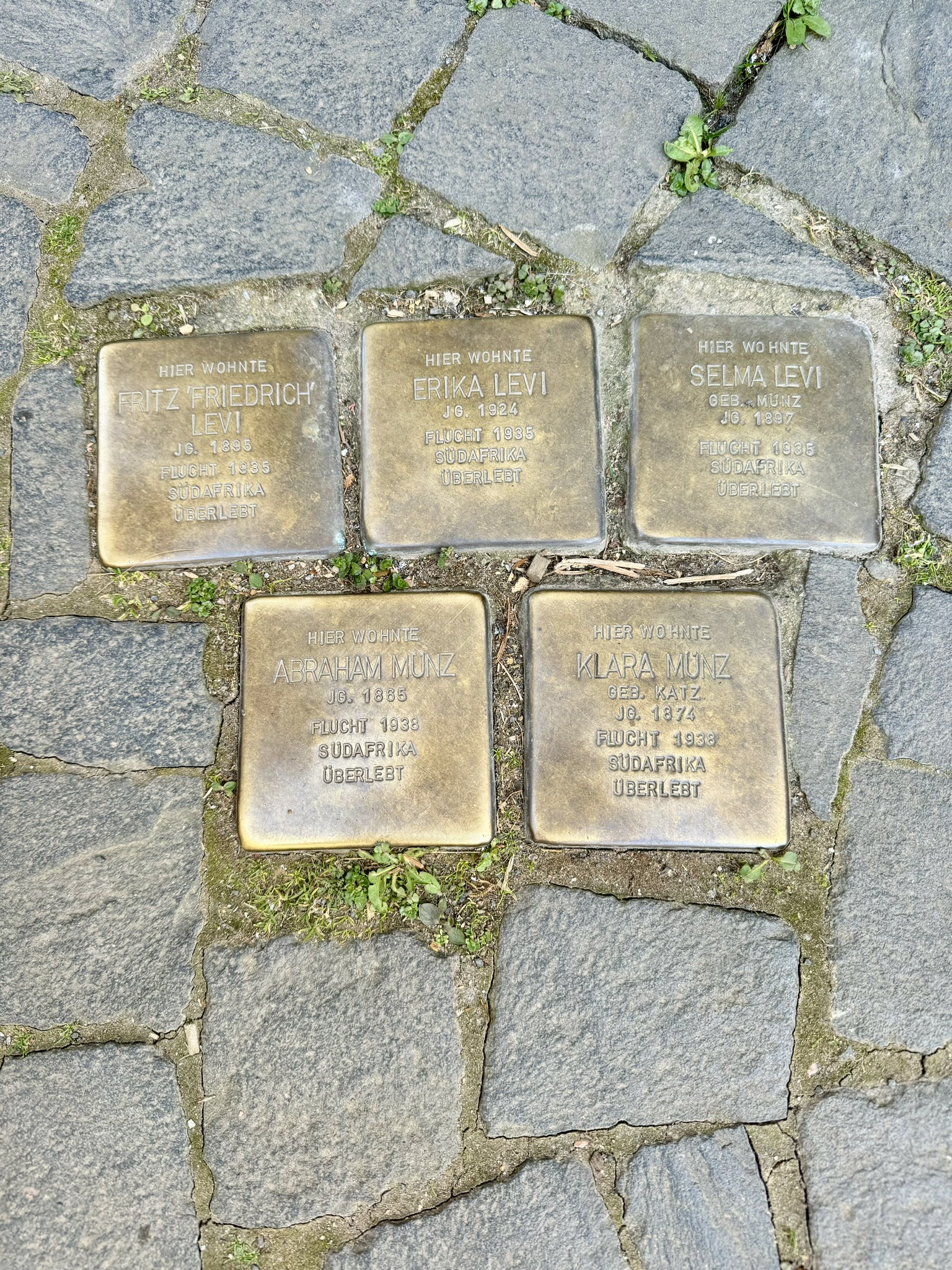
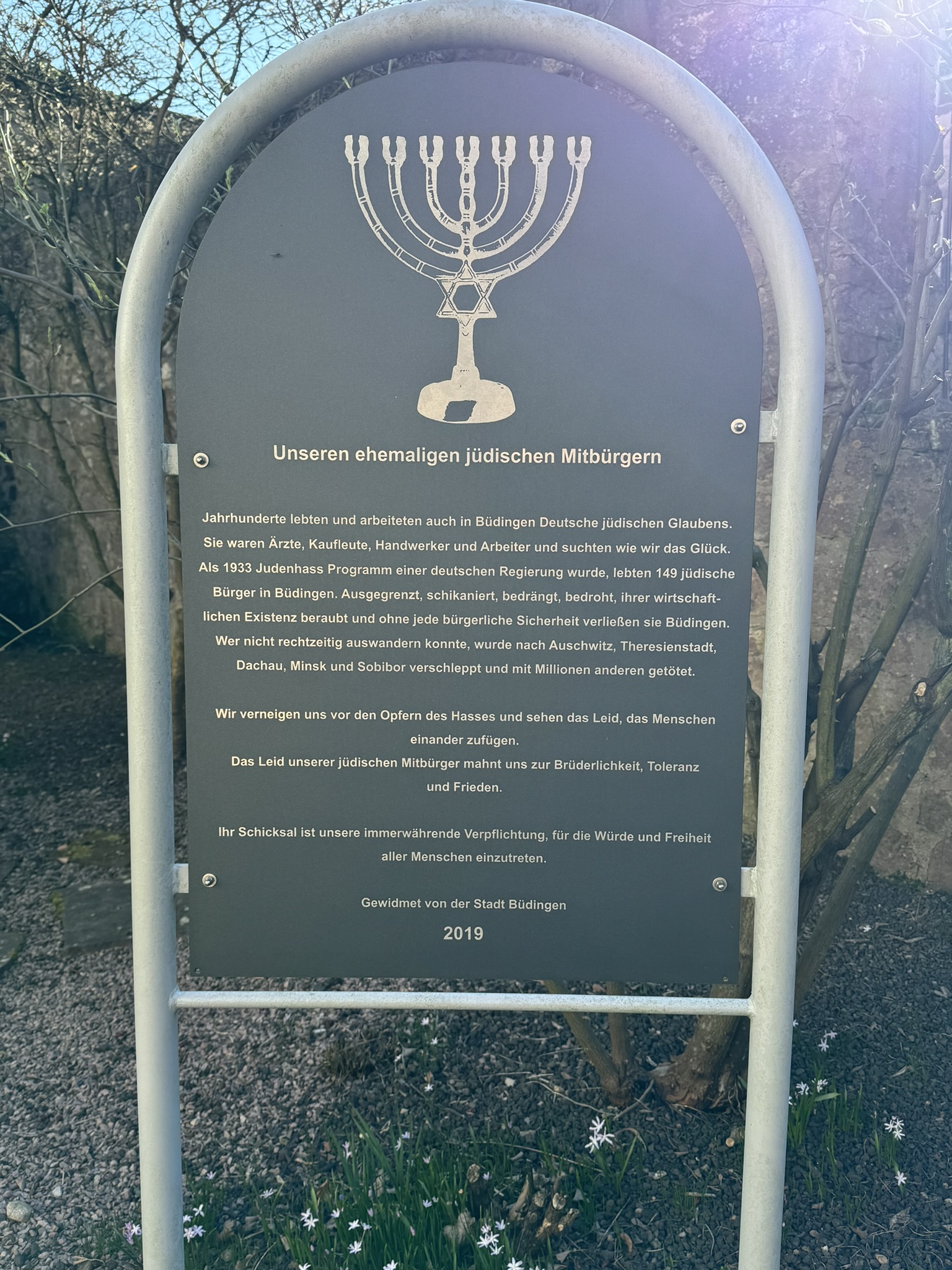
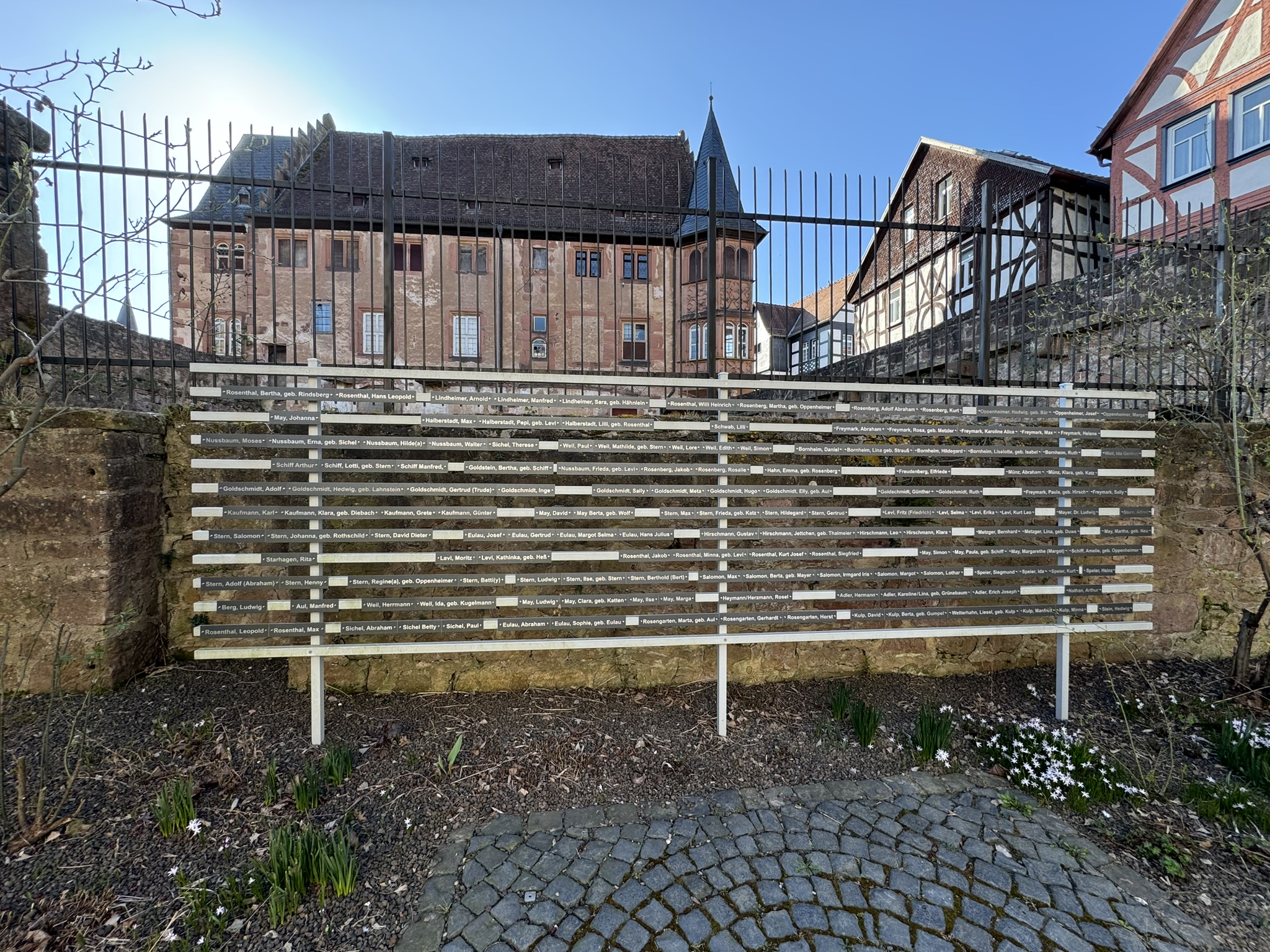
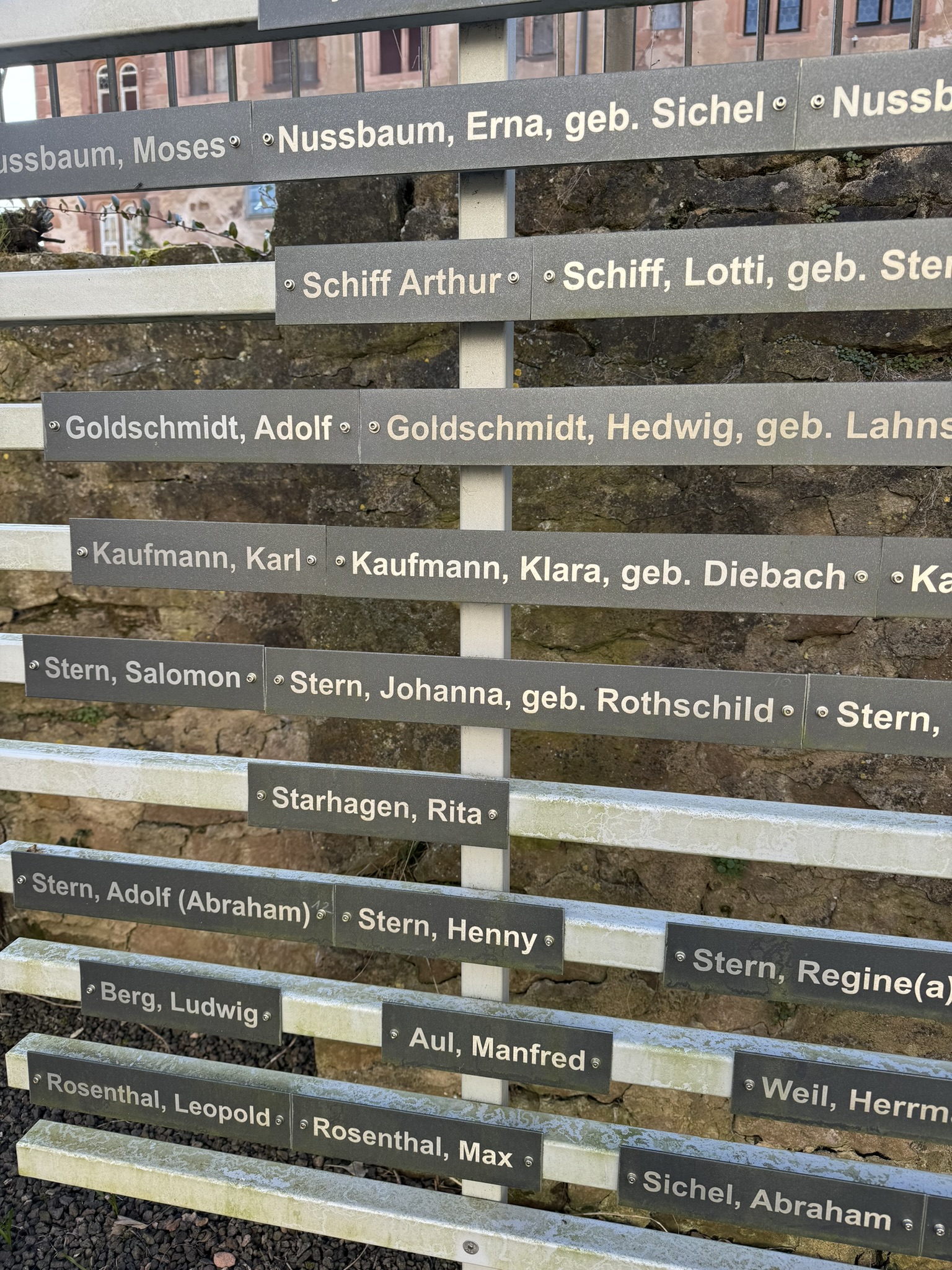
These Stolperstein, or stumbling stones, are placed in front of homes throughout Germany once inhabited by victims of the Holocaust as a way to remember and honor them. Look carefully to see their names, birth dates, and which concentration camp they were placed in. Uberlept means that they survived. You can see that one family settled in South Africa and one in the USA. I wish we knew their stories. Around the corner we found a garden that also held their names in remembrance. May we learn from history and promote tolerance and peace.
With love, Elder & Sister Lamb (aka Ed & Debbie, Mom & Dad, Pop Pop & Tu Tu)
 Lambs in Central Europe